blog

How Are Accident Injuries Diagnosed?
blog

How Are Accident Injuries Diagnosed?

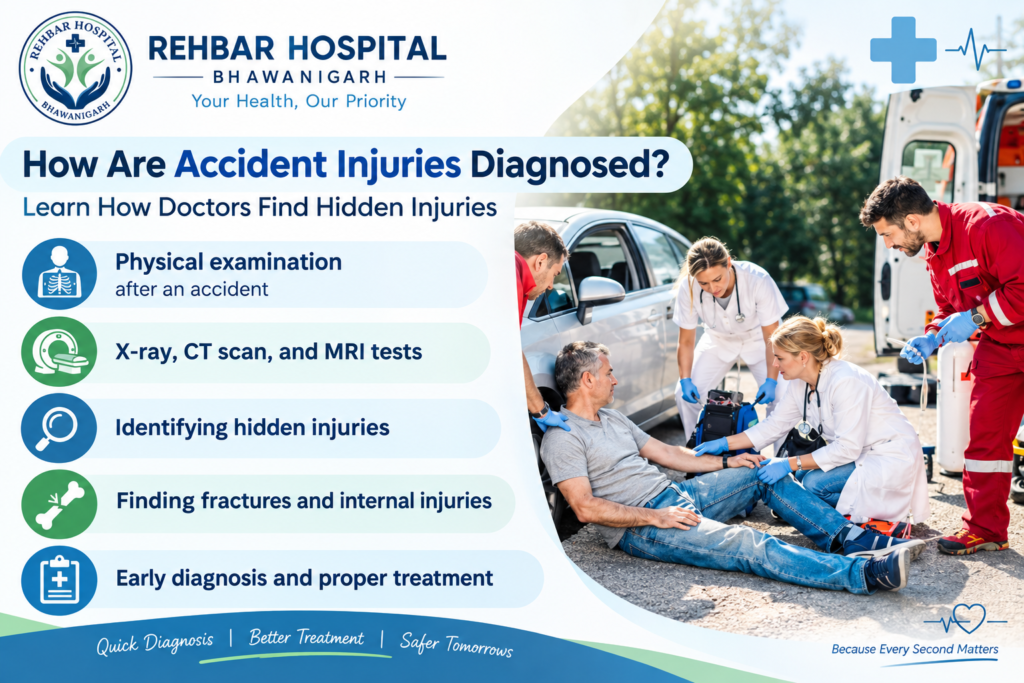
How Are Accident Injuries Diagnosed, Accidents can cause cuts, bruises, broken bones, and internal injuries. However, some injuries may not show symptoms right away. Therefore, you should visit a doctor after an accident, even if you feel fine. How are accident injuries diagnosed? Doctors ask how the accident happen, check your symptoms, and examine your body. They may also use medical tests to find hidden injuries. These tests help doctors identify injuries and choose the right treatment. In this blog, we will explain how doctors diagnose accident injuries, which tests they use, how to identify hidden injuries, and when you should visit a doctor. How Are Accident Injuries Diagnosed? Doctors diagnosed accident injuries by checking the patient’s symptoms and examining the injured body parts. First, they check for serious injuries. Then, they decide which medical tests the patient needs. For example, doctors use X-rays to find broken bones. A CT scan helps them find internal bleeding and injuries to the head or chest. An MRI helps them check for injuries to muscles and ligaments. Doctors also ask how the accident happened and check the patient’s symptoms and medical history. This information helps them choose the right tests and treatment. 1. Medical History and Accident Details The first step How Are Accident Injuries Diagnosed is to understand how the accident happened. Doctors ask questions about the accident to identify possible injuries. They may ask these questions: How did the accident happen? Which part of your body got hurt? Did you lose consciousness? Do you have pain, swelling, dizziness, or bleeding? Do you have any health problems? Are you taking any medicines? The answer help doctors understand the possible injuries. For example, a person who gets hit on the head may need a head injury check. Similarly, a person who falls on their hand may have a broken wrist. Doctors also consider the patient’s age, medical history, and symptoms before deciding which medical tests they need. 2. Physical Examination After an Accident A physical examination helps doctors find injuries after an accident. Doctors check the injured body parts for signs of damage. They also check the patient’s overall health. Doctors may check for: Cuts, bruises, and bleeding Swelling and pain Pain during movement Difficulty moving joints Muscle strength and feeling Changes in breathing or heart rate Signs of nerve damage In an emergency, doctors first check the patient’s airway, breathing, and blood flow. They also look for heavy bleeding and other serious problems. Next, doctors examine the injured areas more carefully. For example, if a patient’s arm hurts, doctors check for swelling, difficulty moving the arm, and signs of a broken bone. However, a physical examination may not find every injury. Therefore, doctors may recommend medical tests if they suspect a serious or hidden injury. 3. Diagnostic Tests After a Road Accident Doctors use different medical tests after a road accident to find broken bones, internal injuries, and damage to muscles or ligaments. They choose the right tests based on the patient’s symptoms and physical examination. X-Ray for Accident Injuries An X-ray helps doctors check for broken bones and dislocated joints. It can also show other bone problems. For example, if a patient has severe leg pain after a road accident, the doctor may recommend an X-ray to check for a broken bone. However, an X-ray cannot find every injury. Doctors may need other tests to check for small fractures or injuries to muscles and ligaments. CT Scan for Accident Injuries A CT scan uses X-rays and a computer to create detailed images of the body. Doctors may recommend this test if they suspect serious internal injuries. A CT scan can help doctors find: Internal bleeding Certain head and brain injuries Chest and abdominal injuries Complex bone fractures Damage to internal organs For example, doctors may recommend a CT scan after a serious accident if the patient’s symptoms or examination suggest a major injury. However, doctors consider the patient’s condition and the risks of radiation before recommending this test. MRI for Accident Injuries An MRI uses magnets and radio waves to create detailed images of the inside of the body. It helps doctors find injuries that may not appear clearly on an X-ray. Doctors may use an MRI to check for: Ligament injuries Tendon injuries Muscle injuries Spinal cord or nerve problems Certain brain injuries For example, a patient may still have joint pain after an accident, even if an X-ray shows no broken bones. In this case, the doctor may recommend an MRI to check for ligament or other soft tissue injuries. However, not every accident injury needs an MRI. Doctors recommend this test when it helps them identify the injury or choose the right treatment. Ultrasound and Blood Tests Doctors may also use an ultrasound to check soft tissues, fluid buildup, or possible internal bleeding in certain situations. Blood tests can help doctors check blood loss, organ function, and other health problems. However, blood tests alone cannot find every accident injury. Therefore, doctors use medical test results along with the patient’s symptoms and physical examination to understand the injury and choose the right treatment. 4. How Do Doctors Diagnose Internal Injuries After an Accident? How Are Accident Injuries Diagnosed Internal injuries after an accident can be dangerous because they may not cause visible wounds. Therefore, doctors check the patient’s symptoms and ask how the accident happened. These injuries can affect the brain, chest, abdomen, blood vessels, and internal organs. Sometimes, symptoms appear hours after the accident rather than immediately. Doctors look for warning signs such as: Severe or increasing stomach pain Difficulty breathing Dizziness or fainting Confusion or unusual sleepiness Repeated vomiting Severe headache Pale, cold, or sweaty skin Unusual weakness Blood in the urine or vomit Doctors may recommend blood tests, an ultrasound, or a CT scan to check for internal injuries. They choose the tests based on the patient’s condition. However, some internal injuries may not cause clear symptoms at first. Therefore, seek medical help quickly after a serious accident,
Broken Bone After an Accident
blog

Broken Bone After an Accident: What Should You Do?

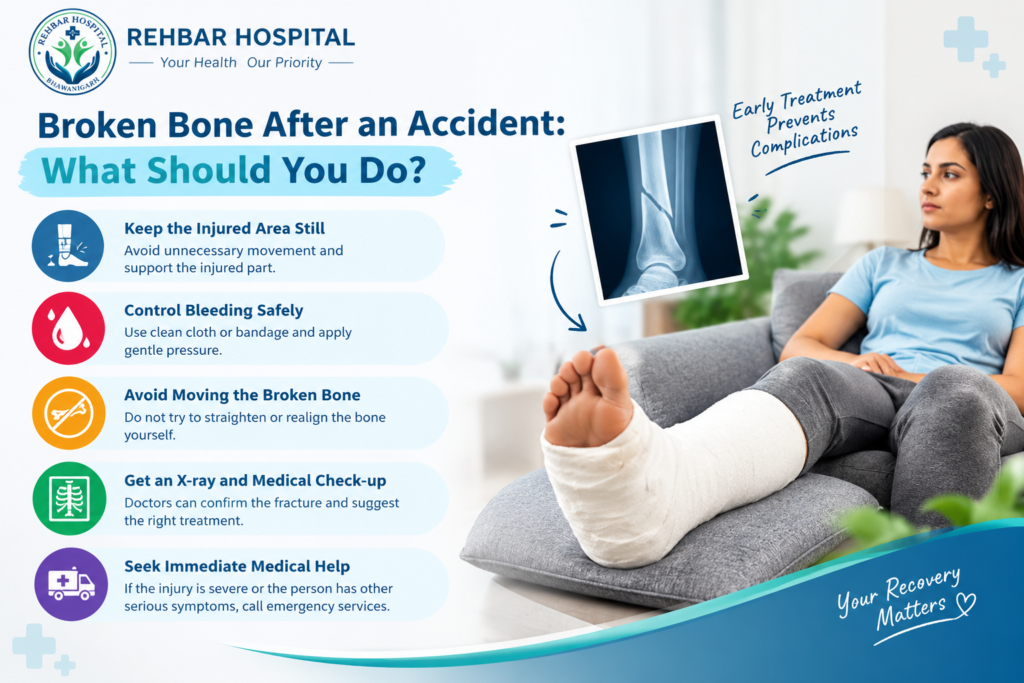
Broken Bone After an Accident can cause pain, swelling, bruising, and difficulty moving the injured body part. It can happen because of a road accident, a fall, a sports injury, or a sudden hit. Some fractures may look small, but others can damage nearby muscles, nerves, and blood vessels. Therefore, it is important to know what to do after a bone fracture. Proper first aid can protect the injured area until a doctor checks it. Early diagnosis and the right fracture treatment can also help prevent further problems and support faster recovery. At Rehbar Hospital, patient can seek medical help for accident-relate injuries and suspect bone fractures. If you think a bone is broke, visit a doctor as soon as possible. Do not try to treat the injury yourself. What Is a Broken Bone After an Accident? A broken bone, also called a fracture, happens when a bone cracks or break due to a strong hit, fall, or pressure. The seriousness of the injury depends on which bone is broke and how much damage has occur. For example, a person may break their arm while trying to protect themselves during a fall. Similarly, a road accident can cause a broken leg due to a strong impact. Sometimes, Broken Bone After an Accident changes the shape of the injured arm or leg. However, in other cases, the only signs may be pain and swelling. Therefore, do not ignore an injury just because the bone looks normal. Always consult a doctor if you suspect a fracture. Signs of a Broken Bone After an Accident Knowing the signs of a broken bone can help you get medical help on time. The symptoms may differ from person to person. However, some common signs can appear after an accident and help you identify a possible fracture 1. Severe Pain A Broken Bone After an Accident often causes pain in the injured area. The pain may increase when you move the injured arm or leg, put weight on it, or touch the affected area. 2. Swelling and Bruising Pain and swelling may appear soon after a fracture. You may also notice bruises around the injured area because blood collects under the skin. 3. Difficulty Moving You may struggle to move your arm, leg, wrist, or ankle normally. For example, standing or walking may become difficult after a leg fracture. 4. Visible Deformity Sometimes, the injured arm or leg may look bent or have an unusual shape. This can be a sign of a serious fracture, so seek medical help immediately. 5. Tenderness Around the Bone The injure area may hurt when you touch it. However, do not press it again and again to check if the bone is broke, as this may make the injury worse. 6. Numbness or Tingling Numbness, tingling, or changes in skin colour may be signs of nerve damage or poor blood flow. If you notice these symptoms after an accident, seek emergency medical help immediately. Important: These symptoms do not always mean that a bone is broken. However, a fracture can still happen even if the pain is mild or the injured area looks normal. Therefore, consult a doctor if you suspect a broken bone after an accident. Broken Bone After an Accident Symptoms and Causes A bone can break for different reasons, such as accidents, falls, or sports injuries. Knowing the common causes of fractures can help you understand when to seek medical help. Common fracture symptoms and causes include: Road accidents: A strong hit during a road accident can break bones in the arms, legs, ribs, or other parts of the body. Falls: Falling from stairs, a height, or even the ground can cause a broken bone. Sports injuries: A sudden twist, fall, or hit while playing sports can lead to a fracture. Workplace accidents: Heavy objects, machines, or falls at work can cause bone injuries. Weak bones: Conditions like osteoporosis make bones weak and increase the risk of fractures, even after a minor fall. Repeated stress: Repeating the same physical activity again and again can cause small cracks in the bones, known as stress fractures. In addition, age, bone health, and the force of the impact can influence the severity of the injury. Types of Bone Fractures Doctors classify fracture base on how the bone break and whether the skin is damage. Closed Fracture A closed fracture happens when a bone breaks but does not damage the skin. However, it can still cause damage to the muscles and tissues around the bone. Open Fracture An open fracture happen when a broken bone is connect to an open wound in the skin. Sometimes, the bone may be visible through the wound. In other cases, the wound reaches the broken bone without showing it. An open fracture needs urgent medical care because germs can enter the wound and cause an infection. Complete Fracture A complete fracture happens when a bone breaks all the way through into two or more pieces. Incomplete Fracture An incomplete fracture happens when a bone cracks but does not break completely. This type of fracture is more common in children, but it can also happen in adults. Displaced Fracture A displaced fracture happens when the broken pieces of a bone move out of their normal position. Non-Displaced Fracture A non-displaced fracture happens when a bone cracks or breaks, but the broken pieces stay in their normal position or move only slightly. Every fracture is different. Therefore, doctors check the type of fracture, the patient’s condition, and any other injuries before choosing the right treatment. Broken Bone After an Accident First Aid: What Should You Do? Broken bone first aid can help protect the injured area and prevent further damage until a doctor provides treatment. If you think someone has a broken bone after an accident, follow these steps to help them safely. 1. Check for Immediate Danger First, make sure the area is safe before helping the injured person. If a serious road accident has occurred, check for heavy

Polytrauma
blog

What Is Polytrauma? Causes, Symptoms and Treatment

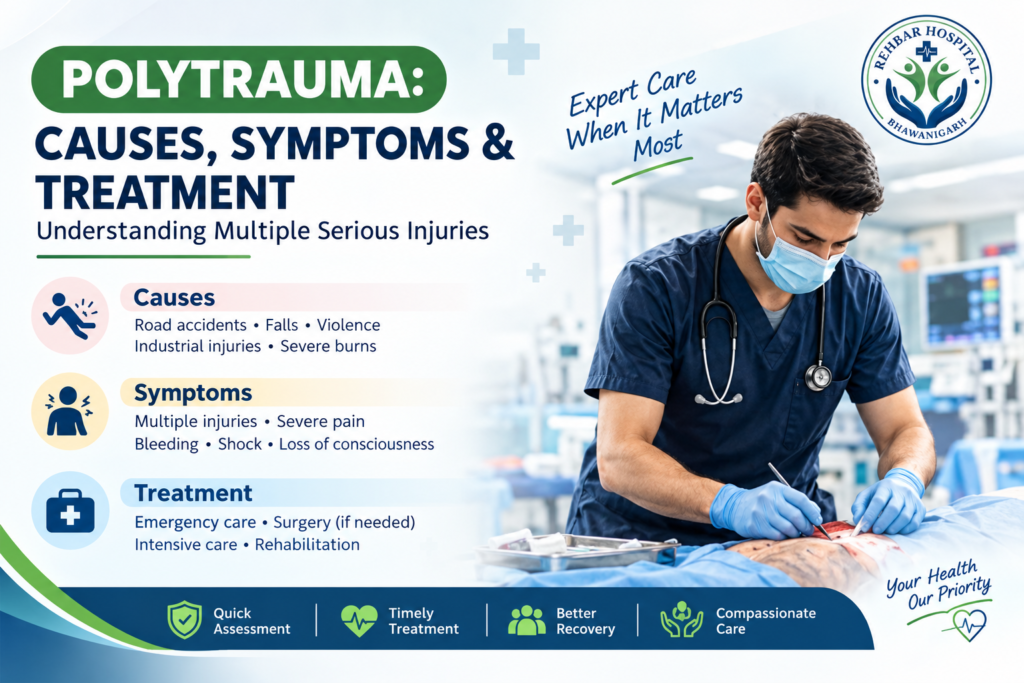
What Is Polytrauma? Causes, Symptoms and Treatment Polytrauma means a person has many injuries in different parts of the body after an accident. These injuries may affect the head, chest, stomach, back, bones, or internal organs. Some injuries can be very serious and may put a person’s life at risk. Therefore, getting medical help quickly is very important. Road accidents, falls from high places, and workplace accidents are some common causes of polytrauma. The injuries can be minor or serious, depending on the accident. Doctors check the patient carefully and start the right treatment as soon as possible. Rehbar Hospital in Bhawanigarh provides 24×7 emergency and trauma care. The medical team checks patients after accidents, gives initial treatment, and arranges tests or specialist care when needed. Early treatment can help prevent further problems. In this blog, we will explain what polytrauma is, what causes it, its symptoms, how doctors diagnose and treat it, and how patients can recover. What Is Polytrauma? Polytrauma means a person has serious injuries in different parts of the body. Some of these injuries can be life-threatening. They usually happen because of major accidents, such as road accidents or falls from high places. For example, after a car accident, a person may have a head injury, broken ribs, a broken leg, or bleeding inside the body. Doctors check the whole body to find all the injuries. Some injuries are not visible from the outside. Therefore, doctors need to check the patient quickly and provide the right treatment to help prevent further problems. Common examples of polytrauma include: A head injury along with a chest injury. Broken bones in the arms, legs, or hips. Stomach injuries that cause internal bleeding. A spine injury along with broken bones. Chest injuries along with damage to internal organs. Recognising these injuries early helps doctors understand how serious the condition is. It also helps them provide emergency treatment quickly and prevent further health problems. What Are the Main Causes? Knowing the causes of polytrauma can help people understand how serious injuries happen. Polytrauma can occur because of different accidents. However, serious road accidents, falls from heights, and other major accidents are some of the common causes. 1. Road Accident Road accident are a common cause of serious injurie. A car accident, motorcycle accident, or be hit by a vehicle can hurt many part of the body at the same time. For example, a person may have broke bones, a head injury, chest pain, or bleeding inside the body after an accident. Sometimes, the accident can also damage internal organs, even if there are only small cuts or marks on the skin. Therefore, it is important to get medical help quickly after a serious road accident. 2. Falls from Heights Falling from a building, ladder, rooftop, or other high place can cause serious injuries. A person may suffer a head injury, broken bones, a back injury, or damage to internal organs after a fall. Older people and construction workers may have a higher risk of falling. Therefore, it is important to use safety equipment, follow safety rules, and take care when working or walking in high places. These steps can help prevent serious injuries. 3. Workplace Accidents Accidents in factories and construction areas can cause serious injuries. Heavy machines, falling objects, damaged equipment, or heavy objects falling on a person can hurt different parts of the body. These accidents may damage bones, muscles, blood vessels, or internal organs. Therefore, workers should follow safety rules and wear proper safety equipment, such as helmets, gloves, and safety shoes. These steps can help reduce the risk of serious injuries. 4. Sports and Recreational Accidents Sports accidents can sometimes cause serious injuries to different parts of the body. For example, a person may get broke bones, a head injury, or a chest injury while cycle, bike race, or play contact sports. The risk of injury depends on the sport and how serious the accident is. Wearing proper safe equipment, such as helmets and protective gear, can help reduce the risk of serious injuries. 5. Burns and Explosions Explosions and big fires can cause serious injuries. A person may suffer burns, broken bones, hearing problems, or damage to internal organs. Breathing in smoke can also make it hard to breathe and worsen the person’s condition. Therefore, getting medical help quickly after an explosion or fire is very important. 6. Violence and Other Traumatic Events Physical attacks, deep cuts, and serious accidents can cause injuries in different parts of the body. In these cases, doctors check for bleeding, damage to internal organs, and other serious problems. No matter how the injuries happen, a person with several serious injuries needs medical help immediately. Early treatment helps doctors treat the injuries quickly and reduce the risk of further problems. What Are the Common  Symptoms? The symptom of polytrauma depend on how serious the injury are and which part of the body are hurt. Some symptoms appear immediately after an accident, while others may appear later. Sometimes, a person may have internal injuries that cannot be seen from the outside. Therefore, it is important to know the warning signs of polytrauma. If someone has serious injuries after an accident, call emergency services and get medical help immediately. Do not wait for symptoms to get worse. 1. Severe Pain and Swelling After an accident, a person may feel severe pain in the head, chest, stomach, back, arms, or legs. They may also have swelling, bruises, or pain when touching an injured area. These signs may mean that a bone is broken or the muscles and other body parts are damage. However, a person may have a serious injury even if they feel only a little pain. Therefore, it is important to get medical help quickly after a serious accident. 2. Bleeding Heavy bleeding from a wound needs immediate medical help. Sometimes, bleeding happens inside the body, such as in the chest or stomach, and no blood can be seen from the outside.

road accident treatment
blog

What to Do After a Road Accident: Immediate Steps, Warning Signs & Treatment

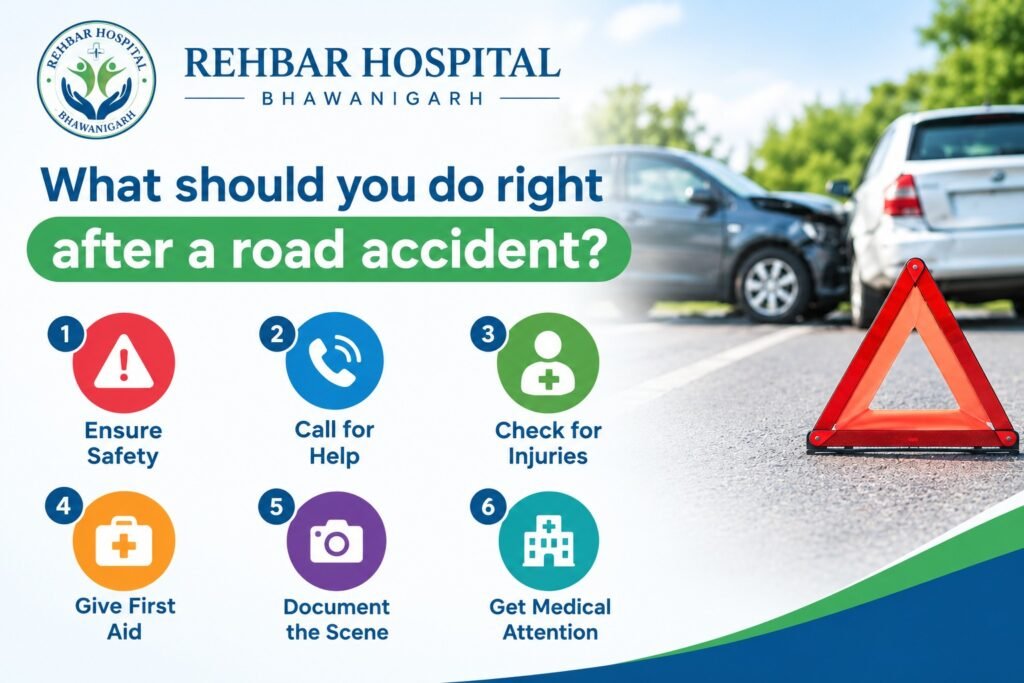
Yes. Not every fracture produces an obvious change in the shape of a limb. Pain, swelling, tenderness or difficulty using the affected area may occur, but these symptoms can also have other causes. A healthcare professional may recommend an examination and imaging such as an X-ray when a fracture is suspected. What should you do right after a road accident? The first steps after a road accident are simple: Make the area safe. Call emergency help if someone may be badly hurt. Do not move an injured person unless there is danger. Check for heavy bleeding and other serious problems. Give basic first aid only if you know how to do it safely. Get medical help quickly if there are warning signs or a serious crash. WHO says you should first make the crash area safe. Then call for help, give basic first aid, and take injured people to a health care center. Also, be careful when moving a person. A neck or back injury may be present. Step 1: Make the accident scene safe Before you help, check for danger. Cars, fire, fuel leaks, broken wires, damaged vehicles, and other dangers can hurt you or the injured person. So, if it is safe, warn other drivers and move to a safe place. WHO says the crash area should be made safe to stop more crashes and injuries. Do not put yourself in danger to reach a person trapped in a car. If there is fire, smoke, a risk of an explosion, or another serious danger, call emergency help. Then follow the operator’s instructions. Step 2: Call for emergency help Call for emergency help at once if someone:Is not awake ?Has heavy bleeding ?Has trouble breathing ?May have a serious head or back injury ?Has major injuries ?May be in danger of dying ?In India, 112 is the single emergency number for police, fire, and health help.When you call, tell the operator ?Where you are or the nearest clear landmark ?How many people are hurt ?If anyone is not awake ?If anyone has heavy bleeding or trouble breathing ?If anyone is trapped in a car ?Any clear danger at the crash site ?Stay on the call. Also, follow the operator’s advice. Step 3: Avoid extra movement After a serious road crash, a neck or back injury may be present. So, avoid moving the person unless there is an immediate danger.Do not pull a hurt person from a car just because they feel uncomfortable. Move them only if staying there could cause serious harm, such as fire.WHO says to keep movement of the neck and back as low as possible when taking someone out of a car.If a person is awake and has a clear arm or leg injury, keep that part still as much as you can.Do not try to straighten a bent or deformed arm or leg yourself. Step 4: Look for serious bleeding Heavy bleeding needs quick help. If it is safe and you know basic first aid, press firmly on the wound with a clean cloth or suitable dressing. Keep getting emergency help. Do not stop emergency care just because the bleeding has slowed for a while. WHO says early care for heavy bleeding is an important part of basic care after a serious injury. Step 5: Check for signs of a serious head injury A person may look fine after a crash and still have a serious injury. After a blow to the head, warning signs can include: Passing out Becoming very sleepy or hard to wake Seizures New weakness or numbness Trouble walking or keeping balance Trouble speaking or understanding Problems with sight or hearing Vomiting more than once Clear fluid or blood from the nose or ears A very bad or worsening headache A large wound or clear change in the shape of the head The NHS says some of these signs need urgent medical care. It also lists a high-speed road crash as a reason to get urgent help after a head injury. So, if someone had a strong blow to the head, do not assume they are safe just because there is no clear wound. What injuries can happen after a road accident? Road accidents can cause many types of injury. Possible injury What you may notice Broken bone Pain, swelling, a sore area, trouble using an arm or leg, or a change in shape Sprain or soft-tissue injury Pain, swelling, and less movement Head injury Headache, confusion, sleepiness, vomiting, or other brain-related signs Spinal injury Neck or back pain, weakness, numbness, or trouble moving Chest injury Chest pain, trouble breathing, or pain when touched Belly injury Belly pain, soreness, weakness, or other worrying signs Cuts and wounds Bleeding, pain, or damaged skin and tissue These signs do not prove what the injury is. Some serious injuries may have few clear signs at first. So, medical care may be important after a serious crash. When should you go to a hospital after a road accident? Medical care is very important if there is: Loss of consciousness Trouble breathing Heavy bleeding A strong blow to the head A possible broken bone Severe or worsening pain Weakness, numbness, or other nerve-related signs Chest or belly symptoms Any doubt about how serious the injury may be Even if a person looks fine after a major crash, they should not assume that all is well. Some signs may appear later. The right type of care depends on the injury, the person’s symptoms, and the type of crash. What happens during road accident treatment? Treatment usually starts with a check of the person’s condition. Depending on the injury, health workers may check: Breathing Blood flow Bleeding Brain and nerve signs Pain Movement Other signs of injury Next, they may do more checks or tests. For example, an X-ray may be needed if a broken bone is suspected. Treatment can be different for each person. It may include: Cleaning a wound Keeping an injured body part still Using a cast or splint Pain relief Surgery Watching the patient Sending

simple exercise for back pain
blog

Simple Exercises for Back Pain Relief | Rehbar Hospital

Simple Exercises for Back Pain Relief Back pain is a common problem that can affect people of all ages. Sitting for long hours, poor posture, lack of movement, muscle strain, or an injury can sometimes lead to back pain. The good news is that gentle movement can help many people feel better and stay active. If you are looking for simple exercises for back pain relief, there are several easy movements you can try at home. These exercises can help improve movement, reduce stiffness, and support the muscles around your back. However, every person’s back pain is different. If an exercise increases your pain, stop and speak with a doctor or physiotherapist. For ongoing or severe back pain, you can also consult the Orthopaedic Department at Rehbar Hospital for proper medical advice. Why Are Exercises Helpful for Back Pain? When you have back pain, it may feel better to stay in bed or avoid movement. However, staying inactive for too long can make your back stiff and may slow recovery. Staying active and doing suitable exercises can help improve movement and manage back pain. Regular movement may help: Reduce back stiffness Improve flexibility Keep your back muscles active Improve your daily movement Support better posture Reduce the chance of future pain The key is to start slowly and choose movements that feel comfortable. 7 Simple Exercises for Back Pain Relief Here are some exercises for back pain relief that are simple and can be done at home. You do not need expensive equipment for most of them. 1. Knee-to-Chest Stretch The knee-to-chest stretch is one of the easy stretches for back pain relief. How to do it: Lie on your back on a comfortable surface. Bend both knees and keep your feet flat. Slowly bring one knee towards your chest. Hold it gently for a few seconds. Slowly lower your leg. Repeat with the other leg. Do not pull your knee too hard. The movement should feel gentle and comfortable. 2. Knee Rolls Knee rolls are simple movements that can help improve lower back movement. How to do it: Lie on your back. Bend your knees and keep your feet on the floor. Keep your shoulders relaxed. Slowly move both knees to one side. Bring them back to the centre. Slowly move them to the other side. Move slowly and avoid forcing your back. Knee rolls are commonly included in gentle back pain relief exercises. 3. Pelvic Tilt Pelvic tilts are useful simple lower back exercises that can help you gently move and control the muscles around your lower back. How to do it: Lie on your back with your knees bent. Keep your feet flat on the floor. Gently tighten your stomach muscles. Slowly press your lower back towards the floor. Hold for a few seconds. Relax and repeat. Start with a small number of repetitions and increase slowly as you become more comfortable. 4. Cat-Cow Stretch The cat-cow movement is a gentle way to move your spine. How to do it: Get on your hands and knees. Keep your hands under your shoulders. Keep your knees under your hips. Slowly round your back upwards. Then gently lower your back and lift your chest. Move slowly between the two positions. Do not make sudden movements. This can be one of the useful exercises to relieve back pain when done comfortably. 5. Glute Bridge The glute bridge can help strengthen the muscles around your hips and lower back. How to do it: Lie on your back with your knees bent. Keep your feet flat on the floor. Keep your arms by your sides. Tighten your stomach and hip muscles gently. Slowly lift your hips. Hold for a short time. Slowly lower your hips back to the floor. Start with a few repetitions. If the movement causes pain, stop and get medical advice. 6. Gentle Walking Walking is one of the easiest home exercises for back pain. You do not need special equipment, and you can start with a short walk. Begin with a comfortable pace and a short distance. If you feel good, slowly increase your walking time. Regular activities such as walking and swimming may help some people manage back pain and stay active. 7. Child’s Pose Stretch This gentle stretch may help relax the back and hips. How to do it: Start on your hands and knees. Slowly move your hips back towards your heels. Stretch your arms forward if comfortable. Keep your breathing slow and relaxed. Hold the position for a few seconds. Slowly return to the starting position. If this position causes pain or feels uncomfortable, do not continue it. Lower Back Pain Exercises for Beginners If your main problem is pain in the lower back, start with simple movements. Lower back pain exercises should not be rushed. You can start with: Gentle walking Knee-to-chest stretches Knee rolls Pelvic tilts Gentle back stretches Light strengthening exercises Choose only movements that feel comfortable. You can gradually increase the number of repetitions as your body gets used to the exercises. If you are not sure which exercises are suitable for you, the Orthopaedic Department at Rehbar Hospital can help you understand your condition and guide you towards suitable care. How Often Should You Do These Exercises? There is no single exercise routine that works for everyone with back pain. Start slowly and listen to your body. For example, you can begin with a few gentle movements once a day. If they feel comfortable, you can slowly increase the repetitions or duration. The goal is not to exercise as hard as possible. The goal is to keep moving without making your pain worse. Tips for Safe Back Pain Exercises Keep these simple tips in mind when doing daily exercises for back pain: Start slowly. Warm up with gentle movement. Do not force a stretch. Keep your movements controlled. Avoid sudden twisting. Stop if your pain becomes worse. Increase exercise slowly. Take short breaks if needed. Stay active during

importance of physiotherapy after surgery
blog

Physiotherapy After Surgery: Benefits, Recovery & Tips

Recovering After Surgery: How Physiotherapy Can Help Surgery is often the first step toward better health. However, recovery takes time. Your body needs time to heal and get strong again. Physiotherapy after surgery can help you during this time. Also, after surgery, you may have pain, swelling, or weakness. You may also find it hard to move. Simple tasks can feel difficult. For example, walking, standing, using stairs, or moving your arm may take more effort. With the right care, you can slowly get back to your normal life. So, physiotherapy after surgery can help you move better, build strength, and do daily tasks more easily. At Rehbar Hospital, Bhawanigarh, physiotherapy is part of care after surgery, injury, or illness. The hospital also offers bone and joint care to help patients move and recover. What Is Physiotherapy After Surgery? Post-surgery physiotherapy means doing safe exercises after an operation. These exercises are chosen based on your health and the type of surgery you had. After surgery, you may not be able to move as well as before. Also, your muscles can become weak if you stay in bed for a long time. Next, a physiotherapist can check your movement and muscle strength. They can then make a simple exercise plan for you. Your plan may include: Gentle exercises Stretching Strength exercises Walking practice Balance exercises Joint movement exercises Exercises to do at home Tips for safe movement The main goal is simple. Physiotherapy helps you move safely while your body heals. Why Is Physiotherapy Important After Surgery? Recovery takes time. So, do not try to return to your normal routine too fast. However, staying in bed for too long can make your muscles weak. It can also make your body stiff. So, the right amount of movement may help you recover. For this reason, physiotherapy can be an important part of recovery. Here are some ways physiotherapy may help. 1. It Helps You Move Better After surgery, you may find it hard to move your arm, leg, knee, shoulder, or another part of your body. The right exercises can help you move better over time. Also, your physiotherapist can show you how to move in a safe way. As you get stronger, your exercises may become a little harder. This can help you make steady progress. 2. It Helps Build Muscle Strength Your muscles may become weak after surgery. This can happen when you are less active than usual. However, simple exercises can help you build your strength again. When your muscles become stronger, daily tasks may become easier. For example, you may find it easier to walk, stand, sit, or use stairs. 3. It Can Help Reduce Stiffness Less movement can make your body feel stiff. This can happen after many types of surgery. Also, gentle movement and stretching may help you move more easily. However, do not force your body to move. Always follow the advice of your doctor or physiotherapist. 4. It Helps You Return to Daily Activities Most people want to get back to their normal life after surgery. However, it is better to take things one step at a time. Physiotherapy can teach you how to move safely. For example, you can slowly work on tasks such as: Walking Getting out of bed Using stairs Sitting and standing Doing simple daily tasks Your recovery time will depend on your surgery and general health. 5. It Supports Your Recovery Physiotherapy is not only about exercise. It also teaches you how to move safely. For example, your physiotherapist may show you the right way to walk after surgery. They can also check your progress. If needed, they can change your exercise plan. In this way, your plan can change as you get better. When Should Physiotherapy Start After Surgery? There is no set time for everyone. In some cases, gentle movement may start soon after surgery. However, some people may need more rest before they start certain exercises. Your doctor can tell you when it is safe to start. Also, your physiotherapist can tell you which exercises are right for you. Most importantly, do not compare your recovery with someone else’s. Every patient is different. Your surgery, age, health, and recovery needs may not be the same as another person’s. What Happens During a Physiotherapy Session? Your first session may start with a simple check. The physiotherapist may check: pain body movement muscle strength balance The way you walk Your ability to do daily tasks After this check, they can make a recovery plan for you. At first, the exercises may be very easy. Then, they may become harder as you get stronger. Your physiotherapist may also give you exercises to do at home. Simple Tips for Recovery After Surgery Physiotherapy is only one part of recovery. Also, your daily habits are important. Here are some simple tips that may help you. Follow Your Doctor’s Advice First, follow the advice given by your doctor. Take your medicines as advised. Also, go to your follow-up visits on time. If your doctor tells you to rest, make sure you get enough rest. Do Your Exercises Regularly Your physiotherapist may give you exercises to do at home. Try to do them as advised. However, do not add new exercises on your own. Doing too much too soon may slow your recovery. So, follow your exercise plan. Get Enough Rest Your body needs rest after surgery. Get enough sleep and give your body time to rest. At the same time, follow the movement plan given by your care team. Eat Healthy Food Healthy food can help your body heal. Try to eat a balanced diet. Also, choose healthy foods and drink enough water unless your doctor tells you to limit fluids. Increase Activity Slowly You may feel better after a few days. However, this does not always mean that your body has fully healed. So, increase your activity slowly. Start with small steps. Then, slowly work toward your normal routine. Tell

Hernia symptoms and treatment
blog

Hernia: Symptoms, Types, Causes, and Treatment

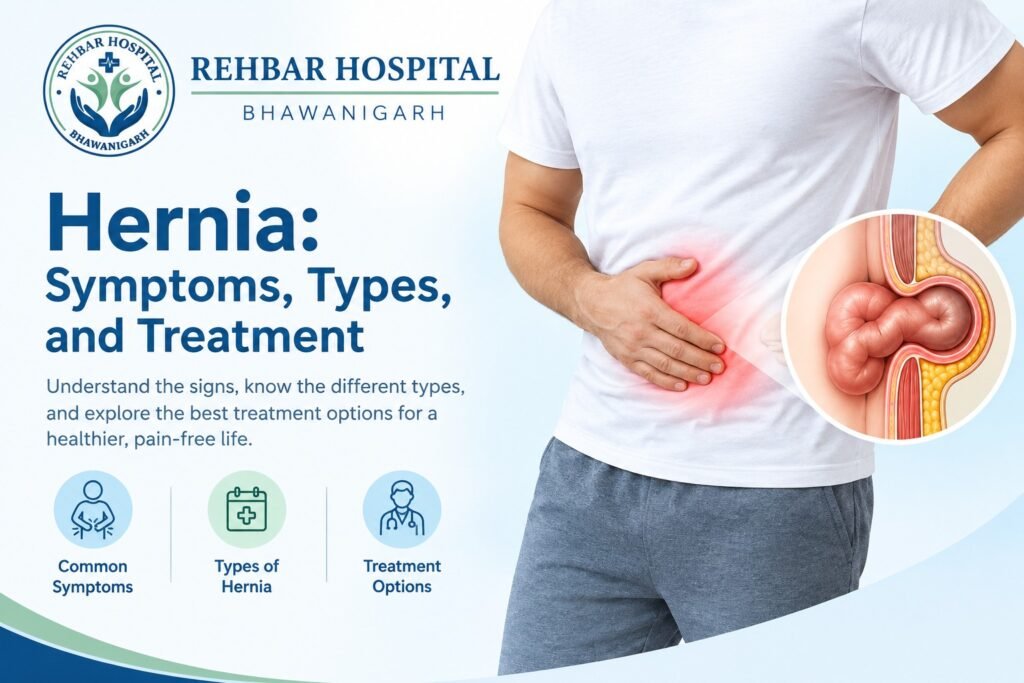
Hernia: Symptoms, Types, and Treatment A hernia is a common health problem that can affect people of all ages. It happens when an organ or tissue pushes through a weak area in the muscle or tissue around it. In many cases, a hernia causes a lump or swelling. However, some hernias may not cause any clear signs at first. If you notice a new lump, pain, or swelling in your stomach or groin, you should get it checked by a doctor. Getting help early can help find the right treatment and lower the risk of serious problems. What Is a Hernia? A hernia happens when part of an organ or tissue pushes through a weak area in the muscle or tissue that normally keeps it in place. Hernias often develop in the stomach area or groin. One common sign is a soft lump that becomes easier to see when you cough, sneeze, bend, or lift something heavy. Some hernias can cause pain or discomfort, while others may not cause any pain. A hernia usually does not go away by itself. So, it is important to talk to a doctor if you think you may have a hernia. What Causes a Hernia? A hernia can happen when there is a weak area in the muscle and there is extra pressure inside the stomach area. Some common causes and risk factors include: Lifting heavy things Long-term coughing Constipation and pushing hard while passing stool Being overweight Pregnancy Weak muscles due to age Past stomach surgery Extra pressure inside the stomach Sometimes, a person may have a weak area in the muscle from birth. A hernia may then appear later in life. Common Hernia Symptoms Hernia symptoms can be different for each person. Some people may only notice a small lump, while others may have pain or a feeling of pressure. Common symptoms include: A lump or bulge in the stomach or groin Pain or discomfort around the lump A feeling of pressure or heaviness Burning or aching in the affected area Pain while coughing, bending, or lifting Swelling that becomes easier to see when standing A lump that becomes smaller when lying down However, some hernias may not cause any symptoms. Therefore, you should see a doctor if you notice a new or unusual lump or swelling. Types of Hernia There are different types of hernia. The type depends on where the hernia develops. 1. Inguinal Hernia An inguinal hernia develops in the groin area. It is one of the most common types of hernia. It can cause a lump or bulge in the groin. The lump may become more visible when you cough, bend, or lift something heavy. Some people may also feel pain, burning, or pressure in the groin. 2. Umbilical Hernia An umbilical hernia develops near the belly button. It happens when tissue pushes through a weak area around the belly button. Umbilical hernias are common in babies, but adults can also have them. In adults, the swelling may cause pain or discomfort, especially when coughing or pushing hard. 3. Femoral Hernia A femoral hernia develops near the groin or upper thigh. It is less common than an inguinal hernia. Some femoral hernias can cause serious problems. So, you should see a doctor if you notice a new lump or swelling near your groin or upper thigh. 4. Hiatal Hernia A hiatal hernia is different from other types of hernia. It happens when part of the stomach moves up through an opening in the muscle below the chest. A small hiatal hernia may not cause any signs. However, a larger one may cause: Heartburn Acid coming back into the mouth Trouble swallowing Chest or stomach pain Feeling full quickly 5. Incisional Hernia An incisional hernia can develop near the place where you had stomach surgery before. It can happen when the muscles in that area become weak. If you notice a new lump near an old surgery mark, talk to a doctor and get it checked. How Is a Hernia Diagnosed? In many cases, a doctor can find a hernia by doing a simple body check. The doctor may check the area while you are standing. You may also be asked to cough or push gently. This can make the hernia easier to see or feel. Sometimes, you may need a scan or other test. Depending on your condition, the doctor may suggest: Ultrasound CT scan MRI The test you need depends on the type and location of the hernia. Hernia Treatment The right hernia treatment depends on a few things. These include the type of hernia, its size, your symptoms, and your general health. Watchful Waiting Some small hernias that do not cause pain or other problems may only need regular checks. However, it is still important to follow your doctor’s advice. A hernia can change over time. Your doctor can tell you if you need treatment. Medicines However, medicines cannot fix most hernias. However, they may help control some symptoms. For example, medicines may help control heartburn and acid coming back into the mouth in people with a hiatal hernia. Hernia Surgery Hernia surgery may be needed when a hernia causes pain, gets bigger, or may cause serious problems. There are two common ways to repair a hernia: Open hernia surgery: The surgeon makes one cut near the hernia and fixes the weak area. Keyhole surgery: The surgeon makes small cuts and uses a small camera to repair the hernia. In some cases, the surgeon may use a special mesh to make the weak area stronger. The right surgery depends on the type and size of the hernia and your overall health. When Is Hernia Surgery Needed? Not every hernia needs surgery right away. However, surgery may be needed when: The hernia causes regular pain The lump is getting bigger The hernia makes daily activities difficult The lump cannot be pushed back inside There is a chance that the bowel may get stuck Your surgeon will check your

first pregnancy ultrasound
blog

First Pregnancy Ultrasound: What to Expect | Rehbar Hospital Bhawanigarh

What to Expect During Your First Pregnancy Ultrasound Finding out that you are pregnant is an exciting moment. Along with the happiness, you may also have many questions. One common question is: What happens during the first pregnancy ultrasound? Your first ultrasound is an important part of early pregnancy care. It helps your doctor see the pregnancy and check how it is developing. It can also help estimate how far along you are and may help confirm your due date. If this is your first pregnancy, it is normal to feel a little nervous. However, knowing what to expect can help you feel more comfortable. What Is a Pregnancy Ultrasound? A pregnancy ultrasound uses sound waves to create pictures of the baby inside the uterus. It does not use X-rays or radiation. During the scan, a healthcare professional uses an ultrasound device to get a clear view of the pregnancy. The images appear on a screen. Your doctor may suggest an ultrasound during the first few weeks or later in the first trimester, depending on your pregnancy and medical needs. When Is the First Pregnancy Ultrasound Done? The timing of your first ultrasound can be different for each woman. Some women have an early pregnancy ultrasound in the first trimester. A scan around 10 to 14 weeks may be use as a dating scan to check how far the pregnancy has progress and to estimate the due date. Your doctor may also suggest an earlier scan if there is a medical reason to check the pregnancy. Therefore, do not worry if your doctor recommends a different time for your first scan. Your healthcare provider will choose the timing based on your needs. Why Is the First Ultrasound Important? The first pregnancy ultrasound can provide useful information about your pregnancy. It may help your doctor: Check the pregnancy and its development Estimate how many weeks pregnant you are Estimate or confirm your due date Check if there is more than one baby Check the baby’s size and growth Look at the baby’s heartbeat when it can be seen at that stage Check the location of the pregnancy First-trimester ultrasound measurements are also consider very useful for estimating pregnancy age. However, every pregnancy is different. Your doctor will explain what can be seen during your particular scan. How Should You Prepare for Your First Ultrasound? In most cases, there is not much preparation need. However, your doctor or ultrasound centre may give you specific instructions. For some early pregnancy scans, you may be ask to drink water before the scan and have a full bladder. A full bladder can sometimes help create a clearer image. So, it is best to follow the instructions given by your healthcare provider. You should also bring any previous pregnancy or medical reports if your doctor has asked you to do so. What Happens During the Ultrasound? The process is usually simple. 1. You will be ask to lie down For an abdominal ultrasound, you will usually lie on your back. Your lower abdomen may need to be expose. 2. Gel is place on your abdomen The healthcare professional applies a clear gel to your skin. This helps the ultrasound device move smoothly and improves contact with the skin. 3. The ultrasound probe is move over your abdomen A small device call a probe is gently move over your abdomen. It sends sound waves into the body and creates images on the screen. 4. The doctor or sonographer checks the images The healthcare professional may take measurements and look at the pregnancy from different angles. Sometimes, you may need to change your position so that a clearer image can be taken. Can the First Pregnancy Ultrasound Be Internal? Sometimes, yes. An early pregnancy ultrasound may be done through the vagina. This is call a transvaginal ultrasound. During this scan, a specially designed ultrasound probe is cover and gently place inside the vagina. This method can provide a closer view of the uterus and early pregnancy. Your doctor will decide which type of ultrasound is suitable for you. If you are having a transvaginal ultrasound, you can tell the healthcare professional if you feel uncomfortable. You can also ask questions before the scan starts. How Long Does a Pregnancy Ultrasound Take? The time can vary depending on the type of scan and what the doctor needs to check. A routine pregnancy ultrasound may take around 20 to 30 minutes, although it can sometimes take longer if clear images are difficult to get. So, it is a good idea to keep some extra time free for your appointment. Is the First Pregnancy Ultrasound Painful? An abdominal ultrasound is usually painless. You may feel some pressure when the probe is move over your abdomen. A transvaginal ultrasound may feel slightly uncomfortable for some women. If you feel pain or discomfort, tell the healthcare professional performing the scan. Your comfort is important, so do not hesitate to speak up. What Can You See During Your First Ultrasound? What you can see depends on how many weeks pregnant you are. During an early scan, the healthcare professional may be able to see the pregnancy and measure the baby. At the right stage, the baby’s heartbeat may also be visible. As the pregnancy grows, more parts of the baby’s body can be seen. It is important to remember that an early ultrasound cannot show everything. Some body parts and organs are too small to see clearly at this stage. Can an Ultrasound Tell Your Baby’s Gender? Usually, the first pregnancy ultrasound is not done to determine the baby’s sex. The main purpose of an early scan is to check the pregnancy, its development, and the pregnancy age. If you want to know about the baby’s sex, ask your doctor about when it may be possible to find out. This can depend on the stage of pregnancy, the baby’s position, and local medical practices. Is Pregnancy Ultrasound Safe? Ultrasound uses sound waves rather

PCOS in young women
blog

PCOS in Young Women: Symptoms, Causes & Treatment Options

PCOS in Young Women: Symptoms, Causes & Treatment Options PCOS in young women is a common health concern. It can affect periods, skin, hair, weight, and fertility. PCOS stands for Polycystic Ovary Syndrome. Many young women notice changes in their periods or skin. Some may also notice extra facial hair or scalp hair thinning. These changes can be symptoms of PCOS. However, other health problems can cause similar signs. So, a proper medical check is important. The good news is that PCOS can be managed. A healthy lifestyle and the right treatment can help control symptoms. Regular care can also support long-term health. In this guide, we explain PCOS symptoms in young women, PCOS causes, diagnosis, and PCOS treatment options. We also cover PCOS in teenagers, PCOS and irregular periods, PCOS and fertility, and daily PCOS management. What Is PCOS? PCOS is a condition linked to changes in hormones and ovulation. It can also affect how the body uses insulin. For some women, PCOS can cause irregular periods. It can also cause acne, extra facial hair, or scalp hair thinning. In addition, some women may have trouble getting pregnant. Despite the name, PCOS does not always mean that a woman has ovarian cysts. Instead, doctors look at several signs when they check for PCOS. PCOS can start during the teen years. However, doctors need to take extra care when checking PCOS in teenagers. Normal changes during puberty can look like some PCOS symptoms. Common PCOS Symptoms in Young Women PCOS symptoms in young women can vary from person to person. Some women have only a few signs. Others may have several signs at the same time. Common signs include: Irregular periods Missed periods Acne and oily skin Extra facial or body hair Hair thinning Weight gain or trouble managing weight Irregular ovulation Trouble getting pregnant Mood and emotional changes However, these signs do not always mean that you have PCOS. A doctor should check your symptoms before making a diagnosis. 1. Irregular or Missed Periods PCOS and irregular periods often occur together. PCOS can affect ovulation. As a result, periods may not come on a regular schedule. You may notice that your periods: Come very late Come less often Stop for several weeks or months Follow an uneven cycle Change from month to month Still, PCOS is not the only cause of irregular periods. Stress, weight changes, thyroid problems, and other health issues can also affect your cycle. Therefore, finding the cause is important. 2. Acne and Oily Skin Hormone changes can cause acne and oily skin. For example, you may notice acne on your: Face Chest Back Jawline However, acne alone does not mean that you have PCOS. Ongoing acne with irregular periods or extra facial hair may need a medical check. 3. Extra Facial or Body Hair Some women with PCOS develop more facial or body hair. This change is called hirsutism. Extra hair may appear on the: Chin Upper lip Chest Stomach Also, higher androgen activity can play a role in this symptom. However, other health conditions can cause extra hair growth. So, a medical check can help find the cause. 4. Hair Thinning PCOS may also cause scalp hair thinning. You may notice less hair around the top or front of your scalp. However, hair loss can have many causes. For this reason, a doctor should check ongoing hair loss. 5. Weight Changes Some women with PCOS gain weight or find weight management harder. However, PCOS can affect women of different body sizes. Therefore, body weight alone cannot confirm or rule out PCOS. Instead, a healthy approach should focus on overall health and daily habits. 6. Difficulty Getting Pregnant PCOS and fertility  are often linked because PCOS can affect ovulation. When ovulation does not happen regularly, pregnancy may become harder for some women. However, PCOS does not mean that you cannot become pregnant. Many women with PCOS can become pregnant with the right care and treatment. 7. Mood and Emotional Health PCOS can affect more than physical health. Some women also have anxiety, low mood, or other emotional concerns. Therefore, emotional health should be part of PCOS care. The international PCOS guideline also recommends attention to mental health and quality of life. What Causes PCOS? The exact PCOS causes are not fully known. However, several factors may play a role. Hormonal Changes Hormones help control periods and ovulation. In PCOS, hormone levels can change. For example, higher androgen activity may contribute to acne and extra hair growth. Also, hormone changes can affect regular ovulation. Insulin Resistance Insulin helps the body use blood sugar for energy. Some women with PCOS have insulin resistance. This means the body does not respond to insulin as well as it should. As a result, the body may make more insulin. Higher insulin levels can affect hormone activity and ovulation. Family History PCOS can also run in families. For example, your risk may be higher if a close family member has PCOS. Still, a family history does not mean that you will develop PCOS. Can Unhealthy Food Cause PCOS? No single food causes PCOS. In fact, PCOS has several possible causes and risk factors. Hormonal, genetic, and metabolic factors can all play a role. At the same time, healthy food and regular activity can support overall health and PCOS management. How Is PCOS Diagnosed? If you have possible symptoms of PCOS, your doctor will first ask about your health. For example, your doctor may ask about: Menstrual cycle Medical history Family history Skin and hair changes Weight changes Pregnancy plans Other health concerns Your doctor may also suggest blood tests. These tests can check hormone levels and other health markers. In some adults, an ultrasound may also be part of the assessment. However, the approach is different for teenagers. Current international guidance recommends careful assessment in adolescents because normal puberty can overlap with PCOS symptoms. In adolescents, both ovulation problems and signs of higher androgen levels are important for diagnosis. Other causes

blog

Fracture Care 101: From Casting to Full Recovery

Fracture Care 101: From Casting to Full Recovery A fracture, also called a broken bone, can happen after a fall, road accident, sports injury, or a sudden impact. It can be painful and may make simple daily activities difficult. However, with the right treatment and proper care, most fractures can heal well. Fracture care is not only about putting a cast on the injured area. It starts with a proper check-up and diagnosis and continues through treatment, follow-up visits, and rehabilitation. In this guide, we will explain the basic steps of fracture care, from the first hospital visit to a safe return to normal activities. What Is a Fracture? A fracture happens when a bone breaks or develops a crack. The injury can be small or serious, depending on the force of the injury and the bone involved. Some common causes of fractures include: Falls Road accidents Sports injuries Direct blows or strong impact Twisting injuries Weak bones A fracture can affect the arm, wrist, leg, ankle, foot, shoulder, or other parts of the body. Common signs of a fracture include pain, swelling, bruising, difficulty moving the injured area, and an unusual shape of the limb. If you think you have a fracture, it is important to get medical attention rather than trying to treat it yourself. Step 1: Get the Injury Checked The first step in fracture care is a proper medical examination. An orthopaedic doctor will check the injured area and ask how the injury happened. An X-ray is often used to confirm whether a bone is broken and to understand the location and type of fracture. In some cases, other scans may also be needed. At Rehbar Hospital, the Orthopedics department provides fracture care with on-site X-ray and diagnostic support when needed. This helps doctors assess the injury and plan the right treatment. Step 2: Choosing the Right Fracture Treatment Not every fracture needs the same treatment. The treatment depends on the location of the fracture, how serious it is, and whether the bone has moved out of its normal position. Depending on the injury, treatment may include: A splint A plaster or fiberglass cast A brace Rest and activity changes Surgery Physiotherapy A cast or splint helps keep the broken bone in the right position while it heals. In more serious fractures, surgery may be needed. Plates, screws, rods, or other methods may be used to hold the bone in place. Your orthopaedic doctor will explain the available treatment options and help decide what is suitable for your injury. Step 3: Understanding Your Cast A cast is commonly used to support a broken bone while it heals. It helps keep the injured area still and protects the bone from unnecessary movement. If you have a cast, follow your doctor’s instructions carefully. Here are some simple cast care tips: Keep the Cast Dry Water can damage some types of casts and may also cause skin problems underneath. Keep your cast dry while bathing or showering. Do Not Put Anything Inside the Cast An itchy cast can be uncomfortable. However, do not put a pen, stick, or other object inside the cast to scratch your skin. This can cause skin damage or infection. Keep the Injured Area Raised For the first few days, raising the injured arm or leg can help reduce swelling. Your doctor may also suggest other ways to manage swelling and pain. Follow Weight-Bearing Instructions If you have a leg or foot fracture, do not put weight on the injured limb until your doctor says it is safe. Using the leg too early can affect healing. Step 4: Follow-Up Visits Matter Getting a cast or treatment is only the beginning of fracture recovery. Follow-up appointments allow your doctor to check how the bone is healing. Your doctor may recommend another X-ray or other tests depending on your injury. These visits are important because a fracture may not be fully healed just because the pain has become better. In fact, pain can improve before the bone is strong enough for normal activities. Therefore, do not return to heavy work, sports, or other demanding activities until your doctor gives you the go-ahead. Step 5: Start Rehabilitation After a period of rest or immobilisation, the injured area may feel stiff or weak. This is common after a fracture. This is where physiotherapy can help. A physiotherapist may guide you through simple exercises to: Improve joint movement Build muscle strength Reduce stiffness Improve flexibility Help you return to daily activities The exercises should be done according to your doctor’s or physiotherapist’s advice. Do not try difficult exercises too soon, as the bone needs enough time to heal. Rehbar Hospital provides physiotherapy support as part of its orthopaedic care, helping patients work towards better movement and recovery after an injury or surgery. How Long Does a Fracture Take to Heal? There is no single healing time for every fracture. Some small fractures may heal in a few weeks, while other fractures can take several months. The healing time depends on the type and location of the fracture. Also, a person’s age, health, and following the treatment plan can affect how quickly the bone heals. For example, a broken arm or wrist may take around 6 to 8 weeks in many cases, while a broken leg can take around 6 to 12 weeks. However, these are general time ranges, and your own recovery may be different. So, it is better to focus on steady healing instead of trying to recover as quickly as possible. When Should You Contact Your Doctor? Some discomfort can be expected after a fracture. However, certain symptoms need medical attention. Contact your doctor or seek urgent medical help if you notice: Increasing or severe pain New or increasing swelling Numbness or tingling Fingers or toes becoming blue, white, or very swollen A cast that feels extremely tight or loose A broken or damaged cast Bad smell or discharge from under the cast Fever Difficulty moving your