
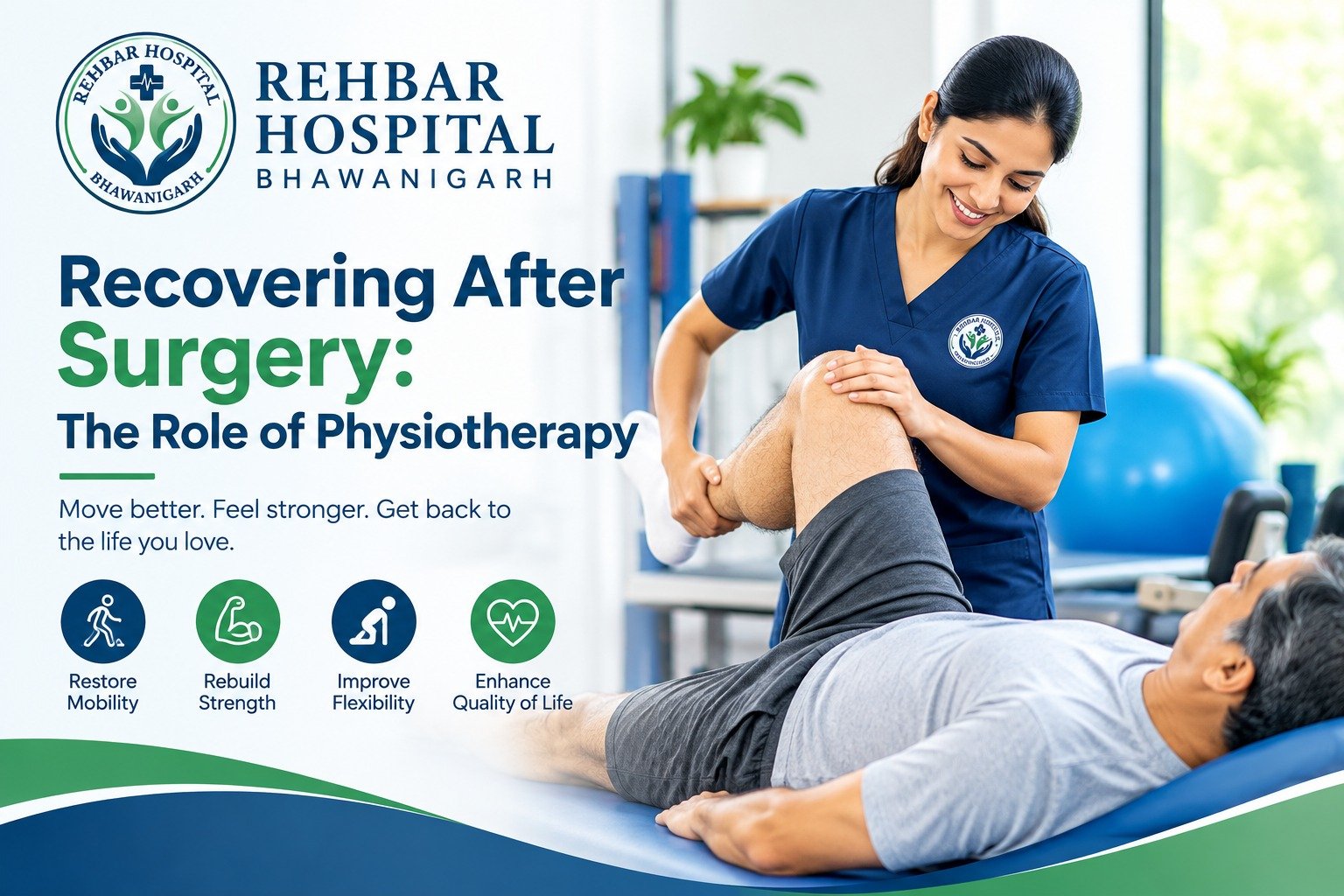
Recovering After Surgery: How Physiotherapy Can Help
Surgery is often the first step toward better health. However, recovery takes time. Your body needs time to heal and get strong again. Physiotherapy after surgery can help you during this time. Also, after surgery, you may have pain, swelling, or weakness. You may also find it hard to move. Simple tasks can feel difficult. For example, walking, standing, using stairs, or moving your arm may take more effort.
With the right care, you can slowly get back to your normal life. So, physiotherapy after surgery can help you move better, build strength, and do daily tasks more easily. At Rehbar Hospital, Bhawanigarh, physiotherapy is part of care after surgery, injury, or illness. The hospital also offers bone and joint care to help patients move and recover.
What Is Physiotherapy After Surgery?
Post-surgery physiotherapy means doing safe exercises after an operation. These exercises are chosen based on your health and the type of surgery you had. After surgery, you may not be able to move as well as before. Also, your muscles can become weak if you stay in bed for a long time.
Next, a physiotherapist can check your movement and muscle strength. They can then make a simple exercise plan for you.
Your plan may include:
- Gentle exercises
- Stretching
- Strength exercises
- Walking practice
- Balance exercises
- Joint movement exercises
- Exercises to do at home
- Tips for safe movement
The main goal is simple. Physiotherapy helps you move safely while your body heals.
Why Is Physiotherapy Important After Surgery?
Recovery takes time. So, do not try to return to your normal routine too fast.
However, staying in bed for too long can make your muscles weak. It can also make your body stiff. So, the right amount of movement may help you recover. For this reason, physiotherapy can be an important part of recovery.
Here are some ways physiotherapy may help.
1. It Helps You Move Better
After surgery, you may find it hard to move your arm, leg, knee, shoulder, or another part of your body. The right exercises can help you move better over time. Also, your physiotherapist can show you how to move in a safe way. As you get stronger, your exercises may become a little harder. This can help you make steady progress.
2. It Helps Build Muscle Strength
Your muscles may become weak after surgery. This can happen when you are less active than usual. However, simple exercises can help you build your strength again. When your muscles become stronger, daily tasks may become easier. For example, you may find it easier to walk, stand, sit, or use stairs.
3. It Can Help Reduce Stiffness
Less movement can make your body feel stiff. This can happen after many types of surgery. Also, gentle movement and stretching may help you move more easily. However, do not force your body to move. Always follow the advice of your doctor or physiotherapist.
4. It Helps You Return to Daily Activities
Most people want to get back to their normal life after surgery. However, it is better to take things one step at a time. Physiotherapy can teach you how to move safely.
For example, you can slowly work on tasks such as:
- Walking
- Getting out of bed
- Using stairs
- Sitting and standing
- Doing simple daily tasks
Your recovery time will depend on your surgery and general health.
5. It Supports Your Recovery
Physiotherapy is not only about exercise. It also teaches you how to move safely. For example, your physiotherapist may show you the right way to walk after surgery.
They can also check your progress. If needed, they can change your exercise plan. In this way, your plan can change as you get better.
When Should Physiotherapy Start After Surgery?
There is no set time for everyone. In some cases, gentle movement may start soon after surgery. However, some people may need more rest before they start certain exercises. Your doctor can tell you when it is safe to start. Also, your physiotherapist can tell you which exercises are right for you.
Most importantly, do not compare your recovery with someone else’s. Every patient is different. Your surgery, age, health, and recovery needs may not be the same as another person’s.
What Happens During a Physiotherapy Session?
Your first session may start with a simple check.
The physiotherapist may check:
- pain
- body movement
- muscle strength
- balance
- The way you walk
- Your ability to do daily tasks
After this check, they can make a recovery plan for you. At first, the exercises may be very easy. Then, they may become harder as you get stronger. Your physiotherapist may also give you exercises to do at home.
Simple Tips for Recovery After Surgery
Physiotherapy is only one part of recovery. Also, your daily habits are important.
Here are some simple tips that may help you.
Follow Your Doctor’s Advice
First, follow the advice given by your doctor. Take your medicines as advised. Also, go to your follow-up visits on time. If your doctor tells you to rest, make sure you get enough rest.
Do Your Exercises Regularly
Your physiotherapist may give you exercises to do at home. Try to do them as advised. However, do not add new exercises on your own. Doing too much too soon may slow your recovery. So, follow your exercise plan.
Get Enough Rest
Your body needs rest after surgery. Get enough sleep and give your body time to rest. At the same time, follow the movement plan given by your care team.
Eat Healthy Food
Healthy food can help your body heal. Try to eat a balanced diet. Also, choose healthy foods and drink enough water unless your doctor tells you to limit fluids.
Increase Activity Slowly
You may feel better after a few days. However, this does not always mean that your body has fully healed. So, increase your activity slowly. Start with small steps. Then, slowly work toward your normal routine.
Tell Your Doctor About New Problems
Some pain and discomfort can be normal after surgery. However, new or very bad symptoms should not be ignored. For example, contact your doctor if you have severe pain, fever, unusual swelling, or wound problems. Also, get medical help if you have trouble breathing.
Physiotherapy After Orthopaedic Surgery
Physiotherapy can help after many types of orthopaedic surgery. Orthopaedic surgery may involve bones, joints, muscles, or other body parts that help you move. After surgery, you may have trouble walking or using the body part that was treated. Because of this, physiotherapy may be part of your recovery plan.
At Rehbar Hospital, Bhawanigarh, the Orthopaedics department provides care for bone, joint, and fracture problems. The hospital also provides help with movement and recovery after surgery or injury.
Depending on your condition, physiotherapy may focus on:
- Better joint movement
- Stronger muscles
- Better balance
- Safe walking
- Better body movement
- Returning to daily tasks
Your exercise plan will depend on your surgery and health.
How Long Does Physiotherapy After Surgery Take?
There is no set time for everyone. Some people may need physiotherapy for a few weeks. However, others may need it for a longer time.
Your recovery may depend on:
- The type of surgery
- age
- general health
- muscle strength
- movement before surgery
- How your body heals
- How well you follow your recovery plan
So, do not worry if your recovery takes more time than you expected. Your physiotherapist can check your progress. They can also guide you on the next step.
Can Physiotherapy Help You Get Back to Normal Life?
Yes, physiotherapy can help you return to daily life after surgery. However, recovery should be slow and safe. First, you may work on simple movements. Next, you may work on walking and strength. Later, you can slowly return to more daily tasks.
The goal is not to rush. Instead, the goal is to help you become stronger and move safely.
Why Choose Rehbar Hospital for Recovery Care?
Rehbar Hospital, Bhawanigarh provides care for patients during different stages of treatment and recovery. The hospital has departments for orthopaedics, general surgery, physiotherapy, emergency care, and other medical needs. Its website also states that physiotherapy helps with recovery and movement after surgery, injury, or illness.
The Orthopaedics department provides care for bone, joint, and fracture problems. It also offers physiotherapy and lifestyle advice for some joint problems.
For appointments or medical help, you can contact the hospital at +91 81462 44330. The hospital also provides 24×7 emergency support.
Frequently Asked Questions
Is physiotherapy needed after every surgery?
No. Every patient is different. Some patients may need physiotherapy after surgery. However, others may not. Your doctor can tell you if physiotherapy is right for you.
Can physiotherapy help with pain after surgery?
Physiotherapy may help you move better and reduce stiffness. This can help your recovery. However, pain can have many causes. So, talk to your doctor or physiotherapist about your pain.
Can I do physiotherapy at home?
Yes, some exercises can be done at home. First, learn the exercises from a trained physiotherapist. Then, make sure you know how to do them safely.
How often should I go for physiotherapy?
It depends on your surgery and recovery. Your physiotherapist will tell you how often you need treatment. They can also change your plan as you get better.
When can I return to work?
This depends on your surgery and the type of work you do. For example, a person with a desk job may return to work sooner than someone who needs to lift heavy items. So, ask your doctor when it is safe for you to return to work.
Conclusion
Recovery after surgery takes time. So, be patient with yourself. Follow your doctor’s advice. Also, do your recommended exercises and get enough rest. Most importantly, do not try to do too much too soon.
With the right care, physiotherapy after surgery can help you move better, build strength, and slowly return to your daily life. If you have recently had surgery, talk to your doctor about your recovery plan.
For orthopaedic care, physiotherapy, surgery, and recovery support, you can contact Rehbar Hospital, Bhawanigarh. The hospital provides physiotherapy and movement support after surgery, injury, or illness.
About Rehbar Hospital
Rehbar Hospital is a charitable hospital in Bhawanigarh, Punjab. It serves patients from Bhawanigarh and nearby areas. The hospital provides OPD, IPD, emergency care, orthopaedic care, surgery, physiotherapy, and other medical services.
Follow Rehbar Hospital
You can add the hospital’s official Facebook, Instagram here once the correct profile URLs are confirmed.
- Facebook: Rehbar Hospital
- Instagram: Rehbar Hospital
