

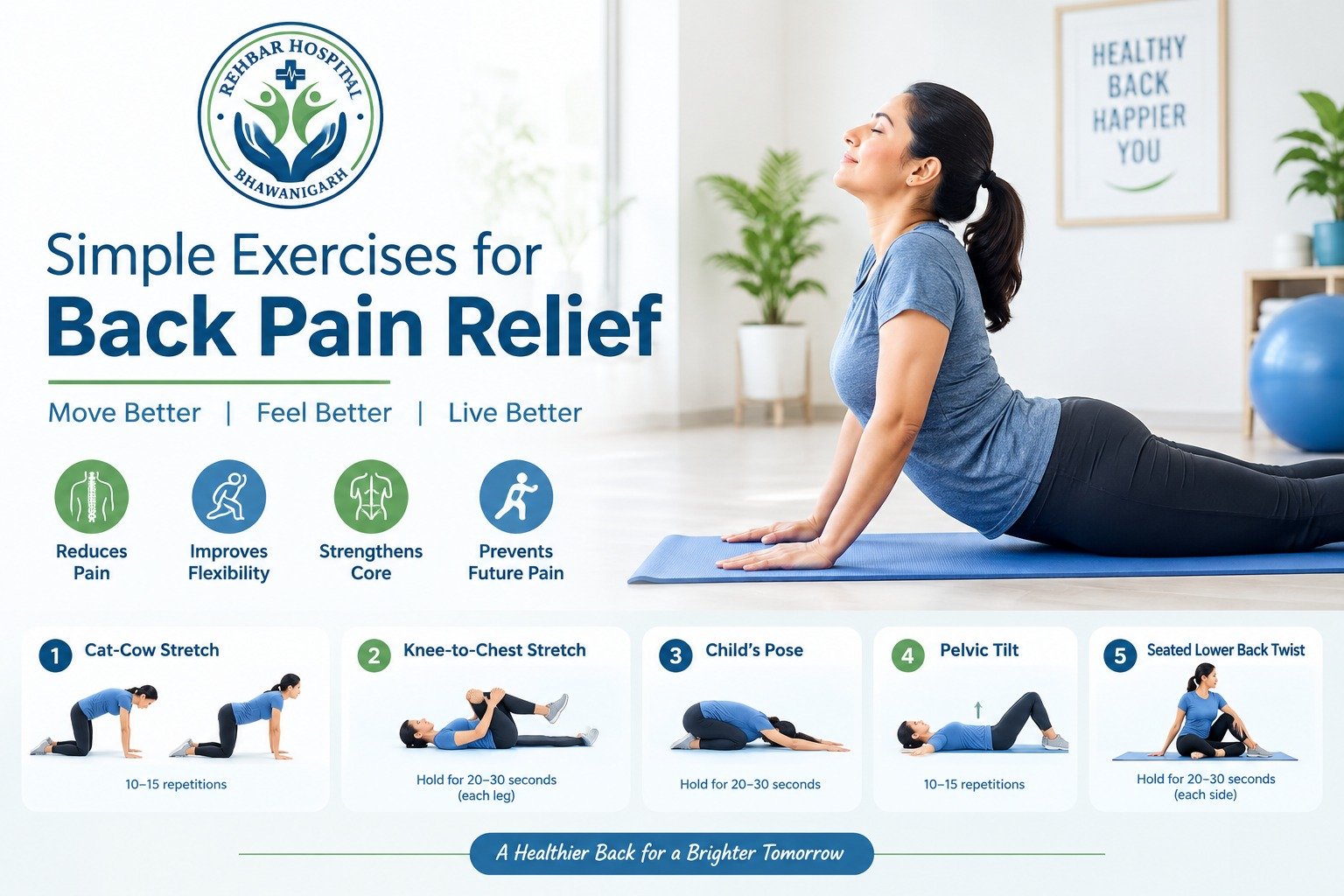
Simple Exercises for Back Pain Relief
Back pain is a common problem that can affect people of all ages. Sitting for long hours, poor posture, lack of movement, muscle strain, or an injury can sometimes lead to back pain. The good news is that gentle movement can help many people feel better and stay active. If you are looking for simple exercises for back pain relief, there are several easy movements you can try at home. These exercises can help improve movement, reduce stiffness, and support the muscles around your back.
However, every person’s back pain is different. If an exercise increases your pain, stop and speak with a doctor or physiotherapist. For ongoing or severe back pain, you can also consult the Orthopaedic Department at Rehbar Hospital for proper medical advice.
Why Are Exercises Helpful for Back Pain?
When you have back pain, it may feel better to stay in bed or avoid movement. However, staying inactive for too long can make your back stiff and may slow recovery. Staying active and doing suitable exercises can help improve movement and manage back pain.
Regular movement may help:
- Reduce back stiffness
- Improve flexibility
- Keep your back muscles active
- Improve your daily movement
- Support better posture
- Reduce the chance of future pain
The key is to start slowly and choose movements that feel comfortable.
7 Simple Exercises for Back Pain Relief
Here are some exercises for back pain relief that are simple and can be done at home. You do not need expensive equipment for most of them.
1. Knee-to-Chest Stretch
The knee-to-chest stretch is one of the easy stretches for back pain relief.
How to do it:
- Lie on your back on a comfortable surface.
- Bend both knees and keep your feet flat.
- Slowly bring one knee towards your chest.
- Hold it gently for a few seconds.
- Slowly lower your leg.
- Repeat with the other leg.
Do not pull your knee too hard. The movement should feel gentle and comfortable.
2. Knee Rolls
Knee rolls are simple movements that can help improve lower back movement.
How to do it:
- Lie on your back.
- Bend your knees and keep your feet on the floor.
- Keep your shoulders relaxed.
- Slowly move both knees to one side.
- Bring them back to the centre.
- Slowly move them to the other side.
Move slowly and avoid forcing your back. Knee rolls are commonly included in gentle back pain relief exercises.
3. Pelvic Tilt
Pelvic tilts are useful simple lower back exercises that can help you gently move and control the muscles around your lower back.
How to do it:
- Lie on your back with your knees bent.
- Keep your feet flat on the floor.
- Gently tighten your stomach muscles.
- Slowly press your lower back towards the floor.
- Hold for a few seconds.
- Relax and repeat.
Start with a small number of repetitions and increase slowly as you become more comfortable.
4. Cat-Cow Stretch
The cat-cow movement is a gentle way to move your spine.
How to do it:
- Get on your hands and knees.
- Keep your hands under your shoulders.
- Keep your knees under your hips.
- Slowly round your back upwards.
- Then gently lower your back and lift your chest.
- Move slowly between the two positions.
Do not make sudden movements. This can be one of the useful exercises to relieve back pain when done comfortably.
5. Glute Bridge
The glute bridge can help strengthen the muscles around your hips and lower back.
How to do it:
- Lie on your back with your knees bent.
- Keep your feet flat on the floor.
- Keep your arms by your sides.
- Tighten your stomach and hip muscles gently.
- Slowly lift your hips.
- Hold for a short time.
- Slowly lower your hips back to the floor.
Start with a few repetitions. If the movement causes pain, stop and get medical advice.
6. Gentle Walking
Walking is one of the easiest home exercises for back pain. You do not need special equipment, and you can start with a short walk.
Begin with a comfortable pace and a short distance. If you feel good, slowly increase your walking time.
Regular activities such as walking and swimming may help some people manage back pain and stay active.
7. Child’s Pose Stretch
This gentle stretch may help relax the back and hips.
How to do it:
- Start on your hands and knees.
- Slowly move your hips back towards your heels.
- Stretch your arms forward if comfortable.
- Keep your breathing slow and relaxed.
- Hold the position for a few seconds.
- Slowly return to the starting position.
If this position causes pain or feels uncomfortable, do not continue it.
Lower Back Pain Exercises for Beginners
If your main problem is pain in the lower back, start with simple movements. Lower back pain exercises should not be rushed.
You can start with:
- Gentle walking
- Knee-to-chest stretches
- Knee rolls
- Pelvic tilts
- Gentle back stretches
- Light strengthening exercises
Choose only movements that feel comfortable. You can gradually increase the number of repetitions as your body gets used to the exercises.
If you are not sure which exercises are suitable for you, the Orthopaedic Department at Rehbar Hospital can help you understand your condition and guide you towards suitable care.
How Often Should You Do These Exercises?
There is no single exercise routine that works for everyone with back pain. Start slowly and listen to your body. For example, you can begin with a few gentle movements once a day. If they feel comfortable, you can slowly increase the repetitions or duration.
The goal is not to exercise as hard as possible. The goal is to keep moving without making your pain worse.
Tips for Safe Back Pain Exercises
Keep these simple tips in mind when doing daily exercises for back pain:
- Start slowly.
- Warm up with gentle movement.
- Do not force a stretch.
- Keep your movements controlled.
- Avoid sudden twisting.
- Stop if your pain becomes worse.
- Increase exercise slowly.
- Take short breaks if needed.
- Stay active during the day.
- Speak with a healthcare professional if you are unsure about an exercise.
Gentle exercise should not significantly increase your symptoms. If your pain becomes much worse during or after exercise, stop and seek professional advice.
When Should You See a Doctor for Back Pain?
Most common back pain gets better with time, but some symptoms need medical attention. You should speak with a doctor if your back pain does not improve after a few weeks, affects your daily activities, or is getting worse.
If you have ongoing back pain, consulting the Orthopaedic Department at Rehbar Hospital can help you get a proper evaluation. An orthopaedic doctor can assess your symptoms and suggest suitable treatment based on the possible cause of your back pain.
Get urgent medical help if your back pain comes with symptoms such as:
- Severe pain that starts suddenly
- Pain after a serious accident
- Weakness or numbness in both legs
- Loss of feeling around the private area
- Problems controlling your bladder or bowel
- Fever or feeling very unwell
- Pain that is getting worse quickly
These symptoms should not be treated with home exercises alone. Seek medical attention as soon as possible.
Can Exercise Prevent Back Pain?
Regular physical activity can help keep your muscles active and reduce stiffness. Walking, swimming, yoga, and Pilates are some activities that may help with back pain.
Along with exercise, simple daily habits can also help. Try to avoid sitting in one position for too long. Take short movement breaks, use a comfortable sitting position, and stay active throughout the day.
Conclusion
Back pain can make everyday activities difficult, but gentle movement can be a useful part of managing many types of back pain. The simple exercises for back pain relief discussed in this guide can be a starting point for people who want to stay active at home. Start with easy movements, go slowly, and never force your body. If your pain is severe, continues for several weeks, or comes with other concerning symptoms, speak with a healthcare professional.
At Rehbar Hospital, patients can receive medical care for bone, joint, muscle, and movement-related conditions. The Orthopaedic Department at Rehbar Hospital provides medical evaluation and care for people experiencing different orthopaedic problems, including back and joint concerns. For persistent or severe back pain, getting the right diagnosis is important. A doctor can help identify the possible cause of your pain and guide you towards suitable treatment and exercises.
If your back pain is affecting your daily life, consider speaking with the Orthopaedic Department at Rehbar Hospital for professional guidance rather than relying only on home exercises.
Frequently Asked Questions
What are the best simple exercises for back pain relief?
Gentle walking, knee-to-chest stretches, knee rolls, pelvic tilts, and other easy back movements may help some people with back pain. The right exercise depends on the cause and type of pain.
Can I do back pain exercises at home?
Yes. Many gentle home exercises for back pain can be done without equipment. Start slowly and stop if the exercise makes your pain worse.
How long should I exercise for back pain?
Start with a short and comfortable session. You can slowly increase the time and repetitions as your body gets used to the movement.
Are stretches good for lower back pain?
Gentle back stretches for pain relief may help reduce stiffness and improve movement for some people. Do not force a stretch, and stop if it increases your pain.
Can walking help with back pain?
Walking is a simple way to stay active and may help some people with back pain. Start with a comfortable distance and increase it slowly.
When should I see an orthopaedic doctor for back pain?
If your back pain continues, keeps coming back, affects your daily activities, or becomes worse, it is a good idea to seek medical advice. You can consult the Orthopaedic Department at Rehbar Hospital for an appropriate evaluation.
Does Rehbar Hospital provide orthopaedic care?
Yes, Rehbar Hospital has an Orthopaedic Department where patients can seek medical advice for bone, joint, muscle, and other orthopaedic concerns.
