
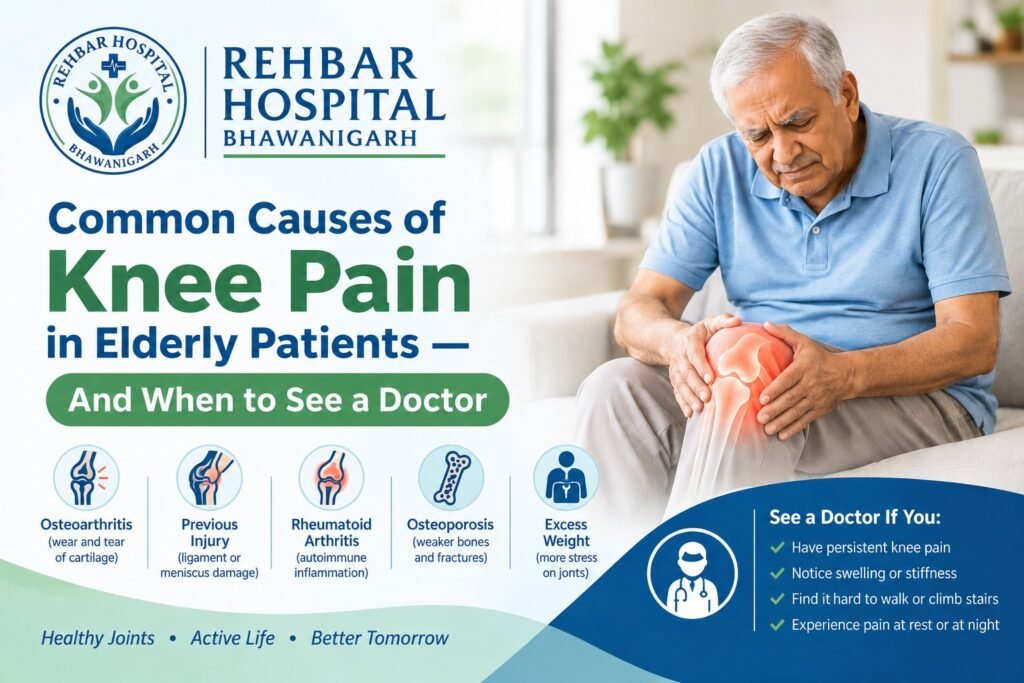
Common Causes of Knee Pain in Elderly Patients & When to See a Doctor
Common Causes of Knee Pain in Elderly Patients — And When to See a Doctor Knee pain is a common problem among old people. For example, knee pain can make daily activities more difficult.It may make walking, climbing stairs, standing up, or sitting down hard Sometimes, the pain may be low and come and go. However, in some cases, it can become severe and affect daily life. As we grow older, our joints may become weaker. Still, knee pain should not always be seen as a normal part of ageing. In some cases, there may be a joint or bone problem that needs proper care. Why Do Elderly People Get Knee Pain? The knee is one of the most important joints in the body. It helps us walk, stand, bend, and move. Also, it supports much of our body weight during daily activities. Over the years, the cartilage and other tissues inside the knee may become weak or worn. In addition, old injuries, extra weight, less physical activity, and some health problems can increase the risk of knee pain. Therefore, finding the cause of knee pain is important. This can help the doctor choose the right treatment and help prevent the problem from affecting your daily activities. Common Causes of Knee Pain in Elderly Patients There are many possible causes of knee pain in older adults. However, some causes are more common than others. Below are some of the main reasons why elderly people may experience knee pain. 1. Osteoarthritis Osteoarthritis is one of the most common causes of knee pain in elderly people. It happens when the protective cartilage inside the knee slowly wears down. As a result, the bones may rub against each other more than they should. This can lead to pain, stiffness, and swelling. Common symptoms include: Knee pain while walking Stiffness after sitting or resting Swelling around the knee Difficulty climbing stairs Pain while standing up Reduced knee movement Grinding or cracking sounds At first, the pain may be mild and happen only during certain activities. Over time, however, it may become more regular and make normal activities difficult. 2. Old Knee Injuries An old knee injury can sometimes cause problems later in life. For example, past ligament injuries, fractures, or cartilage damage may affect the knee joint. In addition, an old injury may increase the chance of developing joint problems as a person gets older. So, if you had a knee injury in the past and now have regular pain, tell your doctor about it during your check-up. 3. Gout Gout can cause sudden and serious joint pain. This condition happens when uric acid crystals build up inside a joint. Although gout often affects the big toe, it can also affect the knee. As a result, the knee may become painful, swollen, red, and warm. Therefore, if knee pain starts suddenly along with swelling and warmth, it is important to get medical advice. 4. Pseudogout Pseudogout is another condition that can cause sudden knee pain. It happens when certain calcium crystals build up inside the joint. As a result, the knee may become swollen, painful, and tender. Also, its symptoms can be similar to gout. Because of this, a doctor may need to examine the knee and perform tests to find the exact cause. 5. Bursitis The knee has small fluid-filled sacs called bursae. These sacs help reduce friction between the tissues around the joint. Sometimes, these sacs can become irritated and swollen. This condition is called bursitis. It may cause: Pain around the knee Swelling Tenderness Pain during movement In addition, bursitis can develop because of repeat pressure, overuse, or an injury. 6. Tendon Problems Tendons connect muscles to bones. When a tendon around the knee becomes irritated or damage, it may cause pain. For example, the pain may become worse while walking, climbing stairs, or doing other activities that put pressure on the knee. Also, older adults with a history of joint problems or repeated stress on the knee may be more likely to develop these problems. 7. Knee Injury After a Fall Falls can be a serious concern for old people. For example, a fall can cause a sprain, fracture, ligament injury, or other damage to the knee. If knee pain begins after a fall, do not ignore it. This is specially important if there is severe pain, swelling, or difficulty putting weight on the leg. In such cases, a doctor can check the knee and suggest the right treatment. 8. Rheumatoid Arthritis Rheumatoid arthritis is different from osteoarthritis. In this condition, the body’s immune system attacks the joints. It can cause: Joint pain Swelling Stiffness Reduce movement Tenderness In addition, the knees can be affected, but other joints may also hurt. Therefore, if an elderly person has ongoing pain or swelling in several joints, a medical check-up is important. What Can Increase the Risk of Knee Pain? Certain factors can increase the chance of knee pain in older adults. For example, age and past injuries can affect the health of the knee. Other risk factors include: Being overweight Previous knee injuries Lack of physical activity Weak muscles Repeat stress on the knee Several types of arthritis Previous knee surgery Also, extra body weight can put more pressure on the knees. At the same time, weak leg muscles may make it difficult for the knee to handle daily activities. Therefore, staying active and maintaining a healthy weight can be helpful for joint health. Common Symptoms of Knee Pain Knee pain does not feel the same for everyone. For some people, it may feel like a dull ache. For others, it may feel sharp or severe. You may also notice: Stiffness Swelling Tenderness Redness Warmth around the knee Difficulty walking Trouble bending the knee Trouble straightening the leg Weakness A feeling that the knee may give way Popping or grinding sounds If these symptoms continue or become worse, it is better to consult an orthopaedic doctor. When Should an Elderly Person