

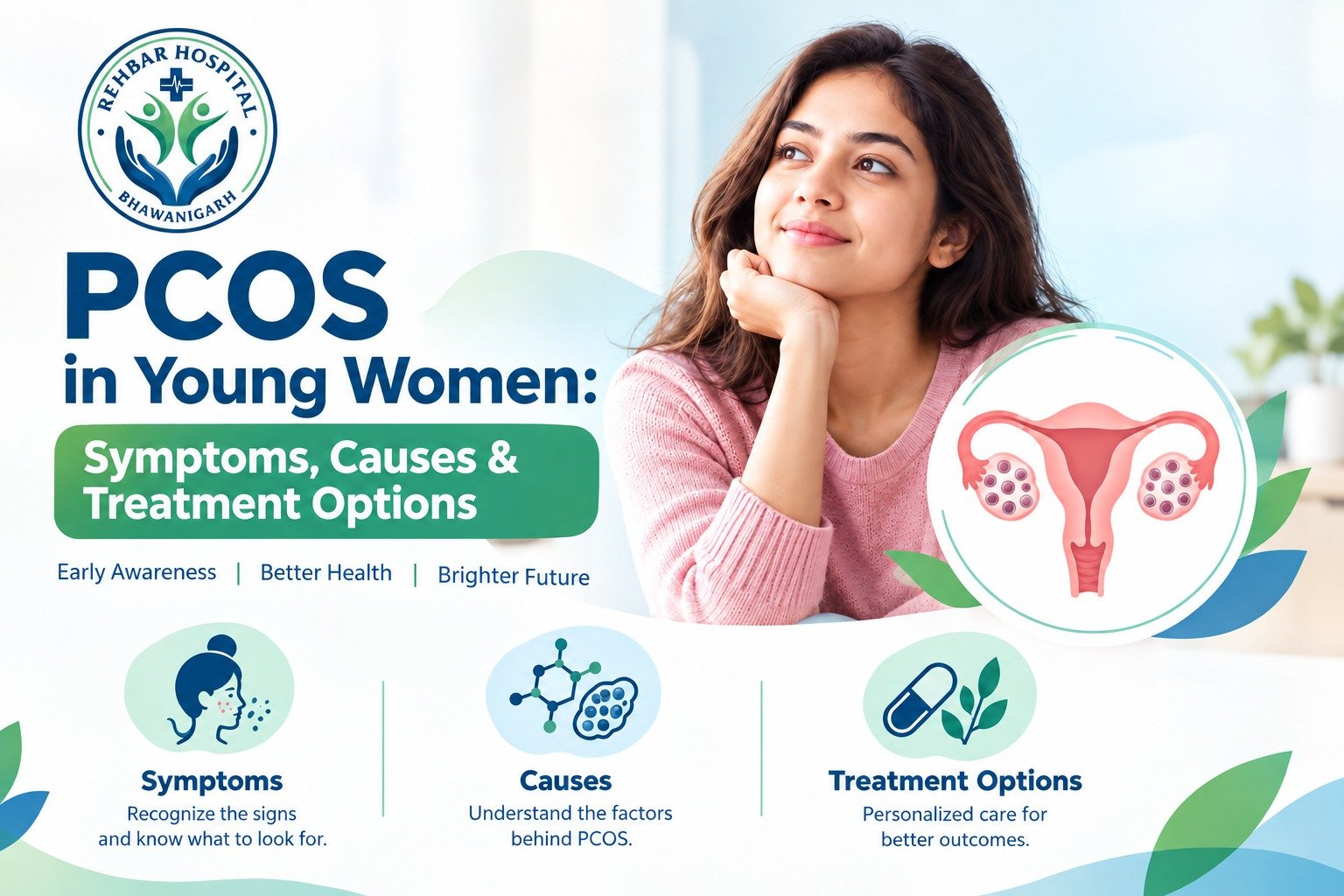
PCOS in Young Women: Symptoms, Causes & Treatment Options
PCOS in young women is a common health concern. It can affect periods, skin, hair, weight, and fertility. PCOS stands for Polycystic Ovary Syndrome. Many young women notice changes in their periods or skin. Some may also notice extra facial hair or scalp hair thinning. These changes can be symptoms of PCOS. However, other health problems can cause similar signs. So, a proper medical check is important.
The good news is that PCOS can be managed. A healthy lifestyle and the right treatment can help control symptoms. Regular care can also support long-term health. In this guide, we explain PCOS symptoms in young women, PCOS causes, diagnosis, and PCOS treatment options. We also cover PCOS in teenagers, PCOS and irregular periods, PCOS and fertility, and daily PCOS management.
What Is PCOS?
PCOS is a condition linked to changes in hormones and ovulation. It can also affect how the body uses insulin. For some women, PCOS can cause irregular periods. It can also cause acne, extra facial hair, or scalp hair thinning. In addition, some women may have trouble getting pregnant.
Despite the name, PCOS does not always mean that a woman has ovarian cysts. Instead, doctors look at several signs when they check for PCOS. PCOS can start during the teen years. However, doctors need to take extra care when checking PCOS in teenagers. Normal changes during puberty can look like some PCOS symptoms.
Common PCOS Symptoms in Young Women
PCOS symptoms in young women can vary from person to person. Some women have only a few signs. Others may have several signs at the same time.
Common signs include:
- Irregular periods
- Missed periods
- Acne and oily skin
- Extra facial or body hair
- Hair thinning
- Weight gain or trouble managing weight
- Irregular ovulation
- Trouble getting pregnant
- Mood and emotional changes
However, these signs do not always mean that you have PCOS. A doctor should check your symptoms before making a diagnosis.
1. Irregular or Missed Periods
PCOS and irregular periods often occur together. PCOS can affect ovulation. As a result, periods may not come on a regular schedule.
You may notice that your periods:
- Come very late
- Come less often
- Stop for several weeks or months
- Follow an uneven cycle
- Change from month to month
Still, PCOS is not the only cause of irregular periods. Stress, weight changes, thyroid problems, and other health issues can also affect your cycle. Therefore, finding the cause is important.
2. Acne and Oily Skin
Hormone changes can cause acne and oily skin.
For example, you may notice acne on your:
- Face
- Chest
- Back
- Jawline
However, acne alone does not mean that you have PCOS. Ongoing acne with irregular periods or extra facial hair may need a medical check.
3. Extra Facial or Body Hair
Some women with PCOS develop more facial or body hair. This change is called hirsutism.
Extra hair may appear on the:
- Chin
- Upper lip
- Chest
- Stomach
Also, higher androgen activity can play a role in this symptom. However, other health conditions can cause extra hair growth. So, a medical check can help find the cause.
4. Hair Thinning
PCOS may also cause scalp hair thinning. You may notice less hair around the top or front of your scalp. However, hair loss can have many causes. For this reason, a doctor should check ongoing hair loss.
5. Weight Changes
Some women with PCOS gain weight or find weight management harder. However, PCOS can affect women of different body sizes. Therefore, body weight alone cannot confirm or rule out PCOS. Instead, a healthy approach should focus on overall health and daily habits.
6. Difficulty Getting Pregnant
PCOS and fertility are often linked because PCOS can affect ovulation. When ovulation does not happen regularly, pregnancy may become harder for some women. However, PCOS does not mean that you cannot become pregnant. Many women with PCOS can become pregnant with the right care and treatment.
7. Mood and Emotional Health
PCOS can affect more than physical health. Some women also have anxiety, low mood, or other emotional concerns. Therefore, emotional health should be part of PCOS care. The international PCOS guideline also recommends attention to mental health and quality of life.
What Causes PCOS?
The exact PCOS causes are not fully known. However, several factors may play a role.
Hormonal Changes
Hormones help control periods and ovulation. In PCOS, hormone levels can change. For example, higher androgen activity may contribute to acne and extra hair growth. Also, hormone changes can affect regular ovulation.
Insulin Resistance
Insulin helps the body use blood sugar for energy. Some women with PCOS have insulin resistance. This means the body does not respond to insulin as well as it should. As a result, the body may make more insulin. Higher insulin levels can affect hormone activity and ovulation.
Family History
PCOS can also run in families. For example, your risk may be higher if a close family member has PCOS. Still, a family history does not mean that you will develop PCOS.
Can Unhealthy Food Cause PCOS?
No single food causes PCOS. In fact, PCOS has several possible causes and risk factors. Hormonal, genetic, and metabolic factors can all play a role. At the same time, healthy food and regular activity can support overall health and PCOS management.
How Is PCOS Diagnosed?
If you have possible symptoms of PCOS, your doctor will first ask about your health.
For example, your doctor may ask about:
- Menstrual cycle
- Medical history
- Family history
- Skin and hair changes
- Weight changes
- Pregnancy plans
- Other health concerns
Your doctor may also suggest blood tests. These tests can check hormone levels and other health markers. In some adults, an ultrasound may also be part of the assessment. However, the approach is different for teenagers.
Current international guidance recommends careful assessment in adolescents because normal puberty can overlap with PCOS symptoms. In adolescents, both ovulation problems and signs of higher androgen levels are important for diagnosis. Other causes should also be ruled out. Therefore, do not diagnose yourself from an ultrasound or a list of symptoms alone.
PCOS Treatment Options for Young Women
There is no single PCOS treatment that suits every woman.
Instead, your doctor will consider your symptoms, health, and personal goals.
Treatment may focus on periods, acne, hair growth, metabolic health, or fertility. Also, treatment can change over time as your needs change.
Common PCOS treatment options may include lifestyle changes and medicines.
1. Healthy Lifestyle Changes
A healthy lifestyle is an important part of PCOS care.
For example, try to:
- Eat balanced meals.
- Choose vegetables and fruits.
- Include whole grains and protein.
- Stay physically active.
- Get enough sleep.
- Manage daily stress.
- Avoid extreme diets.
You do not need a very strict diet. Instead, focus on small changes that you can follow for a long time. The international guideline supports healthy lifestyle habits as a key part of PCOS care.
2. Medicines for Irregular Periods
Some women may need medicine to manage irregular periods. For example, hormonal birth control may help some women manage periods and some PCOS symptoms. However, the right option depends on your health and whether you want to become pregnant. Therefore, discuss medicines with your doctor first.
3. Treatment for Acne and Extra Hair
PCOS-related acne and extra hair growth can affect confidence and daily life. Your doctor may suggest medicines or other treatments.
For hair removal, options may include:
- Shaving
- Waxing
- Electrolysis
- Laser treatment
Also, the best option depends on your symptoms and personal needs.
4. Metformin
Metformin is mainly used to manage blood sugar in people with type 2 diabetes. However, doctors may also use metformin for some women with PCOS. The choice depends on the person’s health and treatment needs. Therefore, do not start metformin without medical advice.
5. Fertility Treatment
PCOS can affect ovulation. As a result, some women may need help when trying to become pregnant. Your doctor can discuss fertility treatment if needed. The plan depends on your health, fertility history, and other factors. Also, current guidelines support evidence-based fertility care for women with PCOS.
PCOS in Teenagers: What Parents Should Know
PCOS in teenagers needs careful assessment. Periods can be irregular during the early years after the first period. Because of this, doctors need to look at the full picture. Parents and young women should speak with a healthcare professional if symptoms continue or cause concern.
These symptoms may include:
- Very irregular periods
- Ongoing acne
- Extra facial or body hair
- Significant hair thinning
- Other ongoing changes
Also, one symptom alone does not confirm PCOS. Current guidance says that doctors should look for both ongoing ovulation problems and signs of higher androgen levels in adolescents. Other causes should also be ruled out. Ultrasound and AMH are not recommended for diagnosing PCOS in teenagers.
Can PCOS Be Managed Naturally?
Healthy habits can support PCOS management. For example, regular physical activity, balanced meals, good sleep, and stress management can support overall health. However, be careful with products that promise a “natural cure” for PCOS. Some supplements may not have enough evidence. Also, some supplements can interact with medicines. Therefore, talk to your doctor before taking a supplement or herbal product.
PCOS and Fertility: Can You Get Pregnant?
Many women worry about PCOS and fertility. PCOS can affect ovulation. As a result, some women may take longer to become pregnant. However, PCOS does not mean that pregnancy is impossible. Many women with PCOS become pregnant with proper medical care. If you are planning a pregnancy, talk to a gynaecologist. Your doctor can check your health and discuss suitable options.
When Should You See a Doctor for PCOS?
You should speak with a doctor if you have:
- Very irregular periods
- Long gaps between periods
- Ongoing acne
- New facial hair
- Increased body hair
- Scalp hair thinning
- Unexplained weight changes
- Difficulty becoming pregnant
- Several possible PCOS symptoms
These symptoms can have many causes. Therefore, proper medical assessment is important.
PCOS Care at Rehbar Hospital
If you are worried about PCOS symptoms in young women, professional advice can help. At Rehbar Hospital, women can seek medical guidance for menstrual concerns, hormonal problems, PCOS, and fertility concerns. A qualified gynaecologist can review your symptoms and suggest suitable tests.
Then, your doctor can explain the right PCOS treatment options for your needs. Most importantly, avoid self-medication. Online advice cannot replace a personal medical assessment.
How to Manage PCOS in Daily Life
Good PCOS management starts with simple daily habits.
Eat Balanced Meals
Choose different types of healthy food.
Include:
- Vegetables
- Fruits
- Whole grains
- Protein
- Healthy fats
Stay Active
Regular physical activity supports overall health. It can also support blood sugar control and help with weight management. You do not need to start with a hard workout. Instead, begin with simple activities that you enjoy.
Get Enough Sleep
Try to follow a regular sleep routine. Good sleep supports physical and emotional health.
Manage Stress
Stress can affect your overall well-being.
For example, you can:
- Take a walk.
- Practise deep breathing.
- Enjoy a hobby.
- Spend time with family.
Keep Your Medical Appointments
Regular check-ups can help you track your symptoms. They also give your doctor a chance to adjust your treatment when needed.
FAQs
What are the common symptoms of PCOS in young women?
Common PCOS symptoms in young women include irregular periods, acne, extra facial or body hair, scalp hair thinning, and irregular ovulation. However, these symptoms can have other causes. So, talk to a doctor if you have concerns.
What are the main causes of PCOS?
The exact PCOS causes are not fully known. Hormonal changes, insulin resistance, and family history may play a role.
Can a thin woman have PCOS?
Yes. PCOS can affect women of different body sizes. Being overweight is not required to have PCOS.
Does PCOS mean I cannot get pregnant?
No, PCOS may make ovulation less regular. As a result, some women may find it harder to become pregnant. However, many women with PCOS can become pregnant with the right care.
Can PCOS cause irregular periods?
Yes, PCOS and irregular periods are commonly linked because PCOS can affect ovulation. However, many other conditions can also cause irregular periods.
