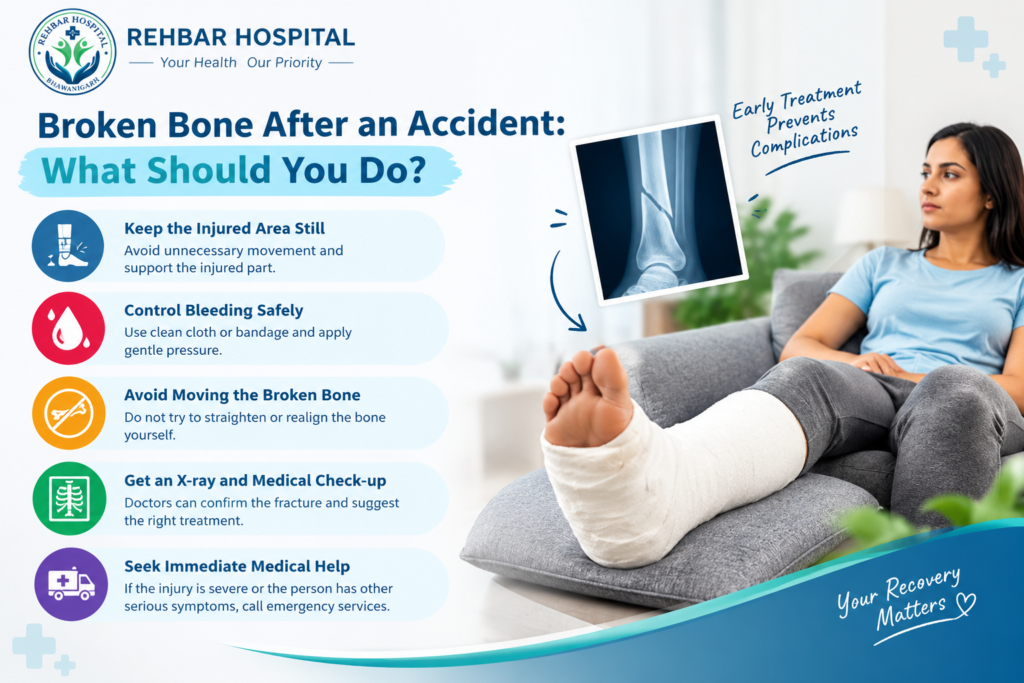
Broken Bone After an Accident: What Should You Do?
Broken Bone After an Accident can cause pain, swelling, bruising, and difficulty moving the injured body part. It can happen because of a road accident, a fall, a sports injury, or a sudden hit. Some fractures may look small, but others can damage nearby muscles, nerves, and blood vessels. Therefore, it is important to know what to do after a bone fracture. Proper first aid can protect the injured area until a doctor checks it. Early diagnosis and the right fracture treatment can also help prevent further problems and support faster recovery. At Rehbar Hospital, patient can seek medical help for accident-relate injuries and suspect bone fractures. If you think a bone is broke, visit a doctor as soon as possible. Do not try to treat the injury yourself. What Is a Broken Bone After an Accident? A broken bone, also called a fracture, happens when a bone cracks or break due to a strong hit, fall, or pressure. The seriousness of the injury depends on which bone is broke and how much damage has occur. For example, a person may break their arm while trying to protect themselves during a fall. Similarly, a road accident can cause a broken leg due to a strong impact. Sometimes, Broken Bone After an Accident changes the shape of the injured arm or leg. However, in other cases, the only signs may be pain and swelling. Therefore, do not ignore an injury just because the bone looks normal. Always consult a doctor if you suspect a fracture. Signs of a Broken Bone After an Accident Knowing the signs of a broken bone can help you get medical help on time. The symptoms may differ from person to person. However, some common signs can appear after an accident and help you identify a possible fracture 1. Severe Pain A Broken Bone After an Accident often causes pain in the injured area. The pain may increase when you move the injured arm or leg, put weight on it, or touch the affected area. 2. Swelling and Bruising Pain and swelling may appear soon after a fracture. You may also notice bruises around the injured area because blood collects under the skin. 3. Difficulty Moving You may struggle to move your arm, leg, wrist, or ankle normally. For example, standing or walking may become difficult after a leg fracture. 4. Visible Deformity Sometimes, the injured arm or leg may look bent or have an unusual shape. This can be a sign of a serious fracture, so seek medical help immediately. 5. Tenderness Around the Bone The injure area may hurt when you touch it. However, do not press it again and again to check if the bone is broke, as this may make the injury worse. 6. Numbness or Tingling Numbness, tingling, or changes in skin colour may be signs of nerve damage or poor blood flow. If you notice these symptoms after an accident, seek emergency medical help immediately. Important: These symptoms do not always mean that a bone is broken. However, a fracture can still happen even if the pain is mild or the injured area looks normal. Therefore, consult a doctor if you suspect a broken bone after an accident. Broken Bone After an Accident Symptoms and Causes A bone can break for different reasons, such as accidents, falls, or sports injuries. Knowing the common causes of fractures can help you understand when to seek medical help. Common fracture symptoms and causes include: Road accidents: A strong hit during a road accident can break bones in the arms, legs, ribs, or other parts of the body. Falls: Falling from stairs, a height, or even the ground can cause a broken bone. Sports injuries: A sudden twist, fall, or hit while playing sports can lead to a fracture. Workplace accidents: Heavy objects, machines, or falls at work can cause bone injuries. Weak bones: Conditions like osteoporosis make bones weak and increase the risk of fractures, even after a minor fall. Repeated stress: Repeating the same physical activity again and again can cause small cracks in the bones, known as stress fractures. In addition, age, bone health, and the force of the impact can influence the severity of the injury. Types of Bone Fractures Doctors classify fracture base on how the bone break and whether the skin is damage. Closed Fracture A closed fracture happens when a bone breaks but does not damage the skin. However, it can still cause damage to the muscles and tissues around the bone. Open Fracture An open fracture happen when a broken bone is connect to an open wound in the skin. Sometimes, the bone may be visible through the wound. In other cases, the wound reaches the broken bone without showing it. An open fracture needs urgent medical care because germs can enter the wound and cause an infection. Complete Fracture A complete fracture happens when a bone breaks all the way through into two or more pieces. Incomplete Fracture An incomplete fracture happens when a bone cracks but does not break completely. This type of fracture is more common in children, but it can also happen in adults. Displaced Fracture A displaced fracture happens when the broken pieces of a bone move out of their normal position. Non-Displaced Fracture A non-displaced fracture happens when a bone cracks or breaks, but the broken pieces stay in their normal position or move only slightly. Every fracture is different. Therefore, doctors check the type of fracture, the patient’s condition, and any other injuries before choosing the right treatment. Broken Bone After an Accident First Aid: What Should You Do? Broken bone first aid can help protect the injured area and prevent further damage until a doctor provides treatment. If you think someone has a broken bone after an accident, follow these steps to help them safely. 1. Check for Immediate Danger First, make sure the area is safe before helping the injured person. If a serious road accident has occurred, check for heavy