Uncategorized

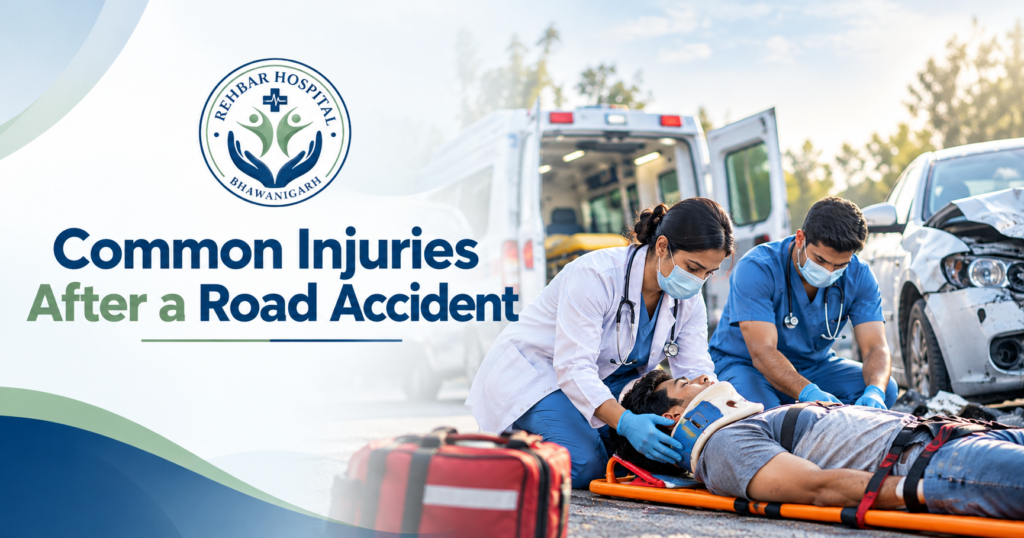
Medical professionals providing emergency care to a road accident victim.
Uncategorized

Common Injuries After a Road Accident: Symptoms, Warning Signs and Care

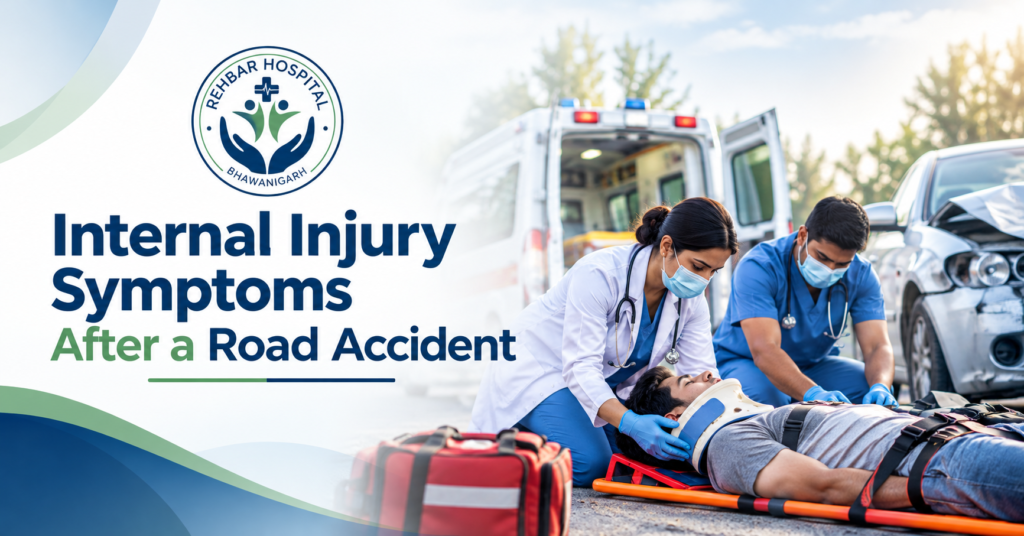
Internal Injuries After a Road Accident: Warning Signs Introduction A road accident can cause injuries that are not visible on the skin. These are called internal injuries. They may affect organs, blood vessels, bones or other tissues inside the body.Some internal injuries cause symptoms immediately. Others may not be obvious at first. A person may have an internal injury even without an open wound or heavy external bleeding.Recognising internal injury symptoms can help people understand when urgent medical assessment is needed. This guide explains common warning signs, possible causes, first aid and how doctors assess these injuries. What Are Internal Injuries? Internal injuries occur when an accident damages structures inside the body. These may include the brain, chest, abdomen, blood vessels or internal organs. A road accident can cause internal injuries through a direct impact, a fall or sudden movement of the body. The severity depends on the force of the accident and the body part affected. Internal bleeding is one possible complication. It happens when blood leaks from damaged blood vessels or organs into the body. Not every internal injury causes bleeding. Some injuries may involve damage to organs, tissues or bones without visible blood. Common Internal Injury Symptoms After a Road Accident Symptoms can vary depending on the type and location of the injury. Watch for the following warning signs after an accident. 1. Abdominal Pain or Swelling Pain in the stomach or abdomen may occur after an impact. The abdomen may also feel tender or appear swollen.Severe or worsening abdominal pain after an accident needs urgent medical assessment. Internal injuries can sometimes cause symptoms without visible wounds. 2. Dizziness, Weakness or Fainting Dizziness, unusual weakness or fainting after an accident may indicate a serious problem. These symptoms can occur when the body loses a significant amount of blood. Confusion, unusual drowsiness or reduced alertness also needs urgent attention. Do not assume these symptoms are caused only by stress or tiredness. 3. Chest Pain or Difficulty Breathing A strong impact to the chest can injure the ribs, lungs or other structures. Warning signs may include chest pain, rapid breathing or difficulty breathing.Breathing problems after an accident require immediate medical attention. Do not wait for the symptoms to settle on their own. 4. Unusual Bruising or Skin Changes Bruising can develop when small blood vessels are damaged. Large, spreading or painful bruises after a serious accident deserve medical assessment.However, the absence of bruising does not rule out an internal injury. Some injuries may not cause visible skin changes. 5. Blood in Urine, Stool or Vomit Blood in urine, vomit or stool after an accident may indicate bleeding inside the body or injury to an organ. Seek urgent medical assessment if these symptoms appear after an accident. Black, tar-like stools or vomit containing blood also require prompt medical attention. 6. Headache, Confusion or Loss of Consciousness A road accident can cause a head injury, even when there is no visible wound. Symptoms may include a worsening headache, confusion, vomiting or loss of consciousness. A person with a suspected head injury needs appropriate medical assessment. A severe or worsening headache, repeated vomiting, seizures or reduced alertness requires urgent emergency care. Can Internal Injury Symptoms Appear Later? Yes. Some internal injuries may not cause clear symptoms immediately after an accident. Symptoms can develop or become more noticeable later. This is why a person should not judge the severity of an accident only by how they feel at first. A serious impact, a suspected head injury or new symptoms after an accident should not be ignored. Seek emergency medical care for severe pain, difficulty breathing, fainting, confusion or signs of possible internal bleeding. Do not wait for every symptom to appear before seeking help. paragraph here What Should You Do If You Suspect an Internal Injury? Take the following steps if you suspect a serious internal injury after a road accident: Get emergency medical help. Call local emergency services if the person has severe symptoms or may have a serious injury. Keep the person still. Avoid unnecessary movement, especially if a head, neck or back injury is possible. Monitor breathing and responsiveness. Tell emergency responders if the person’s condition changes. Do not give food or drink. A serious injury may require urgent treatment or a procedure. Do not delay medical assessment. A person may need examination even when there is no visible bleeding. Severe abdominal pain or swelling Do not try to diagnose an internal injury at home. Medical assessment is important when an injury is suspected. How Do Doctors Check for Internal Injuries? Doctors assess the person’s symptoms, accident history and physical condition. They may check breathing, circulation, alertness and signs of injury. Depending on the findings, further tests may be needed. These can include blood tests or imaging tests, such as ultrasound or CT scans.The choice of test depends on the suspected injury and the person’s condition. Not everyone needs the same investigations. Some injuries require observation, while others need urgent treatment. The medical team decides the next steps based on the assessment and test results. When Should You Seek Emergency Care? Seek emergency medical help after an accident if a person has any of these warning signs: Severe or worsening abdominal or chest pain Difficulty breathing Fainting, confusion or reduced alertness Heavy bleeding or suspected internal bleeding Blood in vomit, urine or stool A severe or worsening headache after a head injury Repeated vomiting or seizures after an accident These symptoms can indicate a serious injury. Do not wait for symptoms to become more severe.For information about emergency and trauma services, you can refer to the Emergency & Trauma Care page. Frequently Asked Questions: 1. What are the common internal injury symptoms after a road accident? Common warning signs include abdominal pain, chest pain, dizziness, fainting, unusual weakness, breathing difficulty and blood in urine, stool or vomit. Symptoms depend on the injury. 2. Can someone have an internal injury without visible bleeding? Yes. Internal injuries can occur without an
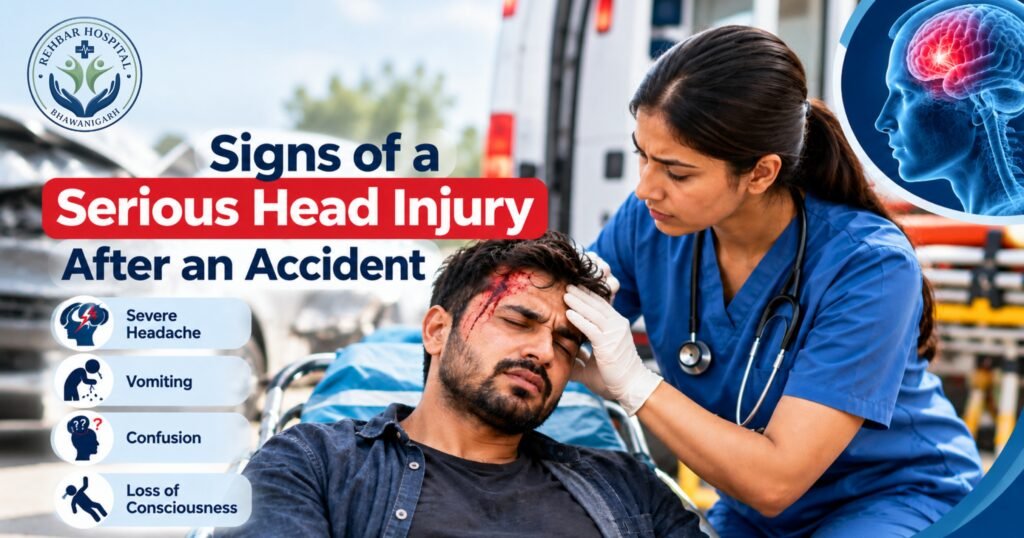
Doctor assessing a patient for serious head injury symptoms after an accident
Uncategorized

Signs of a Serious Head Injury After an Accident

Signs of a Serious Head Injury After an Accident A head injury can happen during a road accident, fall, or other sudden impact. Some injuries cause only mild symptoms. However, others can affect the brain or skull. Head Injury Symptoms may appear immediately or develop hours or days later. Therefore, watching for warning signs after an accident is important. Some symptoms need urgent medical attention. These include repeated vomiting, seizures, confusion, and worsening headache. This article explains the main warning signs and when to seek emergency care. What Is a Head Injury? Type your paragA head injury affects the scalp, skull, or brain.It can happen after a fall, road accident, sports injury, or strong blow.A concussion is one type of traumatic brain injury.A concussion can affect how the brain works for a short time.More serious injuries can cause bleeding or swelling inside the skull.Importantly, a serious injury may exist without a large visible wound.Therefore, the absence of bleeding does not always mean the injury is minor. What Are the Main Head Injury Symptoms After an Accident? Common symptoms include headache, dizziness, nausea, vomiting, confusion, and memory problems.Some symptoms may improve with time. Others can become worse. Common head injury symptoms include:-Headache-Dizziness-Nausea-Vomiting-Blurred or double vision-Feeling confused-Memory problems-Feeling unusually tired-Trouble concentrating-Balance problems-Sensitivity to light or noise-Changes in sleep-Mood or behavior changes These symptoms can occur after a concussion or other brain injury.However, symptoms alone cannot show how serious an injury is.A doctor may need to examine the person and assess the injury. What Are Signs of a Serious Head Injury? Some signs of serious head injury need immediate medical attention.These signs can suggest a more serious brain or skull injury. 1. A Severe or Worsening Headache A headache can occur after a head injury.However, a severe headache that keeps getting worse needs attention.Do not ignore a headache that becomes stronger over time.Persistent headache can be one of the important head injury warning signs. 2. Repeated Vomiting Vomiting can happen after a head injury.However, repeated vomiting is more concerning.It can occur with concussion or more serious brain injury.Therefore, seek urgent medical assessment after repeated vomiting. 3. Confusion or Unusual Behaviour A person may become confused after an accident.They may not know where they are.They may repeat questions or forget what happened.They may also become unusually restless or behave differently.These changes can be important traumatic brain injury symptoms. 4. Loss of Consciousness Some people lose consciousness after a head injury.This can happen for a short or longer period.Even brief loss of consciousness needs medical assessment.A person may also become difficult to wake later.This situation needs emergency medical attention. 5. Seizures A seizure can cause uncontrolled shaking or unusual movements.A seizure after a head injury is an emergency warning sign.Seek emergency care immediately if this happens.Do not try to hold the person down during a seizure.Keep the area around the person clear of hard objects. 6. Weakness, Numbness, or Poor Coordination A serious injury can affect movement or sensation.Watch for weakness or numbness in an arm or leg.Also notice sudden difficulty walking or keeping balance.These symptoms need urgent medical assessment. 7. Problems With Speech or Understanding A person may suddenly have trouble speaking clearly.They may also struggle to understand simple questions.Slurred speech can also occur.These changes can signal a serious problem after head trauma.Therefore, seek emergency care without waiting for symptoms to improve. 8. Vision Problems Blurred vision can occur after a head injury.Double vision can also occur.Sudden or worsening vision problems need medical attention.Unequal pupil size can also be an important warning sign.The pupils are the dark centres of the eyes. 9. Extreme Sleepiness or Difficulty Waking Feeling tired can happen after a mild head injury.However, unusual drowsiness can be more concerning.A person who cannot stay awake needs urgent assessment.Emergency help is especially important if the person cannot be woken. 10. Blood or Clear Fluid From the Nose or Ears Blood from the ears or nose can occur after serious trauma.Clear fluid leaking from the nose or ears also needs urgent attention.Do not assume that this is simply a normal result of an accident.A healthcare professional should assess the person quickly. Can Head Injury Symptoms Appear Later? Yes, some head injury symptoms can appear hours or days after the accident.A person may feel fine immediately after the injury.Later, they may develop headache, dizziness, vomiting, confusion, or vision problems.This can make delayed symptoms easy to overlook.For this reason, someone should not ignore new or worsening symptoms.Delayed symptoms do not always mean that a serious injury exists.However, they deserve proper medical assessment. What Are Concussion Symptoms After an Accident? A concussion is a type of mild traumatic brain injury.It can happen after a blow or sudden movement of the head.Common concussion symptoms include:-Dizziness-NauseaVomiting-Blurred vision-Memory problems-Trouble concentrating-Feeling slowed down-Sensitivity to light or noise-Feeling tired-Sleep changes-Mood changesMost concussion symptoms are not life-threatening.However, serious symptoms can sometimes develop after the injury.Therefore, worsening symptoms need prompt medical attention. When Should You Go to a Hospital After a Head Injury? Go to an emergency department when serious warning signs appear after head trauma.Seek urgent medical care for:-Repeated vomiting-A worsening or severe headache-Seizures-Loss of consciousness-Increasing confusion-Difficulty waking-Weakness or numbness-Trouble speaking-Difficulty walking-New vision problems-Unequal pupils-Blood or clear fluid from the ears or nose-A suspected skull fracture-A high-speed road accidentSome people also need assessment because of the injury itself.For example, a high-energy accident can carry greater risk.A doctor will consider the accident, symptoms, medical history, and examination findings. What Should You Do Immediately After a Serious Accident? First, keep the injured person as still as possible. Avoid unnecessary movement of the head and neck. A serious accident can also cause a neck or spine injury. Do not shake someone who appears confused or sleepy. Do not remove a helmet if you suspect a serious injury. Instead, seek emergency medical help. If the person is unconscious or seriously unwell, call emergency services. Do not delay care while collecting medical records or belongings. How Do Doctors Check a Head Injury? Doctors first assess the person’s condition and

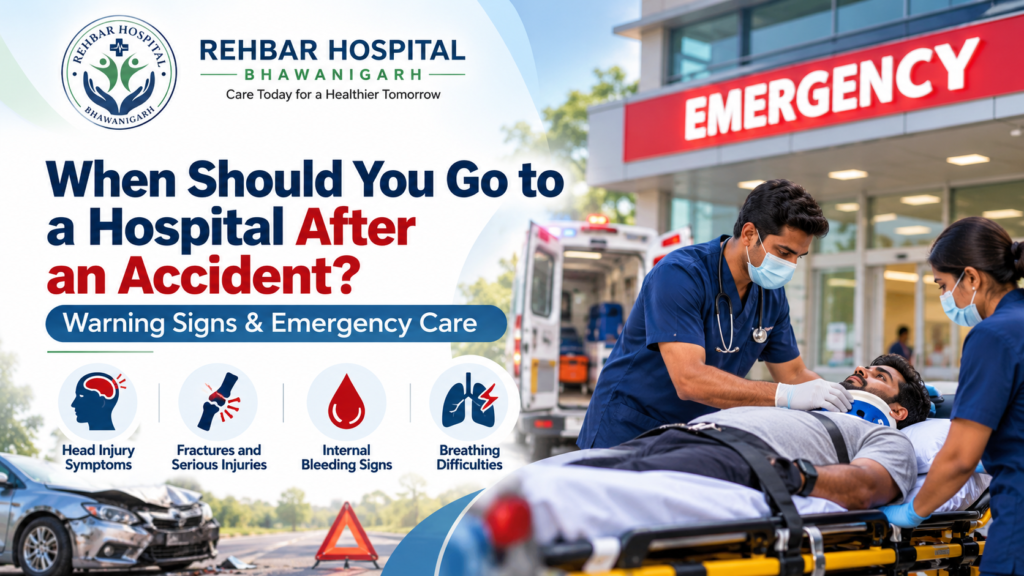
Patient receiving emergency assessment after a road accident at Rehbar Hospital in Bhawanigarh
Uncategorized

When Should You Go to a Hospital After an Accident?

When to Go to Hospital After an Accident: Warning Signs After an accident, some injuries are easy to notice. Others may not appear immediately.Knowing when to go to hospital after an accident can help you get timely medical care.Severe bleeding, breathing problems, loss of consciousness, or serious head injuries need urgent help. However, not every accident causes a visible injury. Some symptoms can develop hours or days later. If you are unsure about an injury, a medical professional can assess you safely. When Should You Go to Hospital After an Accident? You should go to a hospital emergency department when an accident causes serious symptoms or a significant injury.Seek emergency help immediately if the person has:-Trouble breathing-Heavy or uncontrolled bleeding-Loss of consciousness-Seizures-Severe confusion or unusual behaviour-Severe or worsening headache-Repeated vomiting-New weakness or numbness-Trouble speaking or walking-Severe chest pain-Severe abdominal pain or swellingA serious head, neck, or spine injuryA visible fracture or major deformity. These signs can point to serious injuries that need urgent assessment. In India, you can call 112 for emergency assistance. Why Can an Accident Cause Hidden Injuries? Some injuries may not be obvious after an accident.A person may feel normal because of shock or stress. Symptoms can also develop later.For example, concussion symptoms may appear hours or days after a head injury. Internal bleeding can also happen without an obvious external wound. It can become life-threatening without prompt medical care. Therefore, do not judge an injury only by how it looks.A significant accident deserves careful attention, especially when the person has new symptoms. What Signs May Mean You Need Medical Attention? Different symptoms can point to different types of injuries. 1. Headache, Dizziness or Confusion A headache after an accident can have many causes.However, a worsening headache needs medical attention. Dizziness, confusion, unusual behaviour, or problems with balance can also be warning signs. Also, repeated vomiting after a head injury needs urgent assessment. 2. Loss of Consciousness Any loss of consciousness after an accident needs medical assessment.Even a short period of unconsciousness should not be ignored. Head injuries can affect the brain without causing an obvious wound. If the person cannot stay awake or cannot be woken, seek emergency help immediately. 3. Difficulty Breathing Breathing problems after an accident need urgent medical attention.Chest injuries can affect breathing. Serious trauma can also involve injuries that are not visible from outside.Worsening shortness of breath is especially concerning. 4. Severe Bleeding Heavy bleeding needs immediate attention.Apply firm pressure with a clean cloth when appropriate. Do not remove an object that is stuck inside a wound. If bleeding does not stop, seek emergency help immediately.Internal bleeding can also occur without visible blood. It requires urgent medical assessment. 5. Severe Abdominal Pain or Swelling Abdominal pain after a major accident should not be ignored.Swelling or increasing pain may suggest an internal injury. Some internal injuries are not visible from outside.Therefore, seek medical assessment when these symptoms appear after significant trauma. 6. Neck or Back Pain Neck and back pain can occur after sudden impact.However, severe pain, numbness, weakness, or difficulty moving needs medical attention.A suspected neck or spinal injury requires careful handling. Do not ask the injured person to move unnecessarily. 7. Numbness, Weakness or Difficulty Walking New numbness or weakness after an accident can be a serious warning sign.Difficulty walking or poor coordination also needs urgent assessment. Do not force the person to walk after a serious injury. Can You Have a Serious Injury Without Feeling Much Pain? Yes, some serious injuries may not cause strong symptoms at first. For example, concussion symptoms can appear later after a head injury. Internal bleeding may also develop without an obvious external wound.Therefore, feeling fine does not always rule out injury.This does not mean every minor accident requires emergency treatment. The decision depends on the accident, symptoms, and medical assessment. What Should You Do Immediately After an Accident? First, make sure the accident scene is safe.Then follow these basic steps:-Move away from immediate danger if you can do so safely.-Call emergency services if someone has serious injuries.-Check whether the person is responsive and breathing.-Control severe external bleeding with direct pressure.-Avoid unnecessary movement after a suspected head, neck, or spine injury.-Watch for changes in breathing, alertness, or behaviour.-Wait for trained medical help when the injury appears serious. The Red Cross advises avoiding unnecessary movement when a head, neck, or spinal injury is suspected.In India, 112 is the nationwide emergency number for police, ambulance, health, and other emergency services. Should You Go to Hospital After a Minor Accident? Not every minor accident requires emergency treatment.However, you should seek medical advice if symptoms appear or become worse.Pay attention to:New headacheDizzinessNausea or vomitingNeck stiffnesBack painIncreasing swellingNew weaknessNumbnessBreathing difficultyChanges in visionConfusionSome symptoms can appear later after a head injury.If you are unsure, it is safer to discuss the injury with a qualified healthcare professional. What Injuries Can Happen After a Road Accident? Road accidents can cause many types of injuries.These may include: Head Injuries A head injury can affect how the brain works. Concussion is one possible type of traumatic brain injury.Warning signs include worsening headache, repeated vomiting, confusion, weakness, seizures, and loss of consciousness. Bone and Joint Injuries An accident can cause fractures, dislocations, sprains, and other muscle or joint injuries.A visible deformity, severe pain, swelling, or inability to move the injured area needs medical assessment.For accident-related fractures and bone injuries, you can learn more about Rehbar Hospital’s Orthopaedic Care. Neck and Spine Injuries Sudden impact can cause injuries involving the neck or spine.Pain, numbness, weakness, or difficulty moving can require urgent assessment. Chest Injuries Chest trauma can cause pain and breathing problems.Worsening chest pain or shortness of breath after a serious accident needs urgent medical attention. Internal Injuries Internal injuries may not be visible.Doctors may need an examination and appropriate tests to look for internal problems. The tests depend on the person’s symptoms and injury. What Happens at the Hospital After an Accident? The medical team first checks for problems that could threaten life. They may

Image ALT Text: Common injuries after a road accident and emergency trauma care at Rehbar Hospital Bhawanigarh
Uncategorized

Common Injuries After a Road Accident

What are the common injuries after a road accident? The common injuries after a road accident include cuts, bruises, fractures, and muscle injuries. However, accidents can also cause serious head, neck, chest, or internal injuries.Some injuries cause clear pain or swelling. Others may show fewer signs at first. Therefore, a medical check can help identify injuries that need treatment.Road crashes can cause many types of trauma. The injury often depends on the crash, impact, and body position.This guide explains common road accident injuries and their warning signs. It also explains when emergency medical care may be needed. What are the most common road accident injuries? Road accident injuries can affect almost any part of the body. However, some injuries occur more often than others. 1. Cuts, wounds and bleeding Cuts can happen when the body hits glass, metal, or another hard surface. Scrapes can also occur when skin rubs against the road.Small wounds may cause only minor bleeding. However, heavy bleeding needs urgent medical attention.Internal bleeding can also happen after major trauma. It may not always cause visible blood.Warning signs may include:Severe weaknessDizziness or light-headednessPale or clammy skinFast heartbeatShortness of breathConfusionAbdominal pain or swellingTherefore, suspected internal bleeding needs urgent medical assessment. 2. Head injuries A head injury can happen when the head hits the road, vehicle, or another object.A person may develop a concussion after a head injury. A concussion is a temporary injury that affects brain function.Common symptoms can include:HeadacheDizzinessNauseaBalance problemsTirednessMemory problemsTrouble concentratingVision problemsSome symptoms may appear hours or days after the injury. Therefore, feeling well immediately does not always rule out a problem.A worsening headache, repeated vomiting, seizure, confusion, weakness, or unusual sleepiness needs urgent medical care. 3. Neck injuries and whiplash Neck injuries are common after sudden vehicle movement. Whiplash happens when the head moves quickly back and forth.Common symptoms include:-Neck pain-Neck stiffness-Headache-Shoulder pain-Arm pain-Muscle spasmsHowever, symptoms may take several hours to appear.Tingling, numbness, weakness, or walking problems need urgent assessment. These symptoms may suggest nerve involvement. 4. Spinal injuries A serious accident can injure the spine or spinal cord. These injuries need careful medical assessment. Possible warning signs include:-Numbness-Tingling-Weakness-Trouble moving the arms or legs-Loss of normal bladder or bowel controlTherefore, do not move a person unnecessarily if you suspect a spinal injury. Wait for trained emergency help when possible. 5. Bone fractures A fracture means that a bone has broken. Car and bike accidents can cause fractures in the arms, legs, ribs, pelvis, or other bones.Common signs include:-Strong pain-Swelling-Bruising-Difficulty moving-Abnormal shape-Difficulty putting weight on a limb Sometimes, a fracture is not obvious from the outside. Therefore, a doctor may recommend an X-ray after an accident. At Rehbar Hospital, the Emergency & Trauma unit provides trauma assessment. The hospital also lists on-site X-ray access and orthopaedic support for fractures and dislocations. 6. Soft tissue injuries Soft tissue injuries affect muscles, tendons, or ligaments. They can happen during sudden impact or twisting.Common examples include:-Sprains-Muscle strains-Bruises-Swelling-Muscle weaknessThese injuries can cause pain and reduced movement. However, some symptoms may improve with proper care and time.A doctor can assess the injury if pain is severe or movement becomes difficult. 7. Chest injuries A strong impact can injure the chest. Rib bruising and rib fractures can occur after vehicle crashes. Chest injuries may cause:-Chest pain-Pain while breathing-Bruising-Tenderness-Shortness of breath However, serious chest injuries can affect breathing. Therefore, worsening breathing problems need urgent medical care.Coughing up blood after a serious chest injury also needs urgent assessment. What are the signs of serious injury after an accident? Some warning signs need immediate medical attention. These signs can include:-Loss of consciousness-Difficulty breathing-Severe or uncontrolled bleeding-Repeated vomiting-Seizures-Severe confusion-Increasing sleepiness-New weakness or numbness-Trouble speaking-Trouble walking-Severe neck or back pain-Severe chest pain-Coughing up blood-Severe abdominal pain or swellingThese symptoms can indicate a serious injury. Therefore, seek emergency medical care without delay. Can accident injuries appear later? Yes, some accident symptoms may appear later. For example, whiplash symptoms can take several hours to develop.Likewise, some concussion symptoms may appear hours or days after an injury.Therefore, pay attention to new or worsening symptoms after an accident. Do not ignore symptoms simply because you felt fine immediately afterward. What should you do after a road accident? First, move to a safe place if you can do so safely. Then check whether anyone needs urgent help.If someone has severe bleeding, apply firm pressure to the wound. However, do not remove objects stuck inside a wound.Next, seek emergency medical help for serious injuries. Avoid moving someone unnecessarily when you suspect a spinal injury.Also, do not delay medical care while collecting documents. Medical assessment should come first during a serious emergency. WHO notes that delays in post-crash care can increase the severity of injuries. How are road accident injuries diagnosed? Doctors first assess the person’s condition and symptoms. They may also check movement, pain, breathing, and other important signs.Depending on the injury, doctors may recommend imaging or other tests.For example, an X-ray can help check for bone fractures.Other tests may be needed when doctors suspect internal or serious injuries. The exact tests depend on the person’s condition.Therefore, avoid assuming that one test can identify every accident injury. How are road accident injuries treated? Treatment depends on the type and severity of the injury.For example, a small wound may need cleaning and dressing. A fracture may need immobilisation and orthopaedic treatment.Similarly, serious injuries may need emergency stabilisation or surgery. The medical team decides treatment after assessment.At Rehbar Hospital, the Emergency & Trauma service describes a process of triage, stabilisation, diagnosis, and specialist involvement.Rehbar also lists emergency care for road traffic accidents. Its service page states that trauma assessment, wound care, and stabilisation are provided. When should you go to a hospital after an accident? You should seek urgent medical care after an accident when symptoms are severe, worsening, or unusual.You should also seek emergency help after a serious crash. This is especially important with head, neck, spine, chest, or abdominal injuries.For example, loss of consciousness or breathing difficulty needs immediate assessment. Severe bleeding also requires

Living With Kidney Disease
Uncategorized

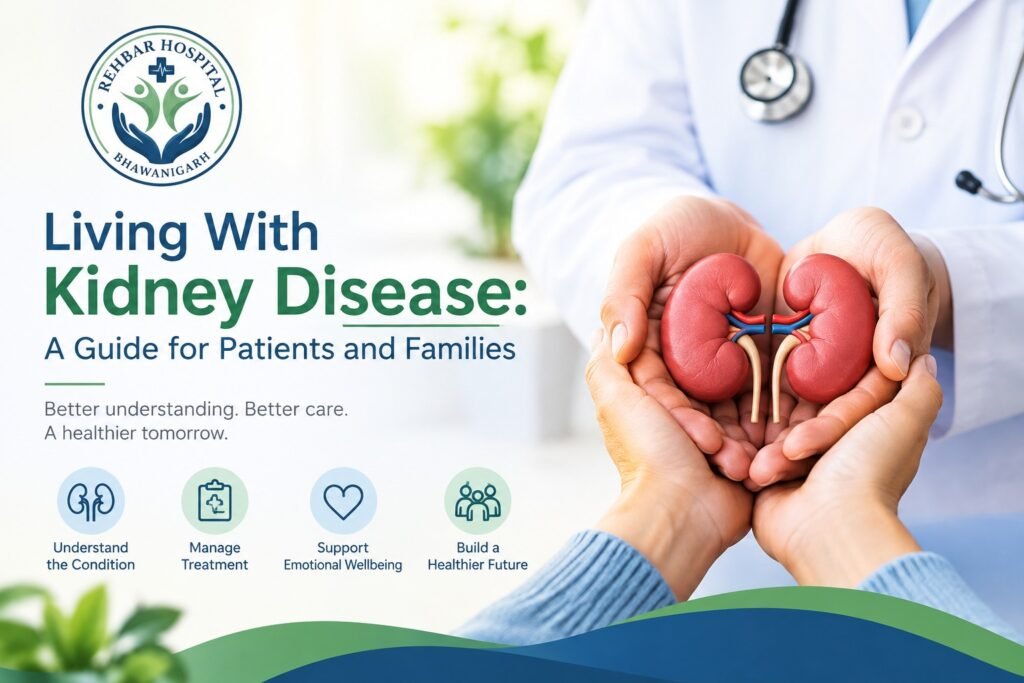
Living With Kidney Disease: A Guide for Patients and Families

Living With Kidney Disease: A Guide for Patients and Families Living with kidney disease can feel hard at first. Patients and families may have many questions. They may ask what to eat, what treatment they need, and how to stay healthy. However, kidney disease can often be managed with the right care. Simple healthy habits can also help you stay well. Regular doctor visits are important too. At Rehbar Hospital Bhawanigarh, we understand the needs of kidney patients and their families. Therefore, this guide explains kidney disease in simple words. It also talks about food, treatment, lifestyle changes, and daily care. What Is Kidney Disease? The kidneys are important parts of our body. They help remove waste from the blood. They also remove extra water from the body. When the kidneys do not work well, kidney disease can happen. If the problem stays for a long time, it may become chronic kidney disease. In the early stages, kidney disease may not cause clear signs. Therefore, regular health checks are important. This is even more important if you have diabetes or high blood pressure. Common Kidney Disease Symptoms Kidney disease symptoms can be different for each person. Some people may not have any clear signs at first. However, some common signs can include: Feeling tired Swelling in the feet or legs Changes in urine Foamy urine Less interest in food Feeling sick Itchy skin Muscle cramps Trouble sleeping Changes in blood pressure These signs can also happen because of other health problems. Therefore, do not try to find the cause on your own. Instead, talk to a doctor if these problems continue. Living With Kidney Disease: What Can You Do? Living with kidney disease means taking care of your health every day. However, small changes can make kidney disease management easier. Here are some simple steps that can help. 1. Take Your Medicines on Time First, take your medicines as your doctor tells you. Do not stop taking them on your own. Also, do not change the amount of medicine without asking your doctor. Tell your doctor before you start any new medicine. This includes painkillers, vitamins, and health products. Some medicines may harm the kidneys. 2. Follow a Kidney-Friendly Diet A healthy diet is an important part of kidney disease management. However, the right food plan is different for each person. Your doctor or diet expert may suggest changes based on your kidney health. You may need to watch how much salt, protein, potassium, or other foods you eat. You may also need to control how much fluid you drink. Therefore, always follow the food plan given to you by your doctor. Some simple tips include: Choose fresh food when possible. Eat less salt. Avoid too much packaged food. Follow your doctor’s food advice. Ask before making big changes to your diet. Drink the amount of fluid advised by your doctor. Most importantly, your kidney disease diet should match your health needs. 3. Stay Physically Active Regular activity can help keep your body healthy. It can also help you feel more active. For example, walking can be an easy way to exercise. However, the right type of exercise depends on your health. Therefore, talk to your doctor before starting a new exercise plan. If you are not used to exercise, start slowly. Then, increase your activity as your doctor advises. 4. Control Blood Pressure and Blood Sugar High blood pressure and diabetes can affect kidney health. Therefore, it is important to keep them under control. Take your medicines on time. Also, check your blood pressure or blood sugar when your doctor tells you to. In addition, follow a healthy food plan. Regular activity can help too. These steps are an important part of chronic kidney disease management. 5. Avoid Smoking Smoking can harm your body. It can also make kidney problems worse. Therefore, quitting smoking is an important kidney health tip. If you smoke, talk to your doctor about how you can stop. Your doctor can help you find a safe way to quit. 6. Do Not Miss Your Check-Ups Regular check-ups are an important part of kidney disease care. During a check-up, your doctor may check your blood pressure. You may also need blood or urine tests. These tests help your doctor see how well your kidneys are working. In addition, regular visits help your doctor change your treatment when needed. Kidney Disease Treatment Kidney disease treatment depends on the cause and stage of the disease. Therefore, treatment can be different for each patient. Treatment may include: Medicines Changes in food Lifestyle changes Regular health checks Dialysis Kidney transplant in some cases However, not every patient needs all these treatments. Your doctor will choose the right treatment based on your kidney health and other health needs. Understanding Chronic Kidney Disease Management Chronic kidney disease management is a long-term process. It includes more than taking medicines and visiting the hospital. For example, your daily habits also matter. Good kidney disease management may include: Taking medicines on time Following your food plan Checking your blood pressure Keeping blood sugar under control Staying active when it is safe Avoiding smoking Going for regular check-ups Asking your doctor before taking new medicines Most importantly, follow the care plan given by your doctor. How Can Families Support a Person With Kidney Disease? Kidney disease can affect the whole family. Therefore, family support can be very helpful. Family members can help in many simple ways. For example, they can: Help keep track of medicines. Go with the patient to doctor visits. Support healthy food choices. Encourage safe exercise. Help manage doctor appointments. Listen to the patient’s worries. Give emotional support. Learn about the patient’s treatment. In this way, patients may find it easier to follow their care plan. Living With Chronic Kidney Disease and Emotional Health Living with chronic kidney disease can sometimes feel stressful. Patients may worry about their health and future. Also, changes in food, medicines, or treatment can affect daily life. Therefore, taking