When to Go to Hospital After an Accident: Warning Signs
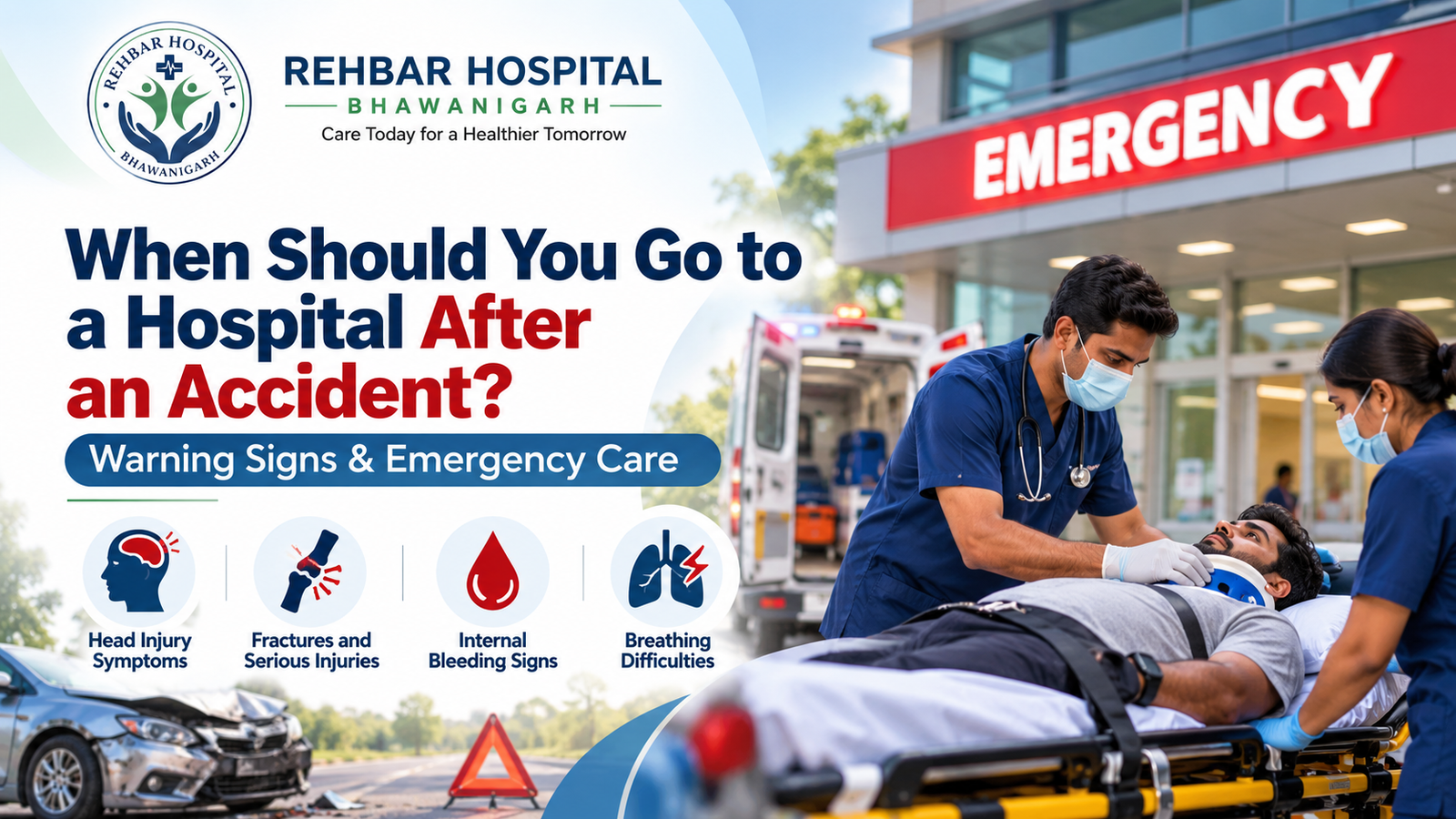
After an accident, some injuries are easy to notice. Others may not appear immediately.Knowing when to go to hospital after an accident can help you get timely medical care.Severe bleeding, breathing problems, loss of consciousness, or serious head injuries need urgent help. However, not every accident causes a visible injury. Some symptoms can develop hours or days later. If you are unsure about an injury, a medical professional can assess you safely.
When Should You Go to Hospital After an Accident?
You should go to a hospital emergency department when an accident causes serious symptoms or a significant injury.
Seek emergency help immediately if the person has:
-Trouble breathing
-Heavy or uncontrolled bleeding
-Loss of consciousness
-Seizures
-Severe confusion or unusual behaviour
-Severe or worsening headache
-Repeated vomiting
-New weakness or numbness
-Trouble speaking or walking
-Severe chest pain
-Severe abdominal pain or swelling
A serious head, neck, or spine injury
A visible fracture or major deformity. These signs can point to serious injuries that need urgent assessment. In India, you can call 112 for emergency assistance.
Why Can an Accident Cause Hidden Injuries?
Some injuries may not be obvious after an accident.A person may feel normal because of shock or stress. Symptoms can also develop later.For example, concussion symptoms may appear hours or days after a head injury. Internal bleeding can also happen without an obvious external wound. It can become life-threatening without prompt medical care. Therefore, do not judge an injury only by how it looks.A significant accident deserves careful attention, especially when the person has new symptoms.
What Signs May Mean You Need Medical Attention?
Different symptoms can point to different types of injuries.
1. Headache, Dizziness or Confusion
A headache after an accident can have many causes.However, a worsening headache needs medical attention. Dizziness, confusion, unusual behaviour, or problems with balance can also be warning signs. Also, repeated vomiting after a head injury needs urgent assessment.
2. Loss of Consciousness
Any loss of consciousness after an accident needs medical assessment.Even a short period of unconsciousness should not be ignored. Head injuries can affect the brain without causing an obvious wound. If the person cannot stay awake or cannot be woken, seek emergency help immediately.
3. Difficulty Breathing
Breathing problems after an accident need urgent medical attention.Chest injuries can affect breathing. Serious trauma can also involve injuries that are not visible from outside.Worsening shortness of breath is especially concerning.
4. Severe Bleeding
Heavy bleeding needs immediate attention.Apply firm pressure with a clean cloth when appropriate. Do not remove an object that is stuck inside a wound. If bleeding does not stop, seek emergency help immediately.
Internal bleeding can also occur without visible blood. It requires urgent medical assessment.
5. Severe Abdominal Pain or Swelling
Abdominal pain after a major accident should not be ignored.Swelling or increasing pain may suggest an internal injury. Some internal injuries are not visible from outside.Therefore, seek medical assessment when these symptoms appear after significant trauma.
6. Neck or Back Pain
Neck and back pain can occur after sudden impact.However, severe pain, numbness, weakness, or difficulty moving needs medical attention.A suspected neck or spinal injury requires careful handling. Do not ask the injured person to move unnecessarily.
7. Numbness, Weakness or Difficulty Walking
New numbness or weakness after an accident can be a serious warning sign.Difficulty walking or poor coordination also needs urgent assessment. Do not force the person to walk after a serious injury.
Can You Have a Serious Injury Without Feeling Much Pain?
Yes, some serious injuries may not cause strong symptoms at first. For example, concussion symptoms can appear later after a head injury. Internal bleeding may also develop without an obvious external wound.Therefore, feeling fine does not always rule out injury.This does not mean every minor accident requires emergency treatment. The decision depends on the accident, symptoms, and medical assessment.
What Should You Do Immediately After an Accident?
First, make sure the accident scene is safe.
Then follow these basic steps:
-Move away from immediate danger if you can do so safely.
-Call emergency services if someone has serious injuries.
-Check whether the person is responsive and breathing.
-Control severe external bleeding with direct pressure.
-Avoid unnecessary movement after a suspected head, neck, or spine injury.
-Watch for changes in breathing, alertness, or behaviour.
-Wait for trained medical help when the injury appears serious.
The Red Cross advises avoiding unnecessary movement when a head, neck, or spinal injury is suspected.
In India, 112 is the nationwide emergency number for police, ambulance, health, and other emergency services.
Should You Go to Hospital After a Minor Accident?
Not every minor accident requires emergency treatment.
However, you should seek medical advice if symptoms appear or become worse.
Pay attention to:
New headache
Dizziness
Nausea or vomiting
Neck stiffnes
Back pain
Increasing swelling
New weakness
Numbness
Breathing difficulty
Changes in vision
Confusion
Some symptoms can appear later after a head injury.
If you are unsure, it is safer to discuss the injury with a qualified healthcare professional.
What Injuries Can Happen After a Road Accident?
Road accidents can cause many types of injuries.
These may include:
Head Injuries
A head injury can affect how the brain works. Concussion is one possible type of traumatic brain injury.Warning signs include worsening headache, repeated vomiting, confusion, weakness, seizures, and loss of consciousness.
Bone and Joint Injuries
An accident can cause fractures, dislocations, sprains, and other muscle or joint injuries.A visible deformity, severe pain, swelling, or inability to move the injured area needs medical assessment.
For accident-related fractures and bone injuries, you can learn more about Rehbar Hospital's Orthopaedic Care.
Neck and Spine Injuries
Sudden impact can cause injuries involving the neck or spine.Pain, numbness, weakness, or difficulty moving can require urgent assessment.
Chest Injuries
Chest trauma can cause pain and breathing problems.Worsening chest pain or shortness of breath after a serious accident needs urgent medical attention.
Internal Injuries
Internal injuries may not be visible.Doctors may need an examination and appropriate tests to look for internal problems. The tests depend on the person's symptoms and injury.
What Happens at the Hospital After an Accident?
The medical team first checks for problems that could threaten life. They may assess breathing, circulation, bleeding, alertness, pain, and visible injuries.
Doctors then decide which tests or treatments are needed.
Depending on the injury, evaluation may include blood tests or imaging. Rehbar Hospital provides on-site pathology and X-ray services through its emergency care system. Ultrasound may also help assess certain internal or soft-tissue problems. Rehbar Hospital provides ultrasound services for several areas of the body. The treatment depends on the injury.Some injuries need observation or medicines. Others may need wound care, fracture treatment, surgery, or critical care.
When Is Emergency Care Needed After an Accident?
Emergency care is needed when symptoms suggest a serious or rapidly worsening injury.
You should seek immediate help for:
Unconsciousness
Severe breathing difficulty
Uncontrolled bleeding
Seizures
Severe head injury
Serious neck or spine injury
Severe confusion
Repeated vomiting after head trauma
Severe chest or abdominal pain
New weakness or numbness
These are recognized warning signs of medical emergencies.
Rehbar Hospital's Emergency & Trauma Care is available 24×7 for road accidents and other urgent conditions. Its emergency service includes trauma assessment, stabilisation, wound care, and access to on-site diagnostics.
Can You Wait If Accident Symptoms Improve?
You should not ignore serious symptoms simply because they improve temporarily.
Some injuries can change over time.
For example, concussion symptoms may appear later after a head injury.
If symptoms were severe, sudden, or unusual, seek professional medical advice.
Most importantly, do not use symptom improvement as proof that no injury exists
When Should You Contact a Doctor After an Accident?
Contact a doctor when symptoms continue, return, or become worse after an accident.This includes ongoing pain, dizziness, headaches, stiffness, swelling, or movement problems.You should also seek medical advice after a head injury if you develop vomiting or dizziness. If symptoms are severe, use emergency services rather than waiting for a routine appointment.For non-life-threatening concerns, Rehbar Hospital's General Medicine department can help assess symptoms and guide further care.
What If the Accident Injury Needs Surgery?
Some serious injuries may need surgical treatment.The need for surgery depends on the injury and medical assessment. For example, some traumatic wounds or internal injuries may require an operation. Rehbar Hospital provides planned and emergency surgical care through its General Surgery department. However, not every accident injury needs surgery. Doctors choose treatment after examining the patient and reviewing appropriate tests.
When Might ICU Care Be Needed?
Severe injuries can sometimes require close monitoring and critical care. ICU care may be needed when a patient needs continuous observation or support for serious illness or injury. Rehbar Hospital has an ICU & Critical Care unit for patients who need close monitoring and critical care. The medical team decides whether ICU care is needed based on the patient's condition.
A Simple Rule to Remember
If an accident causes loss of consciousness, breathing problems, severe bleeding, seizures, severe confusion, or serious head or spine symptoms, seek emergency care immediately.
If symptoms are mild but continue or worsen, contact a doctor.
If you are unsure about an injury, do not try to diagnose it yourself.
A healthcare professional can assess the injury and advise you about the next step.
FAQs:
Conclusion
Knowing when to go to hospital after an accident can help you act quickly when it matters.
Do not ignore severe pain, breathing problems, heavy bleeding, loss of consciousness, or serious head symptoms.
Also, remember that some injuries may not show up right away.
If you or someone around you has a serious accident injury, seek emergency medical care without delay.
For accident injuries in Bhawanigarh and nearby areas, Rehbar Hospital's Emergency & Trauma Care provides 24×7 emergency support. For emergency assistance in India, call 112.
Medical disclaimer: This article provides general health information. It does not replace an examination or advice from a qualified healthcare professional
