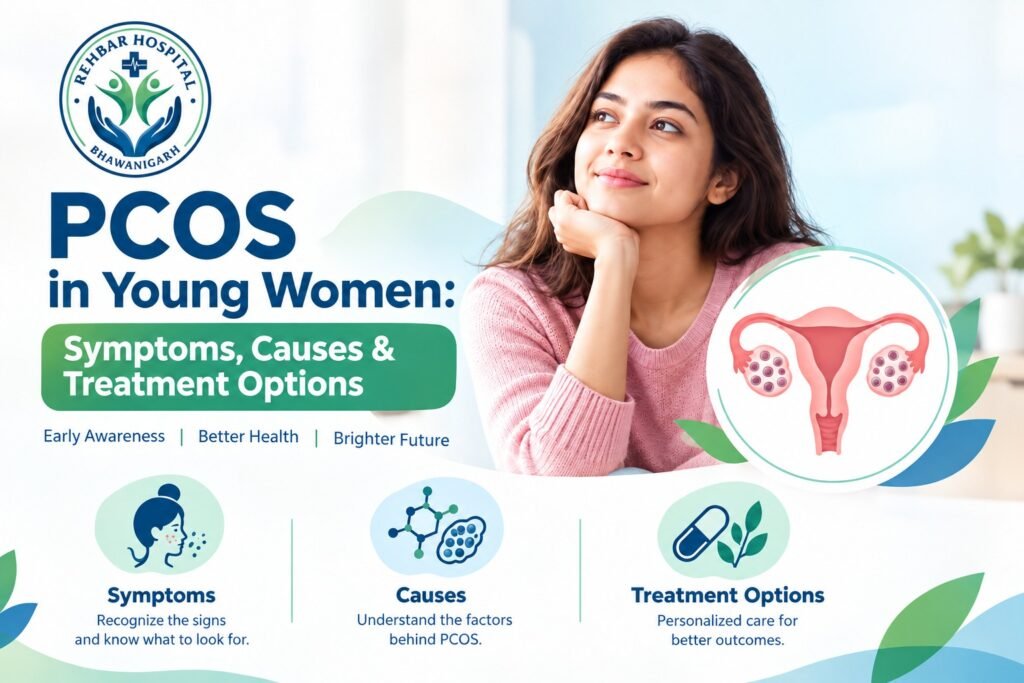
PCOS in Young Women: Symptoms, Causes & Treatment Options
PCOS in Young Women: Symptoms, Causes & Treatment Options PCOS in young women is a common health concern. It can affect periods, skin, hair, weight, and fertility. PCOS stands for Polycystic Ovary Syndrome. Many young women notice changes in their periods or skin. Some may also notice extra facial hair or scalp hair thinning. These changes can be symptoms of PCOS. However, other health problems can cause similar signs. So, a proper medical check is important. The good news is that PCOS can be managed. A healthy lifestyle and the right treatment can help control symptoms. Regular care can also support long-term health. In this guide, we explain PCOS symptoms in young women, PCOS causes, diagnosis, and PCOS treatment options. We also cover PCOS in teenagers, PCOS and irregular periods, PCOS and fertility, and daily PCOS management. What Is PCOS? PCOS is a condition linked to changes in hormones and ovulation. It can also affect how the body uses insulin. For some women, PCOS can cause irregular periods. It can also cause acne, extra facial hair, or scalp hair thinning. In addition, some women may have trouble getting pregnant. Despite the name, PCOS does not always mean that a woman has ovarian cysts. Instead, doctors look at several signs when they check for PCOS. PCOS can start during the teen years. However, doctors need to take extra care when checking PCOS in teenagers. Normal changes during puberty can look like some PCOS symptoms. Common PCOS Symptoms in Young Women PCOS symptoms in young women can vary from person to person. Some women have only a few signs. Others may have several signs at the same time. Common signs include: Irregular periods Missed periods Acne and oily skin Extra facial or body hair Hair thinning Weight gain or trouble managing weight Irregular ovulation Trouble getting pregnant Mood and emotional changes However, these signs do not always mean that you have PCOS. A doctor should check your symptoms before making a diagnosis. 1. Irregular or Missed Periods PCOS and irregular periods often occur together. PCOS can affect ovulation. As a result, periods may not come on a regular schedule. You may notice that your periods: Come very late Come less often Stop for several weeks or months Follow an uneven cycle Change from month to month Still, PCOS is not the only cause of irregular periods. Stress, weight changes, thyroid problems, and other health issues can also affect your cycle. Therefore, finding the cause is important. 2. Acne and Oily Skin Hormone changes can cause acne and oily skin. For example, you may notice acne on your: Face Chest Back Jawline However, acne alone does not mean that you have PCOS. Ongoing acne with irregular periods or extra facial hair may need a medical check. 3. Extra Facial or Body Hair Some women with PCOS develop more facial or body hair. This change is called hirsutism. Extra hair may appear on the: Chin Upper lip Chest Stomach Also, higher androgen activity can play a role in this symptom. However, other health conditions can cause extra hair growth. So, a medical check can help find the cause. 4. Hair Thinning PCOS may also cause scalp hair thinning. You may notice less hair around the top or front of your scalp. However, hair loss can have many causes. For this reason, a doctor should check ongoing hair loss. 5. Weight Changes Some women with PCOS gain weight or find weight management harder. However, PCOS can affect women of different body sizes. Therefore, body weight alone cannot confirm or rule out PCOS. Instead, a healthy approach should focus on overall health and daily habits. 6. Difficulty Getting Pregnant PCOS and fertility are often linked because PCOS can affect ovulation. When ovulation does not happen regularly, pregnancy may become harder for some women. However, PCOS does not mean that you cannot become pregnant. Many women with PCOS can become pregnant with the right care and treatment. 7. Mood and Emotional Health PCOS can affect more than physical health. Some women also have anxiety, low mood, or other emotional concerns. Therefore, emotional health should be part of PCOS care. The international PCOS guideline also recommends attention to mental health and quality of life. What Causes PCOS? The exact PCOS causes are not fully known. However, several factors may play a role. Hormonal Changes Hormones help control periods and ovulation. In PCOS, hormone levels can change. For example, higher androgen activity may contribute to acne and extra hair growth. Also, hormone changes can affect regular ovulation. Insulin Resistance Insulin helps the body use blood sugar for energy. Some women with PCOS have insulin resistance. This means the body does not respond to insulin as well as it should. As a result, the body may make more insulin. Higher insulin levels can affect hormone activity and ovulation. Family History PCOS can also run in families. For example, your risk may be higher if a close family member has PCOS. Still, a family history does not mean that you will develop PCOS. Can Unhealthy Food Cause PCOS? No single food causes PCOS. In fact, PCOS has several possible causes and risk factors. Hormonal, genetic, and metabolic factors can all play a role. At the same time, healthy food and regular activity can support overall health and PCOS management. How Is PCOS Diagnosed? If you have possible symptoms of PCOS, your doctor will first ask about your health. For example, your doctor may ask about: Menstrual cycle Medical history Family history Skin and hair changes Weight changes Pregnancy plans Other health concerns Your doctor may also suggest blood tests. These tests can check hormone levels and other health markers. In some adults, an ultrasound may also be part of the assessment. However, the approach is different for teenagers. Current international guidance recommends careful assessment in adolescents because normal puberty can overlap with PCOS symptoms. In adolescents, both ovulation problems and signs of higher androgen levels are important for diagnosis. Other causes
