Signs of a Serious Head Injury After an Accident
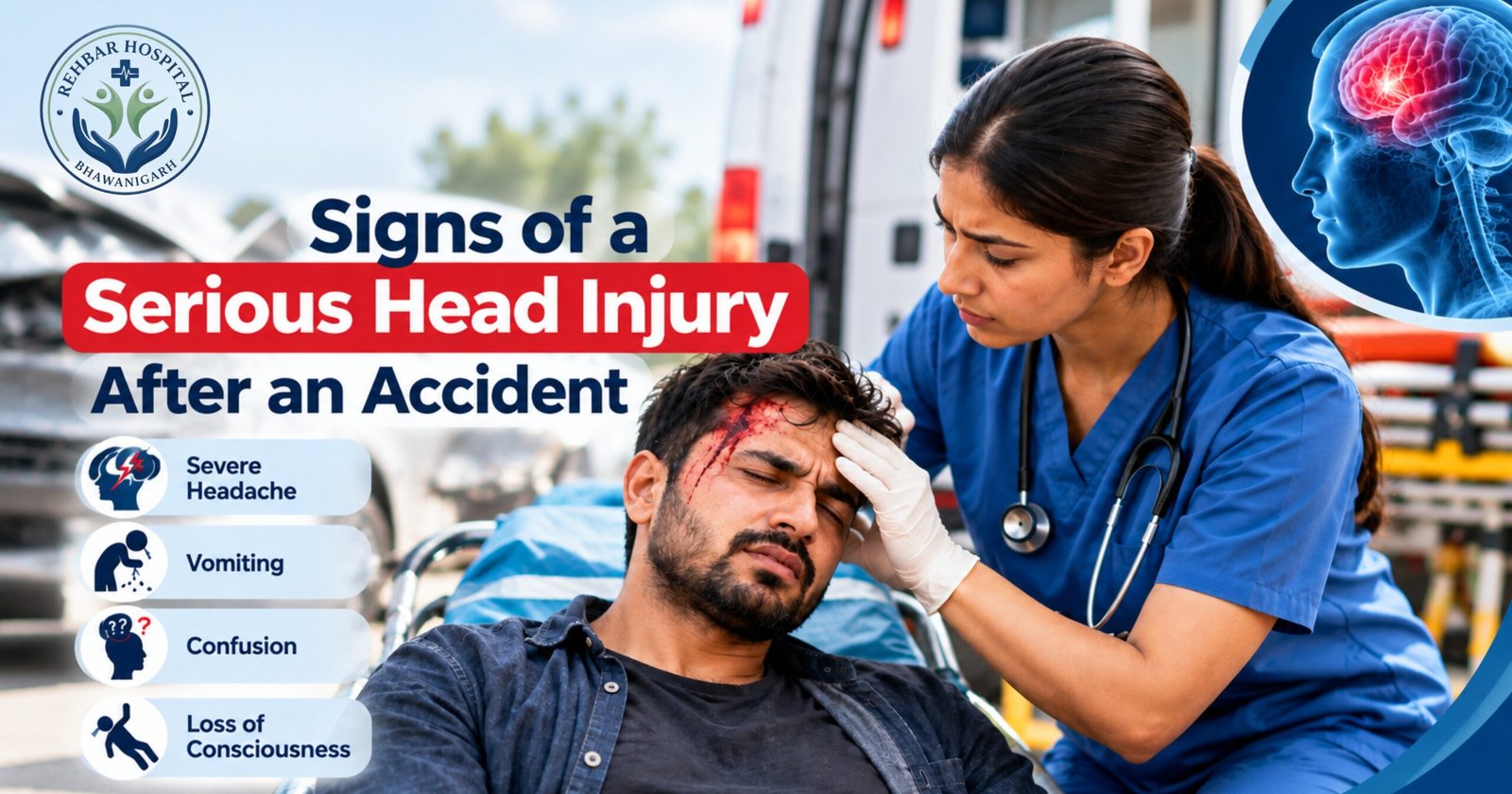
A head injury can happen during a road accident, fall, or other sudden impact. Some injuries cause only mild symptoms. However, others can affect the brain or skull. Head Injury Symptoms may appear immediately or develop hours or days later. Therefore, watching for warning signs after an accident is important. Some symptoms need urgent medical attention. These include repeated vomiting, seizures, confusion, and worsening headache. This article explains the main warning signs and when to seek emergency care.
What Is a Head Injury?
Type your paragA head injury affects the scalp, skull, or brain.
It can happen after a fall, road accident, sports injury, or strong blow.
A concussion is one type of traumatic brain injury.
A concussion can affect how the brain works for a short time.
More serious injuries can cause bleeding or swelling inside the skull.
Importantly, a serious injury may exist without a large visible wound.
Therefore, the absence of bleeding does not always mean the injury is minor.
What Are the Main Head Injury Symptoms After an Accident?
Common symptoms include headache, dizziness, nausea, vomiting, confusion, and memory problems.
Some symptoms may improve with time. Others can become worse.
Common head injury symptoms include:
-Headache
-Dizziness
-Nausea
-Vomiting
-Blurred or double vision
-Feeling confused
-Memory problems
-Feeling unusually tired
-Trouble concentrating
-Balance problems
-Sensitivity to light or noise
-Changes in sleep
-Mood or behavior changes
These symptoms can occur after a concussion or other brain injury.
However, symptoms alone cannot show how serious an injury is.
A doctor may need to examine the person and assess the injury.
What Are Signs of a Serious Head Injury?
Some signs of serious head injury need immediate medical attention.These signs can suggest a more serious brain or skull injury.
1. A Severe or Worsening Headache
A headache can occur after a head injury.
However, a severe headache that keeps getting worse needs attention.
Do not ignore a headache that becomes stronger over time.
Persistent headache can be one of the important head injury warning signs.
2. Repeated Vomiting
Vomiting can happen after a head injury.
However, repeated vomiting is more concerning.
It can occur with concussion or more serious brain injury.
Therefore, seek urgent medical assessment after repeated vomiting.
3. Confusion or Unusual Behaviour
A person may become confused after an accident.
They may not know where they are.
They may repeat questions or forget what happened.
They may also become unusually restless or behave differently.
These changes can be important traumatic brain injury symptoms.
4. Loss of Consciousness
Some people lose consciousness after a head injury.
This can happen for a short or longer period.
Even brief loss of consciousness needs medical assessment.
A person may also become difficult to wake later.
This situation needs emergency medical attention.
5. Seizures
A seizure can cause uncontrolled shaking or unusual movements.
A seizure after a head injury is an emergency warning sign.
Seek emergency care immediately if this happens.
Do not try to hold the person down during a seizure.
Keep the area around the person clear of hard objects.
6. Weakness, Numbness, or Poor Coordination
A serious injury can affect movement or sensation.
Watch for weakness or numbness in an arm or leg.
Also notice sudden difficulty walking or keeping balance.
These symptoms need urgent medical assessment.
7. Problems With Speech or Understanding
A person may suddenly have trouble speaking clearly.
They may also struggle to understand simple questions.
Slurred speech can also occur.
These changes can signal a serious problem after head trauma.
Therefore, seek emergency care without waiting for symptoms to improve.
8. Vision Problems
Blurred vision can occur after a head injury.
Double vision can also occur.
Sudden or worsening vision problems need medical attention.
Unequal pupil size can also be an important warning sign.
The pupils are the dark centres of the eyes.
9. Extreme Sleepiness or Difficulty Waking
Feeling tired can happen after a mild head injury.
However, unusual drowsiness can be more concerning.
A person who cannot stay awake needs urgent assessment.
Emergency help is especially important if the person cannot be woken.
10. Blood or Clear Fluid From the Nose or Ears
Blood from the ears or nose can occur after serious trauma.
Clear fluid leaking from the nose or ears also needs urgent attention.
Do not assume that this is simply a normal result of an accident.
A healthcare professional should assess the person quickly.
Can Head Injury Symptoms Appear Later?
Yes, some head injury symptoms can appear hours or days after the accident.
A person may feel fine immediately after the injury.
Later, they may develop headache, dizziness, vomiting, confusion, or vision problems.
This can make delayed symptoms easy to overlook.
For this reason, someone should not ignore new or worsening symptoms.
Delayed symptoms do not always mean that a serious injury exists.
However, they deserve proper medical assessment.
What Are Concussion Symptoms After an Accident?
A concussion is a type of mild traumatic brain injury.
It can happen after a blow or sudden movement of the head.
Common concussion symptoms include:
-Dizziness
-NauseaVomiting
-Blurred vision
-Memory problems
-Trouble concentrating
-Feeling slowed down
-Sensitivity to light or noise
-Feeling tired
-Sleep changes
-Mood changes
Most concussion symptoms are not life-threatening.
However, serious symptoms can sometimes develop after the injury.
Therefore, worsening symptoms need prompt medical attention.
When Should You Go to a Hospital After a Head Injury?
Go to an emergency department when serious warning signs appear after head trauma.
Seek urgent medical care for:
-Repeated vomiting
-A worsening or severe headache
-Seizures
-Loss of consciousness
-Increasing confusion
-Difficulty waking
-Weakness or numbness
-Trouble speaking
-Difficulty walking
-New vision problems
-Unequal pupils
-Blood or clear fluid from the ears or nose
-A suspected skull fracture
-A high-speed road accident
Some people also need assessment because of the injury itself.
For example, a high-energy accident can carry greater risk.
A doctor will consider the accident, symptoms, medical history, and examination findings.
What Should You Do Immediately After a Serious Accident?
First, keep the injured person as still as possible. Avoid unnecessary movement of the head and neck. A serious accident can also cause a neck or spine injury. Do not shake someone who appears confused or sleepy. Do not remove a helmet if you suspect a serious injury. Instead, seek emergency medical help. If the person is unconscious or seriously unwell, call emergency services. Do not delay care while collecting medical records or belongings.
How Do Doctors Check a Head Injury?
Doctors first assess the person's condition and symptoms. They may check alertness, memory, speech, movement, and pupil reactions. They may also check for other injuries.
The doctor may ask about:
-How the accident happened
-Whether the person lost consciousness
-Memory loss around the accident
-Vomiting after the injury
-Current medicines
-Blood-thinning medicines
-Previous brain conditions
-Changes in behaviour
In some cases, doctors may recommend a CT scan of the head. A CT scan can help identify important bleeding or other serious injury. Doctors decide whether imaging is needed based on the person's risk factors. Not every head injury needs a CT scan.
Can a Head Injury Affect Other Parts of the Body?
Yes. Accidents can cause more than a head injury. A person may also have neck, spine, bone, or joint injuries. For example, a road accident can cause fractures or dislocations. Therefore, doctors may assess the whole body after significant trauma. Rehbar Hospital's Emergency & Trauma Care supports assessment of accident injuries. The hospital also provides emergency care around the clock.
Head Injury and Road Accidents
Road accidents can cause sudden and strong impacts. A person may hit their head against a vehicle or another surface. They may also suffer injuries from sudden movement of the head. Therefore, even a person who feels okay should watch for new symptoms. This is especially important after a high-speed accident. Rehbar Hospital provides 24×7 Emergency & Trauma Care in Bhawanigarh. Its emergency service handles road traffic accidents and other urgent injuries.
When Is ICU Care Needed After a Head Injury?
Some serious injuries require close hospital monitoring. Doctors may recommend intensive care when a patient needs continuous observation. Severe trauma can also involve several injuries at the same time. Rehbar Hospital has an ICU and Critical Care service for serious Trauma. Its listed services include trauma and multi-injury care. The need for ICU care depends on the patient's condition. A doctor makes this decision after assessment and monitoring.
What If the Accident Also Caused a Fracture?
Head trauma can happen together with bone or joint injuries. A fall or road accident may cause fractures or dislocations. These injuries may need examination and imaging. Rehbar Hospital also provides orthopedic care for fractures and trauma. Its orthopedic service includes fracture, dislocation, and post-injury care. A doctor can assess both visible and hidden injuries after an accident.
Common Mistakes to Avoid After a Head Injury
People sometimes wait because the injured person looks normal.
However, some serious problems may not show obvious external signs.
Another mistake is ignoring symptoms that appear later.
Do not ignore repeated vomiting or worsening headache.
Do not ignore confusion, seizures, or unusual sleepiness.
Also, avoid moving someone unnecessarily after major trauma.
When in doubt, seek medical advice rather than guessing the injury is minor.
Why Early Medical Assessment Matters
A head injury can range from mild to severe.The symptoms may also change during recovery.Therefore, medical assessment helps identify people who need closer monitoring. Doctors can decide whether observation, imaging, or other treatment is needed. Early assessment is especially important when warning signs appear. If the injury happened during a road accident, emergency care may be needed. For people in Bhawanigarh and nearby Sangrur areas, Rehbar Hospital provides 24×7 emergency care.
Conclusion:
Head Injury Symptoms should never be ignored after a significant accident. Most head injuries may not become serious. However, warning signs can appear immediately or later. Repeated vomiting, worsening headache, seizures, confusion, and loss of consciousness need urgent attention. Weakness, speech problems, vision changes, and difficulty waking are also important. If you notice these signs, seek emergency medical care promptly. For accident-related injuries, you can visit Rehbar Hospital's Emergency & Trauma Care in Bhawanigarh. Medical information should not replace advice from a qualified healthcare professional.
