
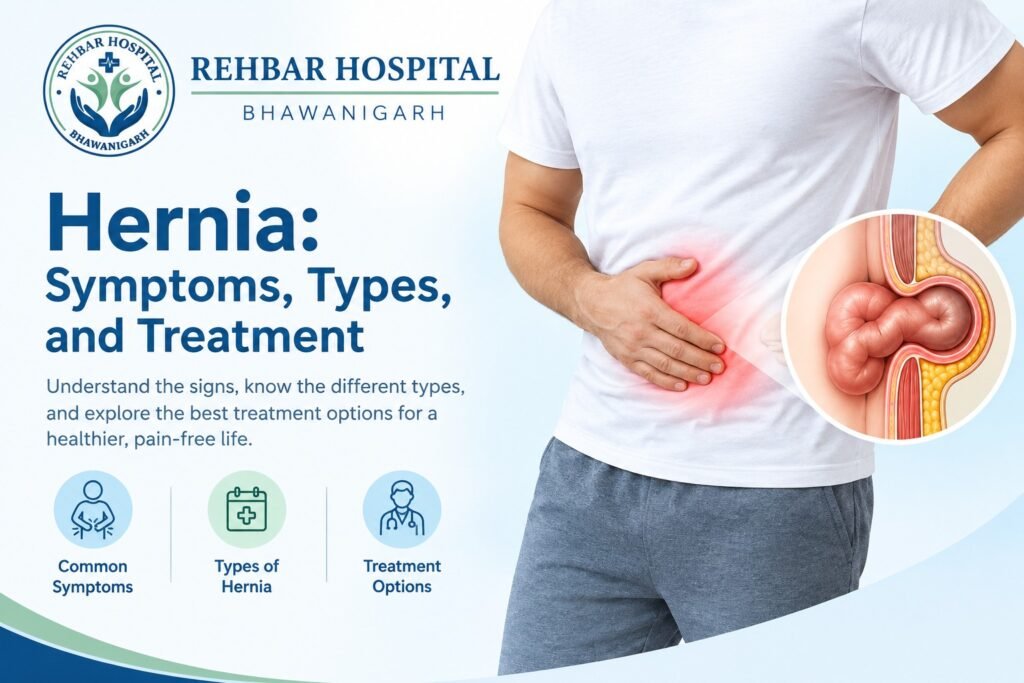
Hernia: Symptoms, Types, Causes, and Treatment
Hernia: Symptoms, Types, and Treatment A hernia is a common health problem that can affect people of all ages. It happens when an organ or tissue pushes through a weak area in the muscle or tissue around it. In many cases, a hernia causes a lump or swelling. However, some hernias may not cause any clear signs at first. If you notice a new lump, pain, or swelling in your stomach or groin, you should get it checked by a doctor. Getting help early can help find the right treatment and lower the risk of serious problems. What Is a Hernia? A hernia happens when part of an organ or tissue pushes through a weak area in the muscle or tissue that normally keeps it in place. Hernias often develop in the stomach area or groin. One common sign is a soft lump that becomes easier to see when you cough, sneeze, bend, or lift something heavy. Some hernias can cause pain or discomfort, while others may not cause any pain. A hernia usually does not go away by itself. So, it is important to talk to a doctor if you think you may have a hernia. What Causes a Hernia? A hernia can happen when there is a weak area in the muscle and there is extra pressure inside the stomach area. Some common causes and risk factors include: Lifting heavy things Long-term coughing Constipation and pushing hard while passing stool Being overweight Pregnancy Weak muscles due to age Past stomach surgery Extra pressure inside the stomach Sometimes, a person may have a weak area in the muscle from birth. A hernia may then appear later in life. Common Hernia Symptoms Hernia symptoms can be different for each person. Some people may only notice a small lump, while others may have pain or a feeling of pressure. Common symptoms include: A lump or bulge in the stomach or groin Pain or discomfort around the lump A feeling of pressure or heaviness Burning or aching in the affected area Pain while coughing, bending, or lifting Swelling that becomes easier to see when standing A lump that becomes smaller when lying down However, some hernias may not cause any symptoms. Therefore, you should see a doctor if you notice a new or unusual lump or swelling. Types of Hernia There are different types of hernia. The type depends on where the hernia develops. 1. Inguinal Hernia An inguinal hernia develops in the groin area. It is one of the most common types of hernia. It can cause a lump or bulge in the groin. The lump may become more visible when you cough, bend, or lift something heavy. Some people may also feel pain, burning, or pressure in the groin. 2. Umbilical Hernia An umbilical hernia develops near the belly button. It happens when tissue pushes through a weak area around the belly button. Umbilical hernias are common in babies, but adults can also have them. In adults, the swelling may cause pain or discomfort, especially when coughing or pushing hard. 3. Femoral Hernia A femoral hernia develops near the groin or upper thigh. It is less common than an inguinal hernia. Some femoral hernias can cause serious problems. So, you should see a doctor if you notice a new lump or swelling near your groin or upper thigh. 4. Hiatal Hernia A hiatal hernia is different from other types of hernia. It happens when part of the stomach moves up through an opening in the muscle below the chest. A small hiatal hernia may not cause any signs. However, a larger one may cause: Heartburn Acid coming back into the mouth Trouble swallowing Chest or stomach pain Feeling full quickly 5. Incisional Hernia An incisional hernia can develop near the place where you had stomach surgery before. It can happen when the muscles in that area become weak. If you notice a new lump near an old surgery mark, talk to a doctor and get it checked. How Is a Hernia Diagnosed? In many cases, a doctor can find a hernia by doing a simple body check. The doctor may check the area while you are standing. You may also be asked to cough or push gently. This can make the hernia easier to see or feel. Sometimes, you may need a scan or other test. Depending on your condition, the doctor may suggest: Ultrasound CT scan MRI The test you need depends on the type and location of the hernia. Hernia Treatment The right hernia treatment depends on a few things. These include the type of hernia, its size, your symptoms, and your general health. Watchful Waiting Some small hernias that do not cause pain or other problems may only need regular checks. However, it is still important to follow your doctor’s advice. A hernia can change over time. Your doctor can tell you if you need treatment. Medicines However, medicines cannot fix most hernias. However, they may help control some symptoms. For example, medicines may help control heartburn and acid coming back into the mouth in people with a hiatal hernia. Hernia Surgery Hernia surgery may be needed when a hernia causes pain, gets bigger, or may cause serious problems. There are two common ways to repair a hernia: Open hernia surgery: The surgeon makes one cut near the hernia and fixes the weak area. Keyhole surgery: The surgeon makes small cuts and uses a small camera to repair the hernia. In some cases, the surgeon may use a special mesh to make the weak area stronger. The right surgery depends on the type and size of the hernia and your overall health. When Is Hernia Surgery Needed? Not every hernia needs surgery right away. However, surgery may be needed when: The hernia causes regular pain The lump is getting bigger The hernia makes daily activities difficult The lump cannot be pushed back inside There is a chance that the bowel may get stuck Your surgeon will check your
