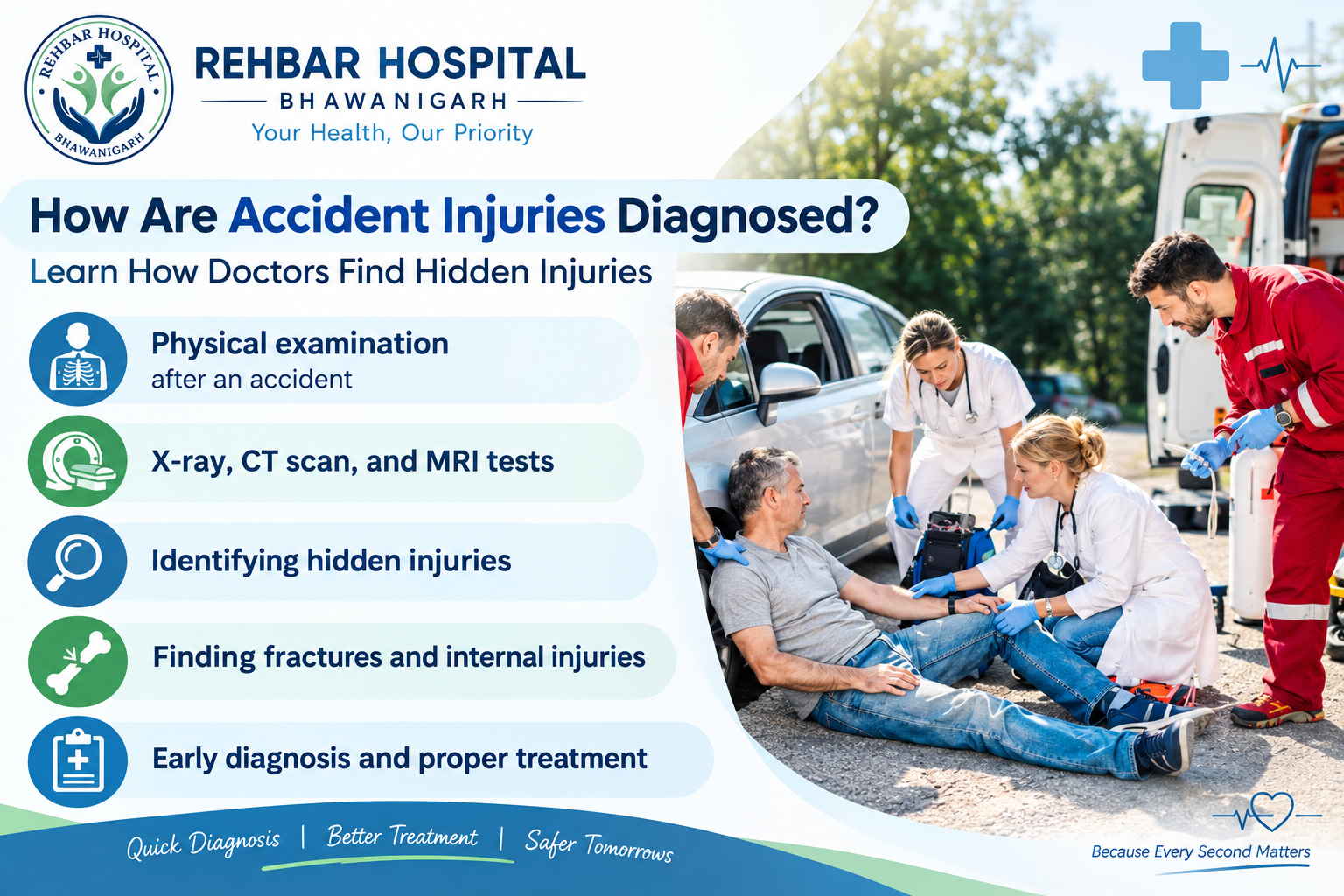
How Are Accident Injuries Diagnosed, Accidents can cause cuts, bruises, broken bones, and internal injuries. However, some injuries may not show symptoms right away. Therefore, you should visit a doctor after an accident, even if you feel fine.
How are accident injuries diagnosed? Doctors ask how the accident happen, check your symptoms, and examine your body. They may also use medical tests to find hidden injuries. These tests help doctors identify injuries and choose the right treatment.
In this blog, we will explain how doctors diagnose accident injuries, which tests they use, how to identify hidden injuries, and when you should visit a doctor.
How Are Accident Injuries Diagnosed?
Doctors diagnosed accident injuries by checking the patient’s symptoms and examining the injured body parts. First, they check for serious injuries. Then, they decide which medical tests the patient needs.
For example, doctors use X-rays to find broken bones. A CT scan helps them find internal bleeding and injuries to the head or chest. An MRI helps them check for injuries to muscles and ligaments.
Doctors also ask how the accident happened and check the patient’s symptoms and medical history. This information helps them choose the right tests and treatment.
1. Medical History and Accident Details
The first step How Are Accident Injuries Diagnosed is to understand how the accident happened. Doctors ask questions about the accident to identify possible injuries.
They may ask these questions:
- How did the accident happen?
- Which part of your body got hurt?
- Did you lose consciousness?
- Do you have pain, swelling, dizziness, or bleeding?
- Do you have any health problems?
- Are you taking any medicines?
The answer help doctors understand the possible injuries. For example, a person who gets hit on the head may need a head injury check. Similarly, a person who falls on their hand may have a broken wrist.
Doctors also consider the patient’s age, medical history, and symptoms before deciding which medical tests they need.
2. Physical Examination After an Accident
A physical examination helps doctors find injuries after an accident. Doctors check the injured body parts for signs of damage. They also check the patient’s overall health.
Doctors may check for:
- Cuts, bruises, and bleeding
- Swelling and pain
- Pain during movement
- Difficulty moving joints
- Muscle strength and feeling
- Changes in breathing or heart rate
- Signs of nerve damage
In an emergency, doctors first check the patient’s airway, breathing, and blood flow. They also look for heavy bleeding and other serious problems.
Next, doctors examine the injured areas more carefully. For example, if a patient’s arm hurts, doctors check for swelling, difficulty moving the arm, and signs of a broken bone.
However, a physical examination may not find every injury. Therefore, doctors may recommend medical tests if they suspect a serious or hidden injury.
3. Diagnostic Tests After a Road Accident
Doctors use different medical tests after a road accident to find broken bones, internal injuries, and damage to muscles or ligaments. They choose the right tests based on the patient’s symptoms and physical examination.
X-Ray for Accident Injuries
An X-ray helps doctors check for broken bones and dislocated joints. It can also show other bone problems.
For example, if a patient has severe leg pain after a road accident, the doctor may recommend an X-ray to check for a broken bone.
However, an X-ray cannot find every injury. Doctors may need other tests to check for small fractures or injuries to muscles and ligaments.
CT Scan for Accident Injuries
A CT scan uses X-rays and a computer to create detailed images of the body. Doctors may recommend this test if they suspect serious internal injuries.
A CT scan can help doctors find:
- Internal bleeding
- Certain head and brain injuries
- Chest and abdominal injuries
- Complex bone fractures
- Damage to internal organs
For example, doctors may recommend a CT scan after a serious accident if the patient’s symptoms or examination suggest a major injury.
However, doctors consider the patient’s condition and the risks of radiation before recommending this test.
MRI for Accident Injuries
An MRI uses magnets and radio waves to create detailed images of the inside of the body. It helps doctors find injuries that may not appear clearly on an X-ray.
Doctors may use an MRI to check for:
- Ligament injuries
- Tendon injuries
- Muscle injuries
- Spinal cord or nerve problems
- Certain brain injuries
For example, a patient may still have joint pain after an accident, even if an X-ray shows no broken bones. In this case, the doctor may recommend an MRI to check for ligament or other soft tissue injuries.
However, not every accident injury needs an MRI. Doctors recommend this test when it helps them identify the injury or choose the right treatment.
Ultrasound and Blood Tests
Doctors may also use an ultrasound to check soft tissues, fluid buildup, or possible internal bleeding in certain situations.
Blood tests can help doctors check blood loss, organ function, and other health problems. However, blood tests alone cannot find every accident injury.
Therefore, doctors use medical test results along with the patient’s symptoms and physical examination to understand the injury and choose the right treatment.
4. How Do Doctors Diagnose Internal Injuries After an Accident?
How Are Accident Injuries Diagnosed Internal injuries after an accident can be dangerous because they may not cause visible wounds. Therefore, doctors check the patient’s symptoms and ask how the accident happened.
These injuries can affect the brain, chest, abdomen, blood vessels, and internal organs. Sometimes, symptoms appear hours after the accident rather than immediately.
Doctors look for warning signs such as:
- Severe or increasing stomach pain
- Difficulty breathing
- Dizziness or fainting
- Confusion or unusual sleepiness
- Repeated vomiting
- Severe headache
- Pale, cold, or sweaty skin
- Unusual weakness
- Blood in the urine or vomit
Doctors may recommend blood tests, an ultrasound, or a CT scan to check for internal injuries. They choose the tests based on the patient’s condition.
However, some internal injuries may not cause clear symptoms at first. Therefore, seek medical help quickly after a serious accident, even if you feel fine initially.
5. Head Injury Diagnosis After an Accident
A head injury can happen during a road accident, a fall, or a hit to the head. Some head injuries are minor, while others can cause serious health problems.
Doctors check the patient’s symptoms, memory, and alertness. They may also check the patient’s eyes, balance, and body movements to look for signs of injury.
Common symptoms of a head injury include:
- Headache
- Dizziness
- Nausea or vomiting
- Confusion
- Blurred vision
- Memory problems
- Loss of consciousness
Depending on the patient’s condition, doctors may recommend a CT scan to check for bleeding or other serious injuries. In some cases, they may use an MRI to get detailed images of the brain.
Seek emergency medical help if a person develops a worsening headache, repeated vomiting, seizures, increasing confusion, weakness, or difficulty staying awake after a head injury.
6. Fracture Diagnosis After an Accident
A fracture means a broken bone. It can happen during a road accident, a fall, a sports injury, or a strong impact.
Doctors check the injured area for pain, swelling, and bruising. They also check whether the patient can move the injured part and whether blood flows properly to the area.
Doctors usually use an X-ray to find a broken bone. However, they may recommend a CT scan for complex fractures or an MRI if they suspect an injury that does not appear clearly on an X-ray.
Some fractures may not cause visible changes in the injured area. Therefore, do not ignore severe pain or difficulty standing or walking after an accident.
Once doctors confirm the fracture, they choose the right treatment based on the location and severity of the injury.
7. Soft Tissue Injury Diagnosis
Soft tissue injuries affect muscles, tendons, ligaments, and tissues around the joints. These injuries can happen when the body twists suddenly, stretches too far, or receives a strong hit.
Common symptoms include pain, swelling, bruising, stiffness, and difficulty moving.
Doctors check the injured area to find the cause of the problem. They examine the pain, muscle strength, joint movement, and stability.
If doctors suspect a serious muscle, tendon, or ligament injury, they may recommend an ultrasound or MRI for a closer look.
Sometimes, soft tissue injury symptoms become worse over time. Therefore, do not ignore pain or swelling that continues after an accident. Visit a doctor to get the injury check and receive the right treatment.
8. Emergency Medical Assessment After an Accident
Emergency medical assessment helps doctors find and treat serious injuries quickly. Doctors check life-threatening problems first because these injuries need immediate care.
First, doctors check the patient’s airway, breathing, blood flow, and alertness. They also control heavy bleeding and provide emergency treatment when needed.
Once the patient’s condition becomes stable, doctors examine the body more carefully and recommend the necessary medical tests.
For example, a person who has trouble breathing after a road accident may need tests to check for chest injuries. Similarly, a person who is not fully conscious may need an urgent examination for a head injury.
This process helps doctors find serious injuries quickly and provide the right treatment at the right time.
9. Symptoms of Hidden Injuries After an Accident
Some accident injuries do not cause symptoms right away. Depending on the injury, symptoms may appear hours or even days later.
Therefore, pay attention to how you feel after an accident. Even if you can walk or move normally, you may still have an injury.
Watch for these warning signs:
- Pain that gets worse over time
- New or increasing swelling
- Headaches that do not go away
- Stomach pain or discomfort
- Numbness or tingling
- Difficulty breathing
- Unusual tiredness or weakness
- Problems with vision or balance
If you notice any of these symptoms, contact a doctor. However, do not wait for your symptoms to get worse if you suspect a serious injury.
Seek emergency medical help immediately if you have heavy bleeding, difficulty breathing, fainting, confusion, severe pain, or signs of a serious head or internal injury.
10. When Should You See a Doctor After an Accident?
Seek emergency medical care if you have severe pain, heavy bleeding, difficulty breathing, loss of consciousness, repeated vomiting, or other signs of a serious injury.
You should also visit a doctor if you have ongoing pain, swelling, stiffness, or difficulty moving after an accident.
Even if you feel fine at first, get a medical check-up after a major accident or strong impact. Some injuries may not show symptoms immediately.
Also, follow your doctor’s advice and attend follow-up appointments when needed. If your symptoms get worse after your first check-up, seek medical help again.
Early diagnosis helps doctors find injuries and reduce the risk of complications. However, the right treatment depends on the type of injury and your overall health.
Accident Injury Treatment and Diagnosis
Doctors begin accident injury treatment by finding the type and severity of the injury. They examine the patient and check the test results to choose the right treatment.
Depending on the injury, treatment may include:
- Cleaning and dressing wounds
- Giving medicine to relieve pain
- Supporting a broken bone with a cast or splint
- Treating muscle and ligament injuries
- Performing surgery for serious injuries
- Providing physiotherapy to help recovery
- Scheduling follow-up check-ups
For example, a minor muscle injury may improve with rest and proper care. However, a serious fracture or internal injury may require hospital treatment or surgery.
Therefore, follow your doctor’s advice and avoid heavy activities until your doctor says it is safe to return to them.
Conclusion
How Are Accident Injuries Diagnosed. Accident injury diagnosis helps doctors find injuries and choose the right treatment. Doctors examine the patient and may use tests such as X-rays, CT scans, MRIs, or blood tests to check for injuries.
However, some injuries may not show symptoms immediately. Therefore, do not ignore severe pain, dizziness, swelling, breathing problems, or worsening headaches after an accident.
If you or someone else has an accident, seek medical help as soon as possible. You can contact Rehbar Hospital for medical guidance and confirm which diagnostic and treatment services are available.
How Are Accident Injuries Diagnosed, Remember, early medical care can help doctors find injuries quickly and provide the right treatment.
How are accident injuries diagnosed?
Doctors find accident injuries by asking how the accident happened, checking the patient’s symptoms, and examining the injured areas. They may also recommend medical tests, such as X-rays, CT scans, MRI scans, or blood tests, to identify the injuries and decide on the right treatment.
Which test are use to diagnose injuries after a road accident?
Doctors may use X-rays to find broken bones, CT scans to check for serious internal injuries, and MRI scans to examine muscle and ligament injuries. They may also recommend an ultrasound or blood tests when needed.
Can internal injuries occur without visible wounds?
Yes, internal injuries can happen even when there are no visible wounds. Therefore, visit a doctor after a serious accident, especially if you have stomach pain, dizziness, breathing problems, or unusual weakness.
Can an X-ray detect all accident injuries?
No. X-rays can find many broken bones, but they cannot detect every injury. If doctors suspect other injuries, they may recommend a CT scan, MRI, ultrasound, or another medical examination.
How soon should I see a doctor after an accident?
Seek emergency medical care if you have severe pain, heavy bleeding, difficulty breathing, confusion, or loss of consciousness. After a serious accident, visit a doctor as soon as possible because some injuries may not show symptoms right away.
