Broken Bone After an Accident can cause pain, swelling, bruising, and difficulty moving the injured body part. It can happen because of a road accident, a fall, a sports injury, or a sudden hit. Some fractures may look small, but others can damage nearby muscles, nerves, and blood vessels.
Therefore, it is important to know what to do after a bone fracture. Proper first aid can protect the injured area until a doctor checks it. Early diagnosis and the right fracture treatment can also help prevent further problems and support faster recovery.
At Rehbar Hospital, patient can seek medical help for accident-relate injuries and suspect bone fractures. If you think a bone is broke, visit a doctor as soon as possible. Do not try to treat the injury yourself.
What Is a Broken Bone After an Accident?
A broken bone, also called a fracture, happens when a bone cracks or break due to a strong hit, fall, or pressure. The seriousness of the injury depends on which bone is broke and how much damage has occur.
For example, a person may break their arm while trying to protect themselves during a fall. Similarly, a road accident can cause a broken leg due to a strong impact.
Sometimes, Broken Bone After an Accident changes the shape of the injured arm or leg. However, in other cases, the only signs may be pain and swelling. Therefore, do not ignore an injury just because the bone looks normal. Always consult a doctor if you suspect a fracture.
Signs of a Broken Bone After an Accident
Knowing the signs of a broken bone can help you get medical help on time. The symptoms may differ from person to person. However, some common signs can appear after an accident and help you identify a possible fracture
1. Severe Pain
A Broken Bone After an Accident often causes pain in the injured area. The pain may increase when you move the injured arm or leg, put weight on it, or touch the affected area.
2. Swelling and Bruising
Pain and swelling may appear soon after a fracture. You may also notice bruises around the injured area because blood collects under the skin.
3. Difficulty Moving
You may struggle to move your arm, leg, wrist, or ankle normally. For example, standing or walking may become difficult after a leg fracture.
4. Visible Deformity
Sometimes, the injured arm or leg may look bent or have an unusual shape. This can be a sign of a serious fracture, so seek medical help immediately.
5. Tenderness Around the Bone
The injure area may hurt when you touch it. However, do not press it again and again to check if the bone is broke, as this may make the injury worse.
6. Numbness or Tingling
Numbness, tingling, or changes in skin colour may be signs of nerve damage or poor blood flow. If you notice these symptoms after an accident, seek emergency medical help immediately.
Important: These symptoms do not always mean that a bone is broken. However, a fracture can still happen even if the pain is mild or the injured area looks normal. Therefore, consult a doctor if you suspect a broken bone after an accident.
Broken Bone After an Accident Symptoms and Causes
A bone can break for different reasons, such as accidents, falls, or sports injuries. Knowing the common causes of fractures can help you understand when to seek medical help.
Common fracture symptoms and causes include:
- Road accidents: A strong hit during a road accident can break bones in the arms, legs, ribs, or other parts of the body.
- Falls: Falling from stairs, a height, or even the ground can cause a broken bone.
- Sports injuries: A sudden twist, fall, or hit while playing sports can lead to a fracture.
- Workplace accidents: Heavy objects, machines, or falls at work can cause bone injuries.
- Weak bones: Conditions like osteoporosis make bones weak and increase the risk of fractures, even after a minor fall.
- Repeated stress: Repeating the same physical activity again and again can cause small cracks in the bones, known as stress fractures.
In addition, age, bone health, and the force of the impact can influence the severity of the injury.
Types of Bone Fractures
Doctors classify fracture base on how the bone break and whether the skin is damage.
Closed Fracture
A closed fracture happens when a bone breaks but does not damage the skin. However, it can still cause damage to the muscles and tissues around the bone.
Open Fracture
An open fracture happen when a broken bone is connect to an open wound in the skin. Sometimes, the bone may be visible through the wound. In other cases, the wound reaches the broken bone without showing it.
An open fracture needs urgent medical care because germs can enter the wound and cause an infection.
Complete Fracture
A complete fracture happens when a bone breaks all the way through into two or more pieces.
Incomplete Fracture
An incomplete fracture happens when a bone cracks but does not break completely. This type of fracture is more common in children, but it can also happen in adults.
Displaced Fracture
A displaced fracture happens when the broken pieces of a bone move out of their normal position.
Non-Displaced Fracture
A non-displaced fracture happens when a bone cracks or breaks, but the broken pieces stay in their normal position or move only slightly.
Every fracture is different. Therefore, doctors check the type of fracture, the patient’s condition, and any other injuries before choosing the right treatment.
Broken Bone After an Accident First Aid: What Should You Do?
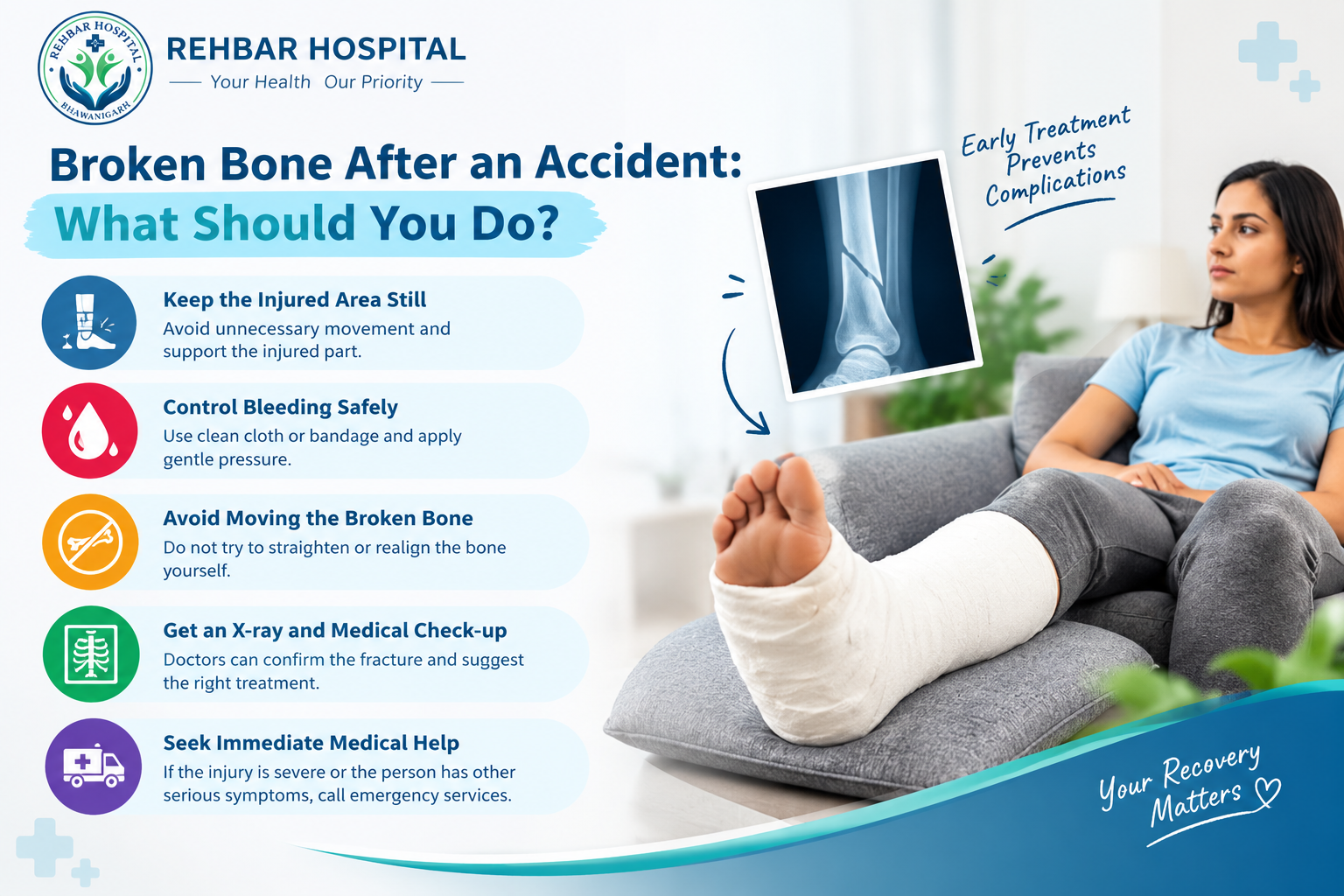
Broken bone first aid can help protect the injured area and prevent further damage until a doctor provides treatment. If you think someone has a broken bone after an accident, follow these steps to help them safely.
1. Check for Immediate Danger
First, make sure the area is safe before helping the injured person. If a serious road accident has occurred, check for heavy bleeding, breathing problems, or loss of consciousness.
Call emergency services if the person has a serious injury. Injuries to the head, neck, back, chest, or abdomen need urgent medical care.
2. Keep the Injured Person Still
Next, ask the injured person to stay as still as possible. Do not move the injured arm or leg unnecessarily, as this can make the injury worse.
If you think the person has a neck or back injury, do not move them unless they are in immediate danger or you need to help them breathe.
3. Support the Injured Area
Use soft padding or support to protect the injured area and keep it comfortable. If you know how to use a splint safely, you can use it to keep the injured area still. Do not try to move the broken bone into place.
Never try to straighten a bent arm or leg. Also, never push a bone back under the skin if it is sticking out.
4. Control Bleeding
If the injury has an open wound, cover it with a sterile dressing or clean cloth. Apply gentle pressure around the wound to control bleeding. However, do not press directly on a bone that is sticking out.
If the bleeding is heavy or does not stop, get emergency medical help immediately.
5. Apply a Wrapped Cold Pack
A cold pack wrapped in a towel can help reduce pain and swelling. Place it gently on the injured area for short periods. Never put ice directly on the skin.
Remember, a cold pack cannot treat a broken bone. Always see a doctor to check the injury and get the right treatment.
6. Avoid Food or Drink if Emergency Surgery May Be Needed
If the injury is serious, doctors may need to perform emergency surgery. Follow the emergency team’s advice about eating and drinking. Do not wait for the pain to improve before seeking medical help. Get treatment as soon as possible.
7. Get Medical Help Promptly
Finally, take the injured person to a doctor as soon as possible. A doctor will examine the injury and may recommend an X-ray to check the broken bone and decide on the right treatment.
Never massage the injured area, apply force, or try to put the bone back in place yourself. These actions can make the injury worse and damage nearby tissues.
Treatment Of Broken Bone After an Accident
The right treatment Broken Bone After an Accident depend on which bone is broke and how serious the injury is. Doctors also check whether the bone is in the correct position and whether nearby tissue are damage. They consider the patient’s age, overall health, and other injuries before choosing the best treatment.
1. Medical Examination
First, the doctor asks how the accident happened and checks the injured area. They look for pain, swelling, and skin damage. They also check movement, blood flow, feeling, and nerve function.
If the patient has several injuries, the medical team treats life-threatening problems first. After that, they focus on treating the broken bone.
2. Bone Fracture Diagnosis
A bone fracture diagnosis usually includes a physical examination and imaging tests. These tests help doctors find the broken bone and understand how serious the injury is.
- X-ray for bone fracture: An X-ray helps doctors find most broken bones and check if the broken pieces have moved out of place.
- CT scan: A CT scan gives more detailed images. Doctors may use it to check complex fractures, especially around joints or the pelvis.
- MRI: An MRI can help doctors find some hidden fractures and check damage to nearby muscles, ligaments, and other soft tissues.
Sometimes, an X-ray does not show a fracture clearly. If the pain continues despite a normal X-ray, the doctor may recommend more tests or another examination.
3. Cast and Splint for Fractures
Doctors may use a cast or splint to keep the broken bone in place while it heals.
A splint allow room for swelling and may be use soon after the injury. A cast gives stronger support and helps keep the bone stable during recovery.
During recovery, follow the doctor’s instructions. Keep the cast dry, avoid putting pressure on it, and attend all follow-up appointments.
If the cast feels too tight or you notice increasing pain, numbness, unusual swelling, or cold or discoloured fingers or toes, seek medical help immediately.
4. Fracture Surgery
Some broken bones need surgery to put the bone back in the correct position and keep it stable. Doctors may use metal plates, screws, or rods to hold the bone in place while it heals.
Fracture surgery may be need if the bone has move out of place, the fracture affect a joint, the bone break through the skin, or a cast or splint cannot keep the bone stable.
However, not every broken bone needs surgery. The doctor examines the injury and chooses the safest treatment for the patient.
5. Pain Management and Follow-Up
Doctors may prescribe pain-relief medicines and recommend follow-up X-rays to check how well the bone is healing. They will also explain when you can move the injured area, put weight on it, care for the wound, and return to your daily activities.
Take medicines only as directed by your doctor. Also, tell your doctor if you notice any new symptoms or if your pain or swelling gets worse.
How Doctors Treat Broken Bone After an Accident
The main goal of fracture treatment is to help the bone heal in a stable position while protecting surrounding tissues.
Depending on the injury, treatment may include:
- Immobilisation: A cast, splint, or brace limits movement and supports healing.
- Reduction: A trained doctor moves displaced bone fragments back into a suitable position when needed.
- Surgical fixation: Plates, screws, rods, or other devices stabilise certain fractures.
- Wound care: Open fractures may require urgent cleaning, antibiotics, and surgery, depending on the injury.
- Rehabilitation: Exercises and physiotherapy help restore movement, strength, and function when appropriate.
Furthermore, patients should attend all scheduled appointments because doctors may need to adjust the treatment plan as the bone heals.
Recovery Time for a Broken Bone
The recovery time for a broken bone varies from person to person. Some simple fractures heal in around six to eight weeks, while other injuries may need several months or longer.
Recovery depends on several factors, including:
- The location and type of fracture.
- The severity of the injury.
- The patient’s age and general health.
- Whether surgery was necessary.
- Smoking and other factors that can affect bone healing.
- Whether the patient follows medical advice.
For example, a simple fracture in the arm may heal differently from a complex fracture involving the leg or a joint. Therefore, there is no single recovery timeline for every patient.
During recovery, avoid lifting heavy objects, walking on an injured leg, or returning to sports before your doctor gives permission. Even when the pain improves, the bone may not have fully healed.
Physiotherapy After a Fracture
After the doctor confirms that movement is safe, physiotherapy after a fracture may help restore normal function.
A physiotherapist can recommend exercises based on the injury and stage of healing. These may focus on:
- Improving joint movement.
- Reducing stiffness after immobilisation.
- Rebuilding muscle strength.
- Improving balance and coordination.
- Gradually returning to walking or daily activities.
However, starting exercises too early may interfere with healing. Therefore, follow the doctor’s and physiotherapist’s guidance rather than trying strenuous movements independently.
Complications of Untreated Fractures
Ignoring a suspected fracture can lead to serious problems. Although complications depend on the injury, delayed or inadequate treatment may increase the risk of:
- Poor bone alignment: The bone may heal in the wrong position.
- Delayed healing: The fracture may take longer than expected to heal.
- Nonunion: The broken bone may fail to heal properly.
- Infection: Open fractures can allow bacteria to enter damaged tissues.
- Nerve or blood vessel damage: Certain fractures can affect nearby structures.
- Joint stiffness: Prolonged immobilisation or joint injuries may limit movement.
- Long-term pain or reduced function: Some injuries can affect everyday activities for an extended period.
Consequently, seek medical care promptly if you suspect a fracture. Early assessment helps doctors identify the injury and plan suitable treatment.
When Should You See an Orthopaedic Doctor for Fractures?
An orthopaedic doctor for fractures can check the injury and suggest the right treatment.
Seek medical help as soon as possible if you have severe pain, swelling, a bent or deformed limb, difficulty moving the injured arm or leg, or trouble standing on the injured leg after an accident.
Go to the emergency department immediately if a bone is sticking out through the skin, the bleeding is heavy, the injured arm or leg becomes cold or blue, or you feel numbness or rapidly increasing pain.
After a serious road accident, do not focus only on a painful arm or leg. The accident may also cause injuries to the head, chest, abdomen, or spine that are not easy to notice at first.
For medical evaluation and guidance, you can visit Rehbar Hospital. The doctor will recommend suitable care based on the injury and the patient’s condition.
Conclusion
A broken bone after an accident needs quick medical attention and proper treatment. Even a small fracture can cause problems if you do not treat it. These problems may include poor bone healing, infection, stiffness, or long-term pain.
Therefore, keep the injured area still and control bleeding safely. Never try to straighten the broken bone yourself. Instead, seek medical help as soon as possible. Doctors can examine the injury and use X-rays or other tests to confirm the fracture. They may recommend a cast, splint, or surgery, depending on the injury.
Moreover, follow your doctor’s advice and complete your rehabilitation exercises to help the bone heal and restore normal movement. If you suspect a fracture after a road accident, fall, or other injury, consult a qualified doctor. You can also visit Rehbar Hospital to learn more about its available medical services.
What should I do if I suspect a broken bone after an accident?
Keep the injured area still and do not try to straighten the broken bone. Control any bleeding safely and get medical help as soon as possible. If the injury is serious or the person has other severe symptoms, call emergency services immediately.
What are the common signs of a broken bone?
Common signs of a broken bone include pain, swelling, bruising, tenderness, and difficulty moving the injured area. Sometimes, the arm or leg may look bent or have an unusual shape. However, a bone can be broke even if the injure area look normal.
Can I move a broken bone before reaching the hospital?
Avoid moving the injured area unnecessarily. Keep it supported in a comfortable position, and never try to put the broken bone back in place. If you suspect a neck or back injury, do not move the person unless they are in immediate danger.
Is an X-ray necessary for every suspected fracture?
Doctors usually use an X-ray to check for a broken bone. However, they may recommend a CT scan, MRI, or another X-ray if the injury is serious or the first X-ray does not clearly show the fracture.
Does every broken bone require surgery?
No, not every broken bone needs surgery. Many fractures can heal with a cast, splint, or brace. However, doctors may recommend surgery if the bone moves out of place, the fracture is unstable, the bone breaks through the skin, or the injury is complex.
