What Is Polytrauma? Causes, Symptoms and Treatment
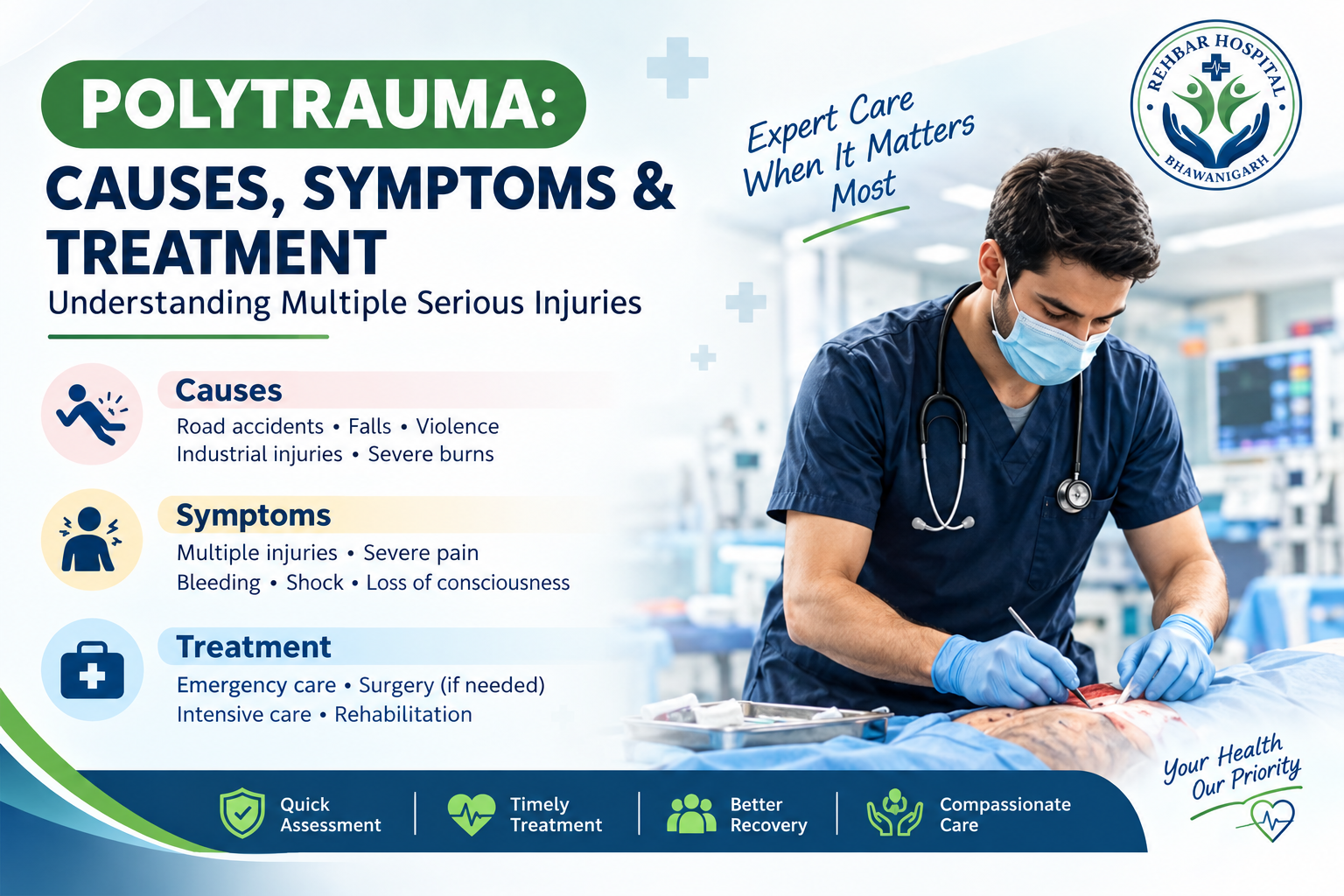
Polytrauma means a person has many injuries in different parts of the body after an accident. These injuries may affect the head, chest, stomach, back, bones, or internal organs. Some injuries can be very serious and may put a person’s life at risk. Therefore, getting medical help quickly is very important.
Road accidents, falls from high places, and workplace accidents are some common causes of polytrauma. The injuries can be minor or serious, depending on the accident. Doctors check the patient carefully and start the right treatment as soon as possible.
Rehbar Hospital in Bhawanigarh provides 24×7 emergency and trauma care. The medical team checks patients after accidents, gives initial treatment, and arranges tests or specialist care when needed. Early treatment can help prevent further problems.
In this blog, we will explain what polytrauma is, what causes it, its symptoms, how doctors diagnose and treat it, and how patients can recover.
What Is Polytrauma?
Polytrauma means a person has serious injuries in different parts of the body. Some of these injuries can be life-threatening. They usually happen because of major accidents, such as road accidents or falls from high places.
For example, after a car accident, a person may have a head injury, broken ribs, a broken leg, or bleeding inside the body.
Doctors check the whole body to find all the injuries. Some injuries are not visible from the outside. Therefore, doctors need to check the patient quickly and provide the right treatment to help prevent further problems.
Common examples of polytrauma include:
- A head injury along with a chest injury.
- Broken bones in the arms, legs, or hips.
- Stomach injuries that cause internal bleeding.
- A spine injury along with broken bones.
- Chest injuries along with damage to internal organs.
Recognising these injuries early helps doctors understand how serious the condition is. It also helps them provide emergency treatment quickly and prevent further health problems.
What Are the Main Causes?
Knowing the causes of polytrauma can help people understand how serious injuries happen. Polytrauma can occur because of different accidents. However, serious road accidents, falls from heights, and other major accidents are some of the common causes.
1. Road Accident
Road accident are a common cause of serious injurie. A car accident, motorcycle accident, or be hit by a vehicle can hurt many part of the body at the same time.
For example, a person may have broke bones, a head injury, chest pain, or bleeding inside the body after an accident. Sometimes, the accident can also damage internal organs, even if there are only small cuts or marks on the skin. Therefore, it is important to get medical help quickly after a serious road accident.
2. Falls from Heights
Falling from a building, ladder, rooftop, or other high place can cause serious injuries. A person may suffer a head injury, broken bones, a back injury, or damage to internal organs after a fall.
Older people and construction workers may have a higher risk of falling. Therefore, it is important to use safety equipment, follow safety rules, and take care when working or walking in high places. These steps can help prevent serious injuries.
3. Workplace Accidents
Accidents in factories and construction areas can cause serious injuries. Heavy machines, falling objects, damaged equipment, or heavy objects falling on a person can hurt different parts of the body. These accidents may damage bones, muscles, blood vessels, or internal organs.
Therefore, workers should follow safety rules and wear proper safety equipment, such as helmets, gloves, and safety shoes. These steps can help reduce the risk of serious injuries.
4. Sports and Recreational Accidents
Sports accidents can sometimes cause serious injuries to different parts of the body. For example, a person may get broke bones, a head injury, or a chest injury while cycle, bike race, or play contact sports.
The risk of injury depends on the sport and how serious the accident is. Wearing proper safe equipment, such as helmets and protective gear, can help reduce the risk of serious injuries.
5. Burns and Explosions
Explosions and big fires can cause serious injuries. A person may suffer burns, broken bones, hearing problems, or damage to internal organs. Breathing in smoke can also make it hard to breathe and worsen the person’s condition. Therefore, getting medical help quickly after an explosion or fire is very important.
6. Violence and Other Traumatic Events
Physical attacks, deep cuts, and serious accidents can cause injuries in different parts of the body. In these cases, doctors check for bleeding, damage to internal organs, and other serious problems.
No matter how the injuries happen, a person with several serious injuries needs medical help immediately. Early treatment helps doctors treat the injuries quickly and reduce the risk of further problems.
What Are the Common Symptoms?
The symptom of polytrauma depend on how serious the injury are and which part of the body are hurt. Some symptoms appear immediately after an accident, while others may appear later. Sometimes, a person may have internal injuries that cannot be seen from the outside.
Therefore, it is important to know the warning signs of polytrauma. If someone has serious injuries after an accident, call emergency services and get medical help immediately. Do not wait for symptoms to get worse.
1. Severe Pain and Swelling
After an accident, a person may feel severe pain in the head, chest, stomach, back, arms, or legs. They may also have swelling, bruises, or pain when touching an injured area. These signs may mean that a bone is broken or the muscles and other body parts are damage.
However, a person may have a serious injury even if they feel only a little pain. Therefore, it is important to get medical help quickly after a serious accident.
2. Bleeding
Heavy bleeding from a wound needs immediate medical help. Sometimes, bleeding happens inside the body, such as in the chest or stomach, and no blood can be seen from the outside.
Signs of blood loss may include pale skin, weakness, dizziness, fast breathing, and a fast heartbeat. If a person shows these signs after an accident, call emergency services immediately.
3. Head Injury Symptoms
A head injury may cause confusion, fainting, vomiting, a bad headache, or unusual behaviour. In serious cases, a person may also have seizures or trouble speaking.
These signs may mean the person has a serious head injury. If any of these symptoms appear after an accident, get emergency medical help immediately.
4. Breathing Difficulties
A chest injury can hurt the ribs, lungs, or nearby body parts. After an accident, a person may feel chest pain, have trouble breathing, or breathe faster than normal.
These signs may indicate a serious injury. Therefore, get emergency medical help immediately if someone has chest pain or breathing problems after an accident.
5. Confusion or Reduced Consciousness
After an accident, a person may feel confused, become very sleepy, stop responding, or forget what happened. These signs may mean the person has a head injury or another serious health problem.
Do not ignore these symptoms or unusual behaviour after an accident. Get emergency medical help immediately because the person may need urgent treatment.
6. Deformity or Difficulty Moving
If a person’s arm or leg looks bent in an unusual way or they cannot move it, they may have a broken bone or a joint that has moved out of place. Numbness or weakness in the arms or legs may also mean there is damage to the nerves or spine.
If you think someone has a spine injury, avoid moving them unless there is immediate danger. Call emergency services and follow their instructions to help prevent further injury.
7. Signs of Shock
Shock can happen when the body does not get enough blood and oxygen. It can be very dangerous and needs immediate medical care.
Common signs of shock include:
- Pale, cold, or sweaty skin.
- Fast breathing.
- A weak or fast heartbeat.
- Feeling dizzy or faint.
- Confusion or difficulty staying awake.
If you notice these signs after an accident, call emergency services immediately.
Important: Do not wait for all the symptoms to appear before getting help. A person may have serious internal injuries even if they are awake and have only a few visible wounds. Always seek urgent medical care after a serious accident.
How Do Doctors Diagnose Polytrauma?
Polytrauma diagnosis means doctors check the patient quickly to find all the injuries. They examine the body and may do medical tests to understand how serious the injuries are.
First, doctors treat serious problems such as trouble breathing, heavy bleeding, or unconsciousness. Once the patient’s condition is stable, they check for other injuries and decide on the right treatment.
The diagnostic process may include the following steps.
1. Initial Emergency Assessment
First, doctors check whether the patient can breathe properly, has a normal blood flow, and is conscious. They also check important signs, such as heart rate and blood pressure, and look for heavy bleeding or signs of shock.
If the patient has a serious problem, doctors start emergency treatment immediately. They do not wait for all test results before providing life-saving care.
2. Physical Examination
Next, doctors carefully check the patient’s head, neck, chest, stomach, back, and arms and legs. They look for cuts, swelling, bruises, pain, broken bones, and other signs of injury.
Doctors may also check the patient again later because some injuries are not easy to find at first. Repeated check-ups help them identify hidden injuries and provide the right treatment.
3. Imaging Tests
Doctors may use different imaging tests to find injuries inside the body. The tests depend on the patient’s condition and the type of injury.
- X-rays: Help doctors find broken bones and check some chest injuries.
- CT scans: Provide detailed pictures of the head, chest, stomach, and other body parts.
- Ultrasound: Helps doctors check for internal bleeding in certain emergency situations.
- MRI: Helps doctors examine some injuries to the brain, spine, and soft tissues.
Not every patient needs all these tests. Doctors choose the right tests based on the patient’s injuries and medical condition.
4. Blood Tests
Blood tests help doctors check the patient’s health after an accident. These tests can show if the patient has lost a lot of blood and help doctors check kidney function, blood clotting, and oxygen levels.
Doctors may repeat these tests during treatment to check the patient’s condition and see if the treatment is working properly.
5. Specialist Evaluation
Depending on the injuries, the patient may need to see different doctors. For example, a trauma surgeon treats serious injuries, an orthopaedic specialist treats broken bones, and a neurosurgeon treats injuries to the brain and spine.
Finding all the injuries correctly helps doctors decide which problems need treatment first. It also reduces the chance of missing a serious injury.
What Is Polytrauma Treatment?
Polytrauma treatment aims to make the patient stable, treat serious injuries, and prevent further health problems. Since every patient may have different injuries, doctors choose the treatment according to the patient’s condition.
Depending on how serious the injuries are, the patient may need emergency care, surgery, special care in the hospital, or physiotherapy to help them recover.
1. Emergency Stabilisation
The main goal of emergency treatment is to save the patient’s life. Doctors first check if the patient is breathing properly, if blood is flowing normally, and if there is heavy bleeding.
Depending on the patient’s condition, treatment may include giving oxygen, helping the patient breathe, giving fluids through a vein, providing blood, treating wounds, or performing emergency procedures.
Doctors also check the patient’s heartbeat, blood pressure, and breathing regularly. This helps them find any problems quickly and provide the right treatment on time.
2. Control of Severe Bleeding
Heavy bleeding can be very dangerous and may put a person’s life at risk. Therefore, doctors try to stop the bleeding as quickly as possible, whether it happens outside or inside the body.
Treatment may include pressing on a wound to stop the bleeding, giving blood to replace lost blood, or performing surgery if needed. The treatment depends on where the bleeding is happening and how serious the patient’s condition is.
3. Treatment for Head and Brain Injuries
Doctors must check head injuries carefully. Depending on how serious the injury is, they may keep the patient under observation, reduce pressure inside the brain, help the patient breathe, or perform surgery if needed.
Finding a head injury early is very important because some injuries can get worse over time, even if the symptoms seem mild at first. Therefore, getting medical help quickly after a head injury is essential.
4. Fracture and Orthopaedic Treatment
A person with several broken bones may need a splint, plaster cast, or surgery. Doctors decide the right treatment base on which bones are broke, how serious the injuries are, and the patient’s health.
Some broken bones heal with the help of a cast or splint that keeps the bone in the correct position. However, serious breaks may need surgery. During surgery, doctors may use metal plates, screws, or rods to hold the bones in place while they heal.
5. Treatment for Internal Organ Injuries
Internal injuries can harm organs such as the lungs, liver, kidneys, spleen, and intestines. The treatment depends on how badly the organs are damage. Doctors may keep the patient under observation, give medicines or blood, perform medical procedures, or carry out surgery if needed.
Some internal injuries can become dangerous very quickly. Therefore, doctors must check the patient carefully and start the right treatment as soon as possible.
6. Surgery When Required
Some patients need emergency surgery to stop bleeding, repair damaged organs, fix broken bones, or treat serious injuries.
However, some patients may need their condition to become stable before having major surgery. This allows doctors to control the most serious problems first and choose the safest treatment for the patient.
7. Intensive Care and Continuous Monitoring
Patients with serious injuries in different parts of the body may need special care in the hospital. Doctors and nurses keep a close watch on their breathing, blood pressure, and how well their organs are working. They also check for infections and other health problems.
Doctors may change the treatment based on the patient’s condition and recovery. This helps them provide the right care and support the patient’s recovery.
8. Rehabilitation and Recovery Support
After the patient becomes stable, rehabilitation helps them become stronger and move better. Depending on their injuries, they may need physiotherapy, help with daily tasks, or emotional support.
Recovery is not just about treating injuries. Regular doctor visits and a recovery plan made for each patient are also important. These steps help patients return to their daily activities safely.
What Is Polytrauma Emergency Management?
Polytrauma emergency management means the steps doctors and medical teams take to check and treat a person with multiple serious injuries.
When several parts of the body are injure, doctors first treat the problems that can put the patient’s life at risk, such as heavy bleeding or difficulty breathing. They then work together to treat the other injuries and provide the right care as quickly as possible.
The main steps include:
- Rapid assessment: Identify immediate threats to life.
- Airway and breathing support: Address breathing difficulties and protect the airway when necessary.
- Circulation management: Control bleeding and treat shock.
- Neurological assessment: Check consciousness and identify possible brain or spinal injuries.
- Injury investigation: Use appropriate examinations, laboratory tests, and imaging.
- Definitive treatment: Perform necessary procedures or surgery and involve relevant specialists.
- Ongoing monitoring: Watch for complications and reassess the patient’s condition.
Family members and people nearby can help by calling emergency services and following their instructions. They should avoid moving the injure person unnecessarily, especially if a neck or spine injury is suspect.
Do not give food, water, or medicine to a seriously injured person unless medical professionals advise you to do so. If the person is unconscious or having trouble breathing, get emergency medical help immediately.
What Are the Common Complications of Polytrauma?
Severe multiple injuries can affect several organs and increase the risk of complications. However, the exact risks depend on the patient’s condition, the type of injuries, and how the body responds to treatment.
Common complications may include:
- Internal bleeding: Blood loss from damaged blood vessels or organs.
- Infection: Particularly when wounds are contaminate or surgery is require.
- Breathing problems: Caused by chest injuries or lung damage.
- Organ dysfunction: Severe injuries may affect the kidneys, lungs, or other organs.
- Blood clots: Reduced movement and hospitalisation may increase the risk.
- Long-term pain and limited movement: Fractures and soft-tissue injuries may affect daily activities.
- Psychological difficulties: Some patients experience anxiety, sleep problems, or emotional distress after a serious accident.
Doctors monitor patients for these problems and provide appropriate treatment when needed. Meanwhile, patients should follow medical advice and attend recommended follow-up visits.
How Long Does Polytrauma Recovery Take?
Polytrauma recovery time is different for every patient. A person with broken bones or muscle injuries may recover faster than someone with a serious head injury, spine injury, or damage to several internal organs.
The recovery time depends on how serious the injuries are and what treatment the patient needs. Some people recover in a few weeks, while others may need several months or longer to get better.
Several factors affect the recovery period, including:
- The number and severity of injuries.
- The patient’s age and general health.
- The time taken to receive emergency treatment.
- The need for surgery or intensive care.
- The development of complications.
- Participation in rehabilitation and follow-up care.
Some patients may need a few weeks or months to return to their normal activities. However, people with serious injuries may need a longer recovery period. Some may also have long-term problems with movement, memory, or thinking.
To recover well, patients should follow their doctor’s advice, take prescribed medicines, attend follow-up visits, and do recommended physiotherapy exercises. If they notice new symptoms, increasing pain, swelling, fever, or difficulty breathing, they should seek medical help.
Patients should also avoid returning to work, driving, playing sports, or doing heavy activities too soon. They should wait until their doctor confirms that it is safe to do so.
When Should You Seek Emergency Trauma Care?
Seek medical help immediately after a serious accident if a person has heavy bleeding, difficulty breathing, severe pain, confusion, fainting, or a suspected broken bone. Injuries to the head, neck, chest, or stomach also need urgent medical attention.
Even if a person can walk or talk after an accident, they may still have serious internal injuries. Some injuries do not show clear signs at first. Therefore, do not ignore the possibility of hidden injuries.
Rehbar Hospital provides 24×7 emergency and trauma care in Bhawanigarh. The hospital offers initial checks and treatment to help stabilise injured patients. It can also arrange specialist care or referral when needed.
For emergency assistance, contact Rehbar Hospital at +91 8437335544. If someone has a life-threatening injury, call emergency services immediately and do not delay medical care
Conclusion
Polytrauma is a serious condition in which a person has multiple injuries in different parts of the body. These injuries can happen due to road accidents, falls, workplace accidents, or other major accidents. Getting medical help quickly is important to prevent further health problems.
Doctors carefully check the patient to find all injuries, including those that cannot be seen from the outside. Treatment depends on how serious the injuries are. It may include stopping bleeding, helping the patient breathe, surgery, treating broken bones, and hospital care. After treatment, physiotherapy and regular doctor visits can help patients recover and return to their daily activities.
If you or someone else has a serious accident, seek medical help immediately. Do not ignore any warning signs, even if the injuries seem minor. Rehbar Hospital in Bhawanigarh provides 24×7 emergency and trauma care for accident injuries and other urgent medical problems. The medical team checks the patient’s condition and provides the needed initial treatment.
For emergency assistance, contact Rehbar Hospital at +91 8437335544.
What is polytrauma in simple words?
Polytrauma means a person has many serious injuries in different parts of the body after a major accident. These injuries may affect the head, chest, bones, or internal organs. Some injuries can be life-threatening, so the person needs medical help as soon as possible.
What causes polytrauma?
Polytrauma can happen because of road accidents, falls from high places, workplace accidents, serious burns, explosions, or major physical injuries. These accidents can hurt different parts of the body at the same time. For example, a person may suffer broken bones, a head injury, and damage to internal organs in one accident.
What are the early signs of polytrauma?
Early signs of polytrauma may include severe pain, bleeding, confusion, difficulty breathing, swelling, unusual changes in the shape of a body part, dizziness, or fainting. However, some internal injuries may not show clear signs at first. Therefore, getting medical help quickly after a serious accident is very important.
How do doctors diagnose polytrauma?
Doctors check the patient’s vital signs and examine the body to find injuries. They may use tests such as X-rays, CT scans, ultrasound, and blood tests to understand the patient’s condition. If needed, specialist doctors may also check specific injuries and help decide the right treatment.
What is the treatment for polytrauma?
Polytrauma treatment may include emergency care, stopping bleeding, helping the patient breathe, surgery, treating broken bones, and intensive care. After the patient’s condition improves, rehabilitation may help them regain strength and movement. Doctors choose the treatment based on the patient’s injuries and overall health.
