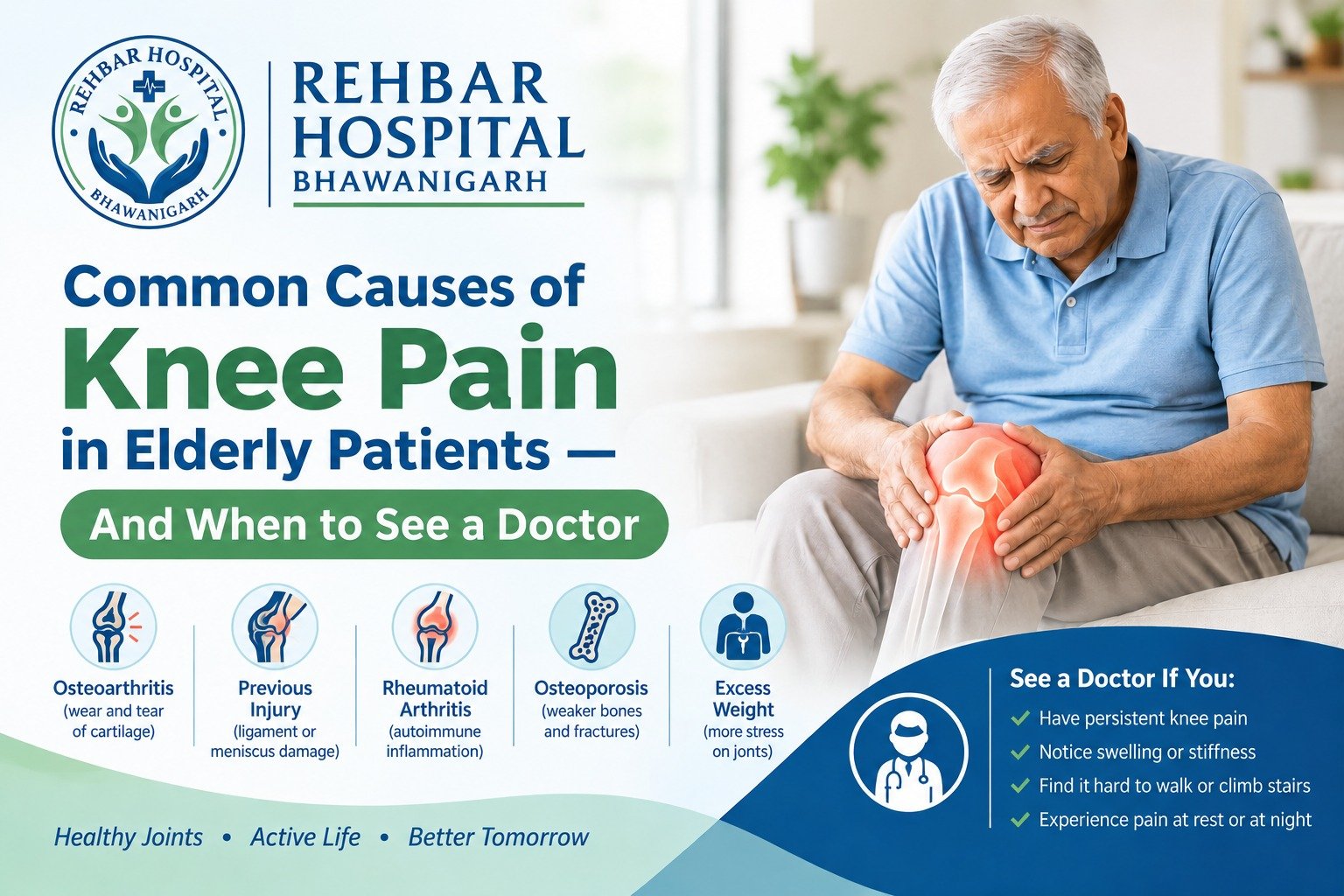
Common Causes of Knee Pain in Elderly Patients — And When to See a Doctor
Knee pain is a common problem among old people. For example, knee pain can make daily activities more difficult.
It may make walking, climbing stairs, standing up, or sitting down hard Sometimes, the pain may be low and come and go. However, in some cases, it can become severe and affect daily life.
As we grow older, our joints may become weaker. Still, knee pain should not always be seen as a normal part of ageing. In some cases, there may be a joint or bone problem that needs proper care.
Why Do Elderly People Get Knee Pain?
The knee is one of the most important joints in the body. It helps us walk, stand, bend, and move. Also, it supports much of our body weight during daily activities. Over the years, the cartilage and other tissues inside the knee may become weak or worn. In addition, old injuries, extra weight, less physical activity, and some health problems can increase the risk of knee pain.
Therefore, finding the cause of knee pain is important. This can help the doctor choose the right treatment and help prevent the problem from affecting your daily activities.
Common Causes of Knee Pain in Elderly Patients
There are many possible causes of knee pain in older adults. However, some causes are more common than others. Below are some of the main reasons why elderly people may experience knee pain.
1. Osteoarthritis
Osteoarthritis is one of the most common causes of knee pain in elderly people. It happens when the protective cartilage inside the knee slowly wears down. As a result, the bones may rub against each other more than they should. This can lead to pain, stiffness, and swelling.
Common symptoms include:
- Knee pain while walking
- Stiffness after sitting or resting
- Swelling around the knee
- Difficulty climbing stairs
- Pain while standing up
- Reduced knee movement
- Grinding or cracking sounds
At first, the pain may be mild and happen only during certain activities. Over time, however, it may become more regular and make normal activities difficult.
2. Old Knee Injuries
An old knee injury can sometimes cause problems later in life. For example, past ligament injuries, fractures, or cartilage damage may affect the knee joint. In addition, an old injury may increase the chance of developing joint problems as a person gets older. So, if you had a knee injury in the past and now have regular pain, tell your doctor about it during your check-up.
3. Gout
Gout can cause sudden and serious joint pain. This condition happens when uric acid crystals build up inside a joint. Although gout often affects the big toe, it can also affect the knee. As a result, the knee may become painful, swollen, red, and warm.
Therefore, if knee pain starts suddenly along with swelling and warmth, it is important to get medical advice.
4. Pseudogout
Pseudogout is another condition that can cause sudden knee pain. It happens when certain calcium crystals build up inside the joint. As a result, the knee may become swollen, painful, and tender. Also, its symptoms can be similar to gout.
Because of this, a doctor may need to examine the knee and perform tests to find the exact cause.
5. Bursitis
The knee has small fluid-filled sacs called bursae. These sacs help reduce friction between the tissues around the joint. Sometimes, these sacs can become irritated and swollen. This condition is called bursitis.
It may cause:
- Pain around the knee
- Swelling
- Tenderness
- Pain during movement
In addition, bursitis can develop because of repeat pressure, overuse, or an injury.
6. Tendon Problems
Tendons connect muscles to bones. When a tendon around the knee becomes irritated or damage, it may cause pain. For example, the pain may become worse while walking, climbing stairs, or doing other activities that put pressure on the knee. Also, older adults with a history of joint problems or repeated stress on the knee may be more likely to develop these problems.
7. Knee Injury After a Fall
Falls can be a serious concern for old people. For example, a fall can cause a sprain, fracture, ligament injury, or other damage to the knee. If knee pain begins after a fall, do not ignore it. This is specially important if there is severe pain, swelling, or difficulty putting weight on the leg.
In such cases, a doctor can check the knee and suggest the right treatment.
8. Rheumatoid Arthritis
Rheumatoid arthritis is different from osteoarthritis. In this condition, the body’s immune system attacks the joints.
It can cause:
- Joint pain
- Swelling
- Stiffness
- Reduce movement
- Tenderness
In addition, the knees can be affected, but other joints may also hurt. Therefore, if an elderly person has ongoing pain or swelling in several joints, a medical check-up is important.
What Can Increase the Risk of Knee Pain?
Certain factors can increase the chance of knee pain in older adults. For example, age and past injuries can affect the health of the knee.
Other risk factors include:
- Being overweight
- Previous knee injuries
- Lack of physical activity
- Weak muscles
- Repeat stress on the knee
- Several types of arthritis
- Previous knee surgery
Also, extra body weight can put more pressure on the knees. At the same time, weak leg muscles may make it difficult for the knee to handle daily activities. Therefore, staying active and maintaining a healthy weight can be helpful for joint health.
Common Symptoms of Knee Pain
Knee pain does not feel the same for everyone. For some people, it may feel like a dull ache. For others, it may feel sharp or severe.
You may also notice:
- Stiffness
- Swelling
- Tenderness
- Redness
- Warmth around the knee
- Difficulty walking
- Trouble bending the knee
- Trouble straightening the leg
- Weakness
- A feeling that the knee may give way
- Popping or grinding sounds
If these symptoms continue or become worse, it is better to consult an orthopaedic doctor.
When Should an Elderly Person See a Doctor for Knee Pain?
Mild knee pain may sometimes improve with rest and simple care. However, ongoing pain should not be ignored.
You should see a doctor if:
- The pain continues for several days
- Knee pain keeps coming back
- You cannot fully bend or straighten the knee
- Pain affects your sleep
- Pain started after a fall or injury
- You have repeat knee swelling
Most importantly, early medical advice can help find the cause of the pain. It can also help you start the right treatment before the problem becomes harder to manage.
When Is Knee Pain an Emergency?
Some knee problems need urgent medical attention. For this reason, it is important to know the warning signs.
Get medical help quickly if:
- You cannot put weight on your leg
- The knee looks deform
- There is sudden and severe swelling
- You have severe pain after an injury
- The knee is very red and hot
- You have knee pain along with fever
- You suddenly cannot move your knee
In particular, a red, hot, and swollen knee with fever may be a sign of an infection. Therefore, it should be checked by a doctor without delay.
How Is Knee Pain Diagnosed?
First, the doctor will mainly ask about your symptoms and health history. For example, you may be ask when the pain start and whether you had a previous knee injury.
Next, the doctor may examine the knee and check:
- Knee movement
- Swelling
- Tenderness
- Joint stability
- Muscle strength
- Walking ability
Depending on your symptoms, the doctor may suggest an X-ray or other tests.
In the end, a proper diagnosis is important because knee pain treatment depends on its cause.
Treatment Options for Knee Pain in Elderly Patients
The right treatment depends on the cause and severity of the knee problem. Therefore, your doctor may suggest one or more treatment options.
1. Exercise
Gentle exercises can help improve muscle strength and joint movement. For example, some elderly people may benefit from walking, swimming, cycling, or suitable stretching. However, the right exercise depends on the condition of the knee. So, talk to a doctor or physiotherapist before starting a new exercise routine if you have regular knee pain.
2. Physiotherapy
Physiotherapy can help improve strength, flexibility, balance, and movement. In addition, it may help elderly people stay active and perform daily tasks more comfortably. A physiotherapist can prepare an exercise plan based on the patient’s condition, age, and level of pain.
As a result, regular physiotherapy may support better movement and strength.
3. Weight Management
Extra weight can put more pressure on the knees. Therefore, if you are overweight, losing weight in a safe and healthy way may help reduce stress on the joints. Even small changes in your daily routine can help when they are followed regularly.
4. Medicines
Depending on the cause of knee pain, a doctor may recommend medicines to control pain or swelling. However, elderly patients should be careful with pain medicines. Some medicines may not be suitable for people who take other medicines or have certain health problems. So, always take medicines as advised by your doctor.
5. Non-Surgical Treatment
Many knee problems can be managed without surgery. Depending on the condition, treatment may include:
- Medicines
- Physiotherapy
- Exercise
- Weight management
- Lifestyle changes
- Other non-surgical treatments
After checking the knee, the doctor will decide which option may be suitable.
6. Surgery
Some elderly patients may have severe knee damage. As a result, they may have trouble walking or performing daily activities. In such cases, surgery may be considered. However, surgery is not needed for every patient.
First, the orthopaedic doctor will assess the condition. Then, the doctor will explain the available treatment options. The main goal is to reduce pain, improve movement, and support a better quality of life.
Orthopaedic Treatment in Bhawanigarh for Knee Problems
If knee pain continues for a long time, getting the right medical advice is important. A proper examination can help identify the cause and guide the right treatment. People looking for orthopaedic treatment in Bhawanigarh can consult the orthopaedic team at Rehbar Hospital for knee pain, arthritis, joint problems, and other bone and muscle-related conditions.
Depending on the patient’s condition, the doctor may suggest medicines, physiotherapy, exercises, diagnostic tests, or other treatment options. Most importantly, do not ignore ongoing knee pain. Early evaluation may help you manage the problem better and stay active.
How Can Elderly People Protect Their Knees?
Not every knee problem can be prevented. However, some healthy habits can support better joint health.
Older adults can try to:
- Stay physically active
- Do safe and suitable exercises
- Maintain a healthy weight
- Avoid putting too much stress on the knees
- Wear comfortable and supportive footwear
- Take steps to prevent falls
- Follow medical advice after an injury
- Get regular knee pain checked
Most importantly, do not ignore pain that keeps coming back. Instead, get medical advice if the pain continues.
Frequently Asked Questions
Is Knee Pain a Normal Part of Ageing?
Knee pain is common among older adults. However, it should not always be considered a normal part of ageing. For example, osteoarthritis, gout, old injuries, and other joint problems can cause knee pain. Therefore, a doctor can help find the actual cause
What Is the Most Common Cause of Knee Pain in Elderly People?
Osteoarthritis is one of the most common causes of knee pain in older adults. It can cause pain, stiffness, swelling, and difficulty with movement.
Can Elderly People Exercise With Knee Pain?
Gentle, low-impact exercise may help improve strength and movement. However, the right exercise depends on the cause of the pain. So, it is better to take advice from a doctor or physiotherapist before starting new exercises.
When Should I See an Orthopaedic Doctor for Knee Pain?
You should see an orthopaedic doctor if knee pain continues, gets worse, affects walking, causes swelling, or makes everyday activities difficult. Also, severe pain after an injury needs medical attention. Therefore, do not delay a check-up when symptoms are severe or keep getting worse.
Where Can I Get Orthopaedic Treatment in Bhawanigarh?
If you are looking for orthopaedic treatment in Bhawanigarh, you can consult the orthopaedic team at Rehbar Hospital for knee pain, arthritis, joint problems, injuries, and other musculoskeletal conditions.
Conclusion
Knee pain is common in elderly patients and should not be ignored. However, osteoarthritis is not the only cause of knee pain. Old injuries, gout, pseudogout, bursitis, tendon problems, and rheumatoid arthritis can also cause knee pain. If the pain is affecting your walking, sleep, or daily activities, it is important to get medical advice. Early diagnosis can help identify the cause and guide the right treatment.
For those looking for orthopaedic treatment in Bhawanigarh, Rehbar Hospital provides care for various bone, joint, and muscle-related problems. Finally, remember that knee pain is not something you always have to live with as you get older. If the pain continues or becomes worse, speak with an orthopaedic doctor and get the right advice.
