
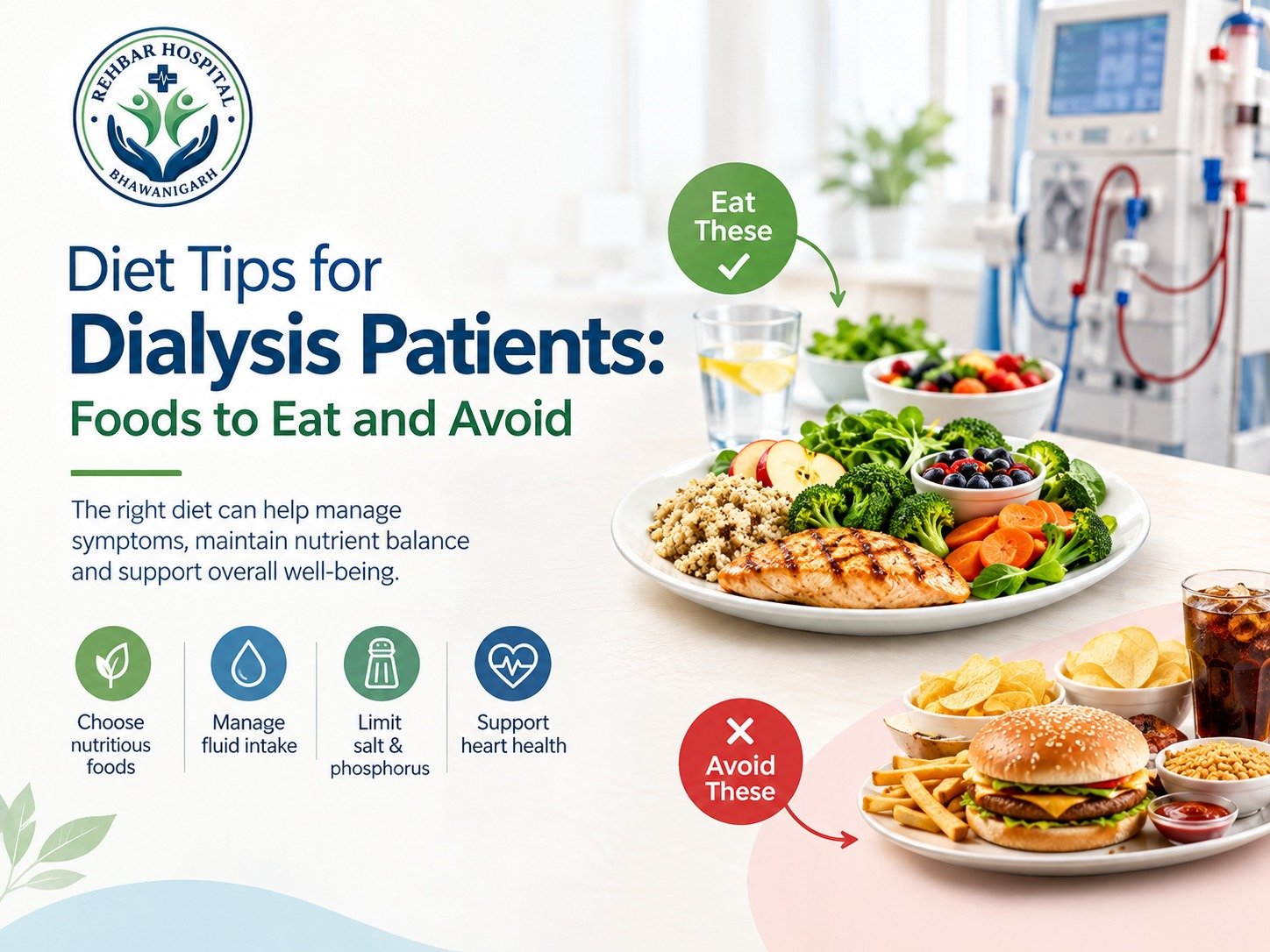
Diet Tips for Dialysis Patients: Foods to Eat and Avoid
Dialysis is an important treatment for people with serious kidney problems. However, dialysis care is not only about the treatment. A healthy diet is also an important part of dialysis care. For dialysis patients, food choices can help manage fluid, salt, potassium, and phosphorus levels. Therefore, knowing what to eat and what to limit is very important.
At Rehbar Hospital, patients can get proper medical care and guidance for dialysis. In addition, your doctor or dietitian can help you choose foods based on your health needs. In this blog, we will discuss simple diet tips for dialysis patients. We will also look at foods that may need to be limited.
Why Is Diet Important for Dialysis Patients?
Healthy kidneys remove waste and extra fluid from the body. However, when the kidneys do not work well, waste and fluid can build up in the body. Dialysis helps remove some of this waste and extra fluid. At the same time, your diet also plays an important role.
A good dialysis diet can help you:
- Get enough energy
- Maintain muscle strength
- Control fluid levels
- Manage salt intake
- Control potassium levels
- Manage phosphorus levels
- Support overall health
However, every dialysis patient is different. Therefore, you should follow the diet plan given by your doctor or dietitian.
1. Eat Enough Protein
Protein helps your body build and repair muscles. It also helps you stay strong. In addition, people on dialysis may need enough protein to support their health. Therefore, your doctor may suggest good protein foods as part of your daily diet.
Some good protein choices may include:
- Eggs or egg whites
- Fresh chicken
- Fish
- Lean meat
- Other protein foods suggested by your dietitian
However, the amount of protein you need may be different from another patient. So, do not increase your protein intake without medical advice. Your healthcare team at Rehbar Hospital can guide you about the right food choices for your needs.
2. Reduce Salt and Sodium
Too much salt can make you feel thirsty. As a result, you may drink more fluids. Also, too much salt can make your body hold extra fluid. This can be a problem for people receiving dialysis. Therefore, try to limit foods that contain a lot of salt.
These foods may include:
- Pickles
- Chips
- Salty snacks
- Instant noodles
- Processed meat
- Packaged soups
- Fast food
- Ready-to-eat meals
Instead, use fresh herbs and suitable spices to add taste to your meals. In addition, check food labels before buying packaged foods. This simple step can help you control your salt intake.
3. Watch Your Potassium Intake
Potassium is a mineral that helps your muscles and heart work properly. However, people with kidney problems may have high or low potassium levels. Therefore, your doctor may check your potassium level through blood tests.
If your potassium level is high, you may need to limit certain foods. However, you should not stop eating fruits and vegetables on your own. Some foods that can contain a lot of potassium include:
- Bananas
- Oranges
- Orange juice
- Potatoes
- Tomatoes
- Milk
- Yogurt
- Nuts
- Some beans
- Dried fruits
However, your food needs are personal. So, ask your doctor or dietitian which foods are right for you.
4. Control Phosphorus
Phosphorus is another mineral that needs attention during dialysis. When the kidneys are not working well, phosphorus can build up in the blood. As a result, your doctor may ask you to limit foods that contain a lot of phosphorus.
These foods may include:
- Milk
- Cheese
- Nuts
- Seeds
- Some beans
- Processed meats
- Some packaged foods
- Some soft drinks
Also, check the ingredients on packaged foods. Ingredients that contain the word “phos” may mean that the food has added phosphorus. If your doctor gives you a phosphate binder, take it as advised.
5. Follow Your Fluid Limit
Fluid control is very important for many dialysis patients. This is because the kidneys may not remove enough extra fluid from the body. Therefore, your doctor may give you a daily fluid limit.
Too much fluid can cause:
- Swelling
- Sudden weight gain
- Shortness of breath
- High blood pressure
- Extra strain on the heart
Remember, fluid does not only mean water. For example, tea, coffee, juice, milk, soup, and ice cream can also add to your fluid intake. Therefore, keep track of all the fluids you take during the day.
At Rehbar Hospital, your healthcare team can help you understand your fluid limit and how to manage it in your daily life.
6. Choose Fresh Foods
Fresh food can make it easier to control salt and other nutrients. Therefore, try to choose fresh food when possible.
You can include foods such as:
- Fresh vegetables as advised by your dietitian
- Suitable fruits in the right portions
- Fresh fish
- Fresh chicken
- Eggs
- Rice
- Roti
- Home-cooked meals
On the other hand, try to limit highly processed foods. These foods may contain extra salt or added phosphorus. So, choosing simple home-cooked meals can be a better option for many dialysis patients.
7. Do Not Skip Meals
Dialysis patients need enough energy and nutrients. Therefore, skipping meals regularly may make it harder to stay strong. If you have a poor appetite, try smaller meals. In addition, smaller meals may feel easier than eating a large meal at one time.
However, tell your doctor if you:
- Are losing weight
- Feel weak
- Have very little appetite
- Have trouble eating enough food
Your healthcare team at Rehbar Hospital can help you find suitable food choices.
8. Read Food Labels
Food labels can help you make better choices. Therefore, make it a habit to check the label before buying packaged food.
Look for information about:
- Sodium
- Protein
- Potassium, when listed
- Phosphorus or phosphate additives
- Added sugar
Also, check the ingredient list. Look for ingredients that contain “phos” if you need to control phosphorus. At first, reading labels may seem difficult. However, it becomes easier with practice.
9. Do Not Take Supplements Without Advice
Some people take vitamins, minerals, protein powders, or herbal products without asking their doctor. However, some supplements may not be suitable for dialysis patients.
Therefore, always speak with your doctor before taking any new supplement. In addition, tell your doctor about any herbal products you are using.
Your healthcare team at Rehbar Hospital can tell you if you need a specific supplement.
Simple Diet Tips for Dialysis Patients
Following a dialysis diet does not have to be difficult. Instead, start with small and simple changes.
Here are some useful tips:
- First, eat meals at regular times.
- Also, choose fresh food more often.
- Next, use less salt while cooking.
- In addition, limit packaged and processed foods.
- Drink only the amount of fluid advised by your doctor.
- Also, eat enough protein as advised by your dietitian.
- Check food labels before buying packaged foods.
- Take your prescribed medicines on time.
- Finally, get your regular blood tests.
These simple habits can make your daily food choices easier.
What Foods Should Dialysis Patients Avoid?
There is no single food list that is right for every dialysis patient. Instead, your diet should depend on your blood test results and health needs.
However, many dialysis patients may need to limit:
- Very salty foods
- Processed foods
- Packaged foods
- Foods with added phosphorus
- Certain high-potassium foods
- Too much fluid
- Supplements that are not approved by their doctor
Most importantly, do not remove foods from your diet without medical advice. Your doctor or dietitian can tell you which foods you need to limit and which foods you can enjoy safely.
How Can Rehbar Hospital Help Dialysis Patients?
Rehbar Hospital provides dialysis care and medical support for patients who need regular treatment. However, dialysis is only one part of kidney care. In addition, proper food choices and regular medical advice are important for managing your health.
The healthcare team can guide you about:
- Your dialysis treatment
- Food choices
- Fluid intake
- Salt intake
- Potassium levels
- Phosphorus levels
- Regular health checks
Therefore, if you or your family member is receiving dialysis, talk to your healthcare team about your diet. At Rehbar Hospital, patients can receive medical guidance based on their individual needs.
Frequently Asked Questions
Can dialysis patients eat fruits?
Yes, dialysis patients can often eat fruits. However, the type and amount of fruit may depend on your potassium level. Therefore, ask your doctor or dietitian which fruits are suitable for you.
Can dialysis patients drink a lot of water?
Not always. Many dialysis patients have a daily fluid limit. Therefore, follow the amount advised by your doctor. Remember that tea, coffee, juice, soup, and other liquids can also count as fluid.
Is protein good for dialysis patients?
Yes, protein is important for many people on dialysis. It helps support muscles and strength. However, the right amount can be different for each person. So, follow your dietitian’s advice.
Can dialysis patients eat salt?
Yes, protein is important for many people on dialysis. It helps support muscles and strength. However, the right amount can be different for each person. So, follow your dietitian’s advice.
Can dialysis patients eat salt?
Yes, protein is important for many people on dialysis. It helps support muscles and strength. However, the right amount can be different for each person. So, follow your dietitian’s advice.
